 Save
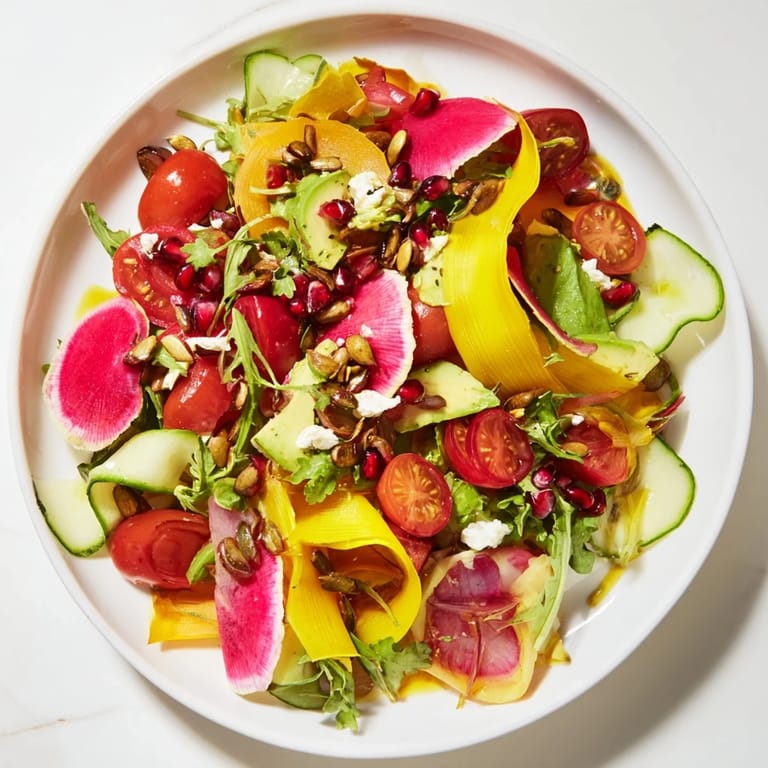
Save I discovered this salad during a museum visit where I found myself mesmerized by a Jackson Pollock painting—all those wild splashes of color and chaotic energy somehow felt celebratory rather than overwhelming. Walking out, I thought about how food could capture that same uninhibited joy. That evening, I threw together every colorful ingredient in my kitchen without a plan, tossed them onto a plate like brushstrokes, and realized I'd created something that tasted as good as it looked. Now whenever I make it, I feel like I'm painting with vegetables, and that freedom is exactly the point.
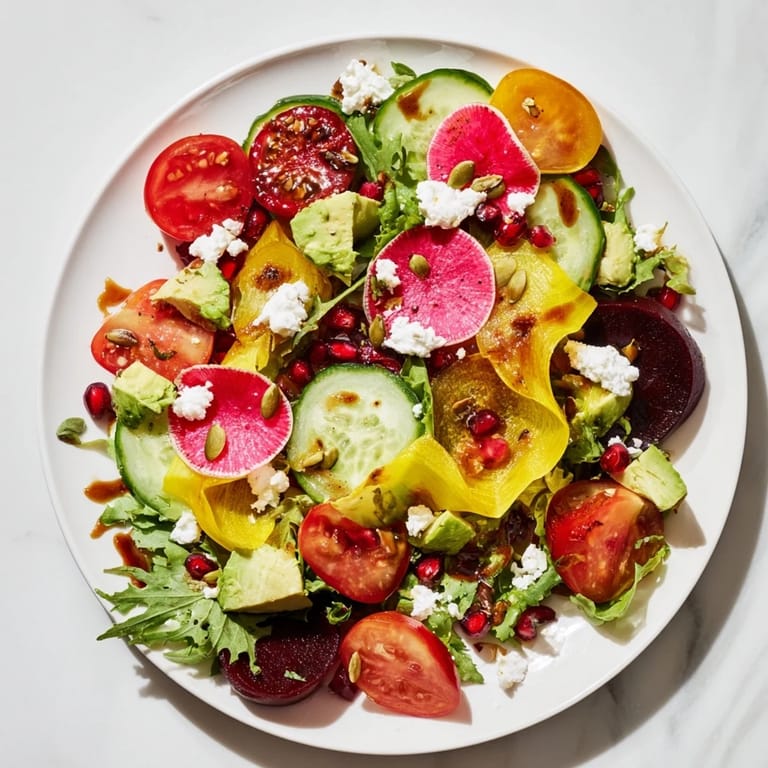
I made this for a dinner party where a guest mentioned they were tired of salads tasting like obligations. Watching their face light up when they saw the plate—the riot of reds and yellows and greens scattered like confetti—then hearing them say it tasted like joy was the moment I knew this wasn't just salad. It was an edible conversation starter.
Ingredients
- Cherry tomatoes (red and yellow), halved: These are your brightest colors, and halving them instead of leaving whole keeps them from rolling around. Use a mix of red and yellow if you can find them—it's the visual variety that makes this dish sing.
- Golden beet, peeled and shaved: Raw beet brings earthiness without the heavy sweetness of roasted, and shaving it thin with a vegetable peeler creates delicate ribbons that catch the light. Don't skip this—it's what gives the salad its jeweled quality.
- Cucumber, sliced into ribbons: A vegetable peeler creates long ribbons that add drama and make the salad feel intentional rather than chopped. Fresh and crisp, they're your structural anchor.
- Red radishes, thinly sliced: Peppery and crunchy, slicing them razor-thin is key—thick slices taste harsh, but thin ones add bite without aggression. They're the punchline of the flavor story.
- Watermelon, cut into irregular cubes: Cut these bigger than you think, aiming for roughly half-inch cubes. The slight sweetness and juiciness balance the earthier vegetables, and irregular shapes feel more artistic than uniform ones.
- Avocado, cubed: Wait to cube this until just before serving so it doesn't brown. The creaminess is essential—it mellows the other flavors and adds richness without heaviness.
- Mixed baby greens (arugula, baby spinach, frisée): Use the tenderest, youngest leaves you can find. This is your canvas, and you want greens delicate enough to disappear into the composition without competing.
- Fresh mint leaves, torn: Tearing by hand instead of chopping bruises the leaves less and releases more fragrance. Mint adds brightness and makes this taste summer-bright even in winter.
- Toasted pumpkin seeds: If yours aren't already toasted, lightly toast them in a dry pan until fragrant. They add crunch and nutty depth, plus their pale green color is beautiful against the vibrant vegetables.
- Pomegranate seeds: Jewel-like and tart-sweet, they burst when you bite them. They're as much about appearance as flavor—those ruby pockets of juice are what make this dish memorable.
- Crumbled feta cheese: Use good feta, crumbled by hand rather than pre-crumbled if possible. It's salty and tangy and keeps the salad from feeling too virtuous. The irregular pieces matter more than uniformity.
- Extra-virgin olive oil: Use something you actually enjoy tasting—this is where quality matters because there's nowhere for it to hide.
- White balsamic vinegar: Milder and slightly sweeter than dark balsamic, it adds acidity without overpowering delicate greens or introducing dark splatters that would muddy your color palette.
- Honey: Just a touch to round out the dressing and bridge the gap between the acidic and creamy elements. Don't skip it—one teaspoon makes a difference.
- Dijon mustard: This acts as an emulsifier, helping the dressing come together smoothly. It also adds subtle sharpness that keeps the whole thing from tasting too sweet.
- Salt and black pepper: Season to taste at the end. The feta is already salty, so go easy at first and adjust once you've tasted.
Tired of Takeout? 🥡
Get 10 meals you can make faster than delivery arrives. Seriously.
One email. No spam. Unsubscribe anytime.
Instructions
- Prep everything first:
- Set up your workspace like you're about to paint. Wash and dry all your vegetables thoroughly—moisture is the enemy of a visually striking salad. Arrange each ingredient in its own small bowl so they're ready when you need them. This takes a few minutes but makes the actual assembly feel meditative rather than chaotic.
- Build your canvas:
- Take your large serving platter or shallow bowl and scatter the mixed baby greens and torn mint in loose, random clumps across the surface. Don't arrange them neatly—let them pool in some areas and thin out in others. This is your base, and imperfection is the point.
- Let chaos be your guide:
- Now comes the fun part. Take each prepared vegetable and scatter it across the greens without overthinking it. Let the cherry tomatoes fall where they may, drape the cucumber ribbons like brushstrokes, pile the beet shavings in one corner and let them drift toward another. The radish slices, watermelon cubes, and avocado should overlap and intermingle. Think less arrangement and more artistic explosion. Some areas will have density, others will be sparse, and that's exactly what makes it work.
- Add the final textures:
- Sprinkle the toasted pumpkin seeds across the composition in an intentionally irregular pattern—some clustered, some scattered. Do the same with the pomegranate seeds and crumbled feta. These add both visual and textural interest, creating little pockets of crunch and tang that surprise you as you eat.
- Make your dressing:
- In a small bowl, whisk together the olive oil, white balsamic vinegar, honey, and Dijon mustard. Start whisking the oil and vinegar together, then add the honey and mustard. Keep whisking until it becomes creamy and emulsified rather than separated and oily. This usually takes about a minute of steady whisking. Season with salt and pepper, tasting as you go.
- The grand finale:
- Drizzle the dressing across your salad in wild zigzags and splatters, mimicking painterly brushstrokes. Don't aim for evenness—let some areas get a generous drizzle while others stay mostly dry. This uneven distribution means some bites are rich and heavily dressed while others taste fresher and lighter.
- Serve and celebrate:
- Bring the salad to the table while the presentation is still stunning. Let people admire it for a moment before they dig in. Then let them mix it as much or as little as they want. Some people prefer the artistic chaos, others will toss it all together, and both approaches are equally valid.
 Save
Save A friend once brought her grandmother to dinner right after I made this, and I watched three generations of women sit in front of it without touching it at first—just looking. Then the grandmother said, 'This is what happiness looks like on a plate,' and I realized that beautiful food and good company aren't separate things. They're the same conversation.
Why This Salad Works as Art
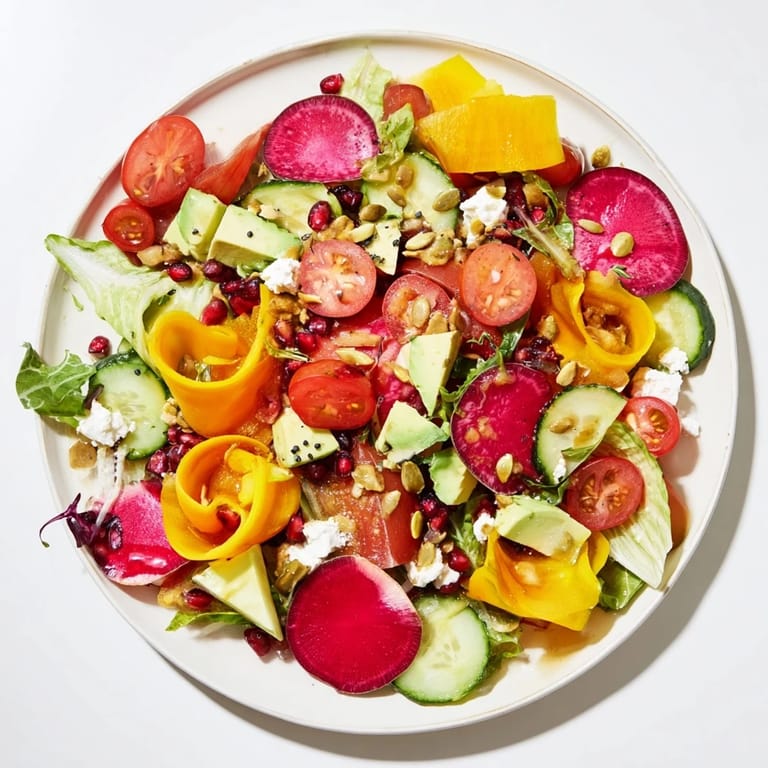
There's something deeply satisfying about creating something beautiful that you can also eat. Most art gets looked at. Most salad gets tolerated. This one does both. The colors aren't accidental—every ingredient was chosen as much for how it looks as how it tastes. The chaos is intentional. The textures play against each other deliberately. When you serve this, you're not just feeding people. You're creating a moment where they have to pause and notice before they consume, which is increasingly rare in how we eat.
Customization Without Apology
One of my favorite things about this salad is that it's genuinely personal. If you love beets, add more. If you prefer greens heavier than vegetables, build a thicker base. If you have edible flowers or microgreens or roasted purple sweet potatoes, scatter them in. The structure stays the same—the chaos is actually quite forgiving. Purple cabbage adds drama. Roasted chickpeas add protein and earthiness. Crumbled goat cheese swaps beautifully for feta. Even the dressing can shift—a lime vinaigrette instead of balsamic, a tahini drizzle instead of oil and vinegar. The rule is simple: bright colors, varied textures, intentional irregularity. Fill those requirements and you're making your own version.
Pairing and Serving Suggestions
This salad drinks wine the way a painting draws light. A crisp Sauvignon Blanc is the obvious choice—the acidity echoes the brightness of the vegetables and the vinegar. But sparkling water with fresh citrus works beautifully too, letting the salad be the show. Serve it as a light lunch with some good bread, or as a stunning side dish at a dinner party where you want people talking about how it looked before they even taste it. I've even served it as the opener to a larger meal—something beautiful to transition from gathering to eating.
- Serve immediately after dressing for the crispest greens and the most striking presentation.
- If you're serving a crowd, you can prep all the ingredients an hour or two ahead and assemble just before people arrive.
- Leftovers are best eaten the same day, though the dressing actually makes everything taste more cohesive after a few hours of sitting together.
 Save
Save Make this when you want to remind yourself that eating can be joyful, that food is its own form of creativity, and that sometimes the most nourishing meal is one that feeds more than just your body. Serve it with intention and watch what happens.
Recipe FAQs
- → What makes this salad 'abstract expressionist'?
The salad’s presentation mimics abstract expressionism by layering colorful ingredients in a seemingly chaotic, artistic way, creating visual energy and texture contrasts on the plate.
- → Can I substitute the feta cheese?
Yes, vegan cheese or a nut-based cheese substitute can be used to maintain the creamy texture without dairy.
- → How should the dressing be applied for best effect?
Apply the dressing with drizzles and splatters to emulate brushstrokes, enhancing the salad’s artistic appearance.
- → Are there any allergy concerns with the seeds?
Pumpkin seeds may be processed with nuts, so check packaging if allergies are a concern; pomegranate seeds are generally safe and nut-free.
- → What are good beverage pairings for this dish?
Crisp Sauvignon Blanc or sparkling water with citrus complement the fresh, vibrant flavors nicely.
- → How can I add more color to the salad?
Incorporate edible flowers or roasted purple sweet potatoes for additional vivid hues and flair.