 Save
Save My neighbor knocked on the door one Tuesday evening with that look—the one that says she's got nothing in the fridge but needs dinner on the table in twenty minutes. I opened my pantry and spotted a box of ranch seasoning, some ground turkey in the freezer, and whatever vegetables were lingering in the crisper drawer. That night, we threw together this creamy skillet dish and she's been asking for the recipe ever since. Sometimes the best meals come from constraint rather than planning.
I made this for a potluck once, carrying it in an old ceramic dish that I'd borrowed from my mom years ago and never returned. The creamy sauce held up beautifully under the buffet lamp, and people kept coming back asking what was in it—not because it was fancy, but because it tasted like comfort and care. My friend Tom had thirds and mentioned it tasted like home, even though his home was three states away.
Ingredients
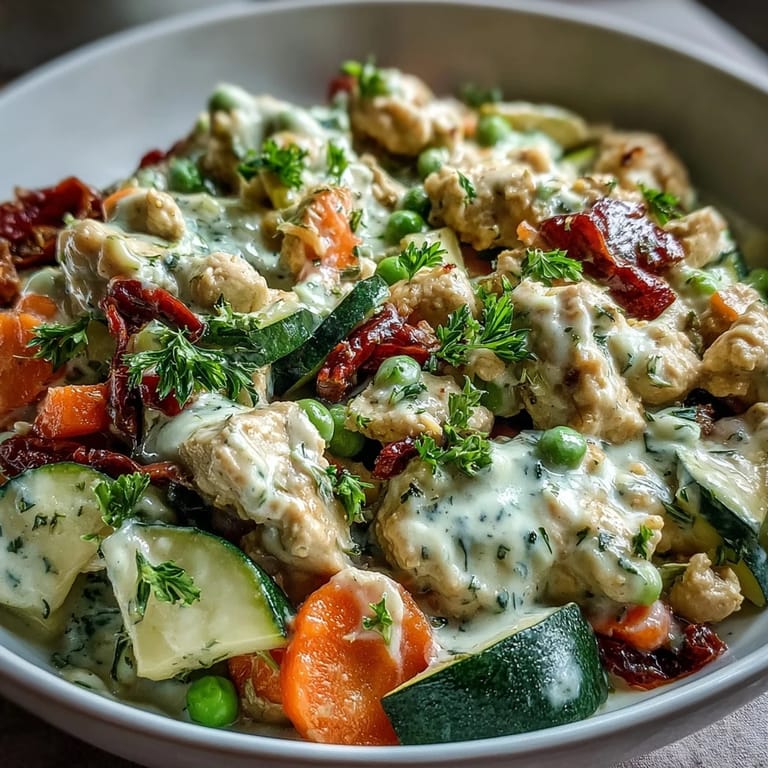
- Ground turkey: Lean and forgiving, it absorbs the ranch flavors beautifully without overwhelming the vegetables—brown it thoroughly so every crumb gets flavor from the pan.
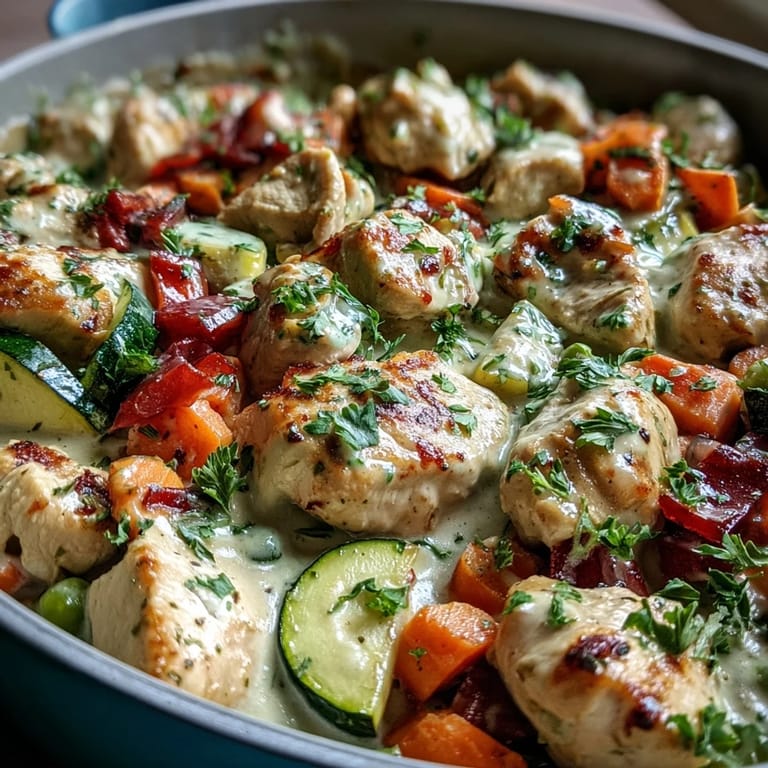
- Bell peppers, zucchini, and carrots: The holy trio that gives this dish texture and color; don't skip cutting them roughly the same size so they cook evenly.
- Frozen peas: They thaw perfectly in the hot sauce and add a subtle sweetness that balances the tanginess of the ranch.
- Red onion and garlic: The aromatics that make your kitchen smell like something important is happening, layering flavor before everything else goes in.
- Heavy cream and broth: Together they create that silky sauce—the cream makes it luxurious while the broth keeps it from feeling too heavy.
- Ranch seasoning mix: This is your shortcut to complexity; it's got dried herbs, garlic powder, and that distinctive tangy quality that makes people wonder what your secret is.
Tired of Takeout? 🥡
Get 10 meals you can make faster than delivery arrives. Seriously.
One email. No spam. Unsubscribe anytime.
Instructions
- Brown the turkey with confidence:
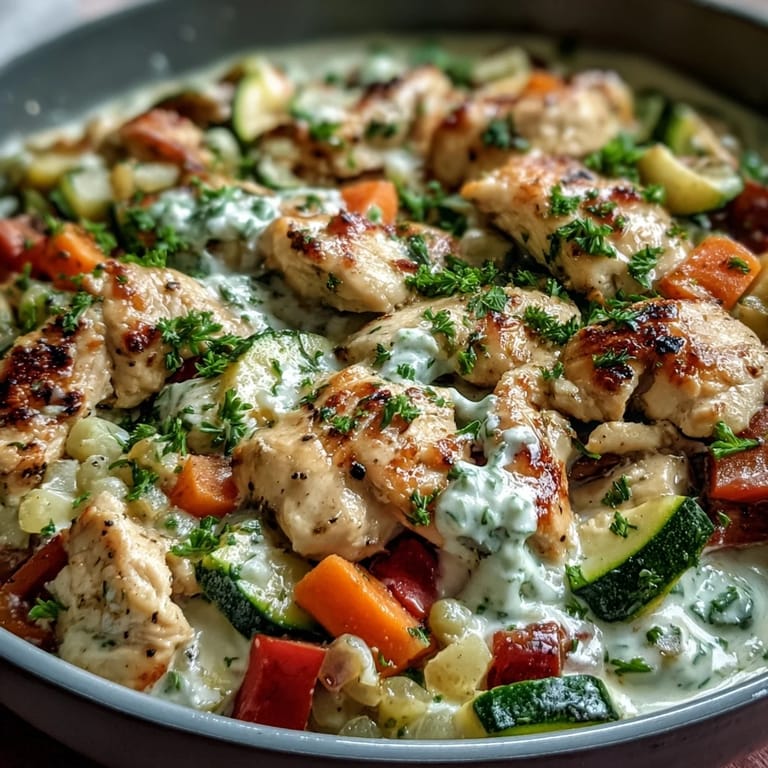
- Heat your oil until it shimmers, then add the turkey and let it sit for a minute before stirring—this helps it brown instead of steam. Break it into small, irregular pieces as it cooks, listening for that gentle sizzle that tells you it's caramelizing.
- Wake up the aromatics:
- Once the turkey's done, add your onion and garlic, stirring constantly so the garlic doesn't burn but perfumes the whole pan. This is the moment where you know something delicious is about to happen.
- Build the vegetable layer:
- Add the harder vegetables first—peppers, zucchini, and carrots—stirring frequently so they soften but stay slightly firm. The pan will get crowded and steamy, which is exactly right.
- Finish with peas and sauce:
- Scatter in the peas, then pour the cream and broth mixture over everything while stirring gently. Sprinkle in that ranch seasoning and watch the sauce come together, tasting and adjusting salt and pepper until it feels balanced.
- Simmer to silken perfection:
- Keep the heat at a gentle bubble, not a rolling boil, stirring occasionally as the sauce thickens and the vegetables become tender. This should take about five minutes—patience here prevents the cream from breaking.
 Save
Save  Save
Save My daughter once made this for her school lunch club without telling me, and came home grinning because everyone wanted the recipe. She'd learned something essential that day—that simple food made with attention and warmth feeds people in ways that fancy ingredients never could. Now when she helps me cook this, she moves through each step like she's sharing something sacred.
Why Ground Turkey Works Here
Ground turkey gets a bad reputation from people who've only experienced it as a lean, dry disappointment, but that's only because it needs the right treatment. In a creamy sauce like this, it stays tender because the fat from the cream and oil surrounds it, and the vegetables release moisture as they cook. It's actually the most forgiving protein for a weeknight skillet because it cooks quickly and doesn't demand the fussing that other meats do.
The Vegetable Swap Strategy
This recipe is flexible enough that you can use almost any vegetables you have on hand—broccoli, green beans, snap peas, mushrooms, or even cauliflower all work beautifully. The key is keeping them in roughly the same size so they finish cooking at the same time; nothing's worse than biting into a hard carrot chunk while the zucchini is mushy. I've made this with whatever was cheapest at the market, and it's never failed me.
Serving and Storage Wisdom
This dish tastes equally good over buttered egg noodles, regular pasta, rice, or even mashed potatoes if you're in a carbohydrate mood. The sauce is forgiving enough that you can make it ahead and warm it gently on the stove, though it's best enjoyed fresh when the vegetables still have a little snap. Leftovers keep for three days in the fridge and reheat beautifully with a splash of extra broth to loosen the sauce.
- If you're using gluten-free pasta, cook it just before serving since it can get mushy if it sits in the warm sauce too long.
- A squeeze of fresh lemon juice right before serving brightens the whole dish and cuts through the richness beautifully.
- Fresh parsley isn't just garnish—it adds a peppy freshness that makes people think you put more effort into this than you actually did.
 Save
Save 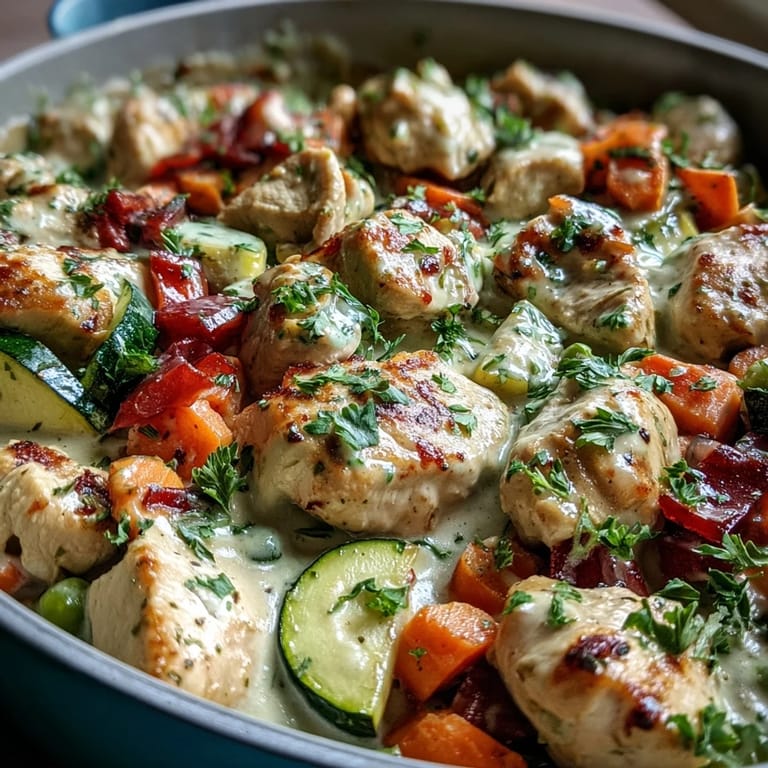 Save
Save This recipe has become my go-to when I need something that feels special but doesn't require special effort. It's the kind of dish that makes people feel cared for without making you feel frazzled in the kitchen.
Recipe FAQs
- → Can I make this skillet dairy-free?
Yes, substitute the heavy cream with full-fat coconut milk or a dairy-free cream alternative. Use a dairy-free ranch seasoning or make your own with herbs and spices.
- → What vegetables work best in this dish?
Bell peppers, zucchini, carrots, and peas provide great color and texture. You can also add mushrooms, corn, broccoli florets, or spinach depending on what you have available.
- → How do I store leftovers?
Store in an airtight container in the refrigerator for up to 3 days. Reheat gently on the stove with a splash of broth or cream to loosen the sauce. The pasta or rice is best stored separately.
- → Can I freeze this skillet?
The turkey and vegetable mixture freezes well for up to 3 months. However, cream-based sauces can separate when frozen and reheated. For best results, freeze without the sauce and add fresh cream when reheating.
- → What can I serve with this skillet?
This pairs beautifully with pasta, rice, or mashed potatoes to soak up the creamy sauce. A crisp green salad with vinaigrette balances the richness, and garlic bread makes for a comforting addition.