 Save
Save I still remember the moment my nephew pressed his nose against the kitchen glass at my lab coat wearing friend's house party, utterly mesmerized by what I was arranging on the board. "Auntie, is that... DNA?" he whispered. That's when I realized this Double Helix appetizer wasn't just food—it was edible science, a conversation starter that made people smile before they even tasted it. I'd been inspired by a late-night documentary about genetics, suddenly seeing the kitchen as a canvas for wonder. That night, everyone gathered around asking questions, taking photos, and discovering how beautiful vegetables could be when arranged with intention.
The first time I made this for my sister's book club, three people asked for the recipe before they even sat down. I watched grown adults giggle like kids while deconstructing the cheese rungs, and somehow it sparked the most genuine conversation about science and creativity I'd heard in years. That's when I understood—this wasn't about being clever. It was about giving people permission to play with their food, to see eating as joyful rather than routine.
Ingredients
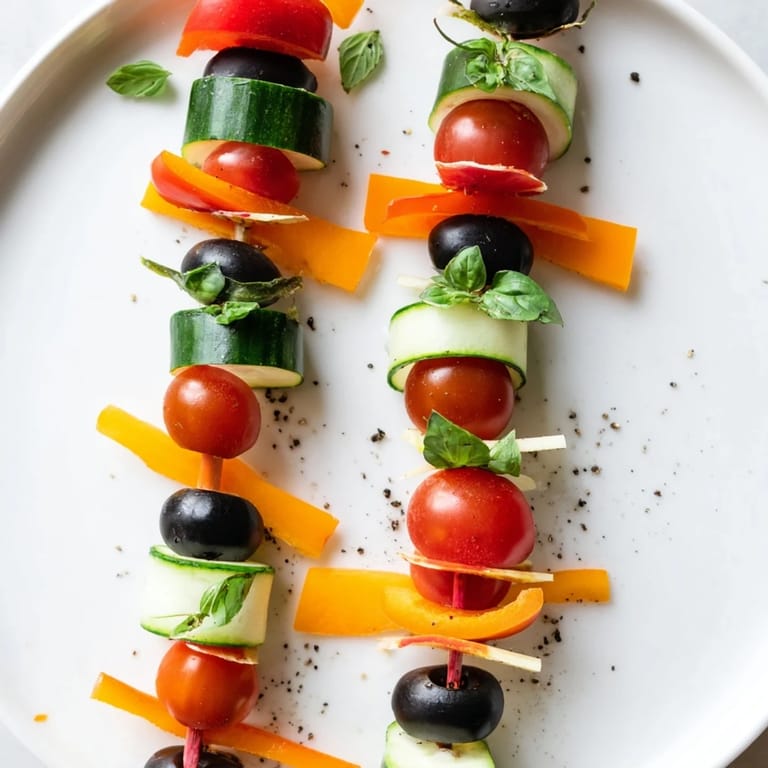
- Black olives, pitted and sliced (100 g): These form one of your DNA strands with their deep, almost midnight color. I learned to pit them ahead of time because wrestling with pits in front of guests ruins the elegance—buy pre-pitted if you can, your fingers will thank you
- Cherry tomatoes, halved (100 g): The bright red creates stunning contrast against the dark olives. Choose ones that are just ripe but still firm so they hold their shape when arranged
- Cucumber, cut into thin half-moons (100 g): This gentle green adds freshness and breaks up the intensity of the darker vegetables. Slice them just before serving so they stay crisp and don't weep onto your board
- Roasted red peppers, sliced (100 g): Whether you roast your own or use jarred, these add sweetness and that silky texture that makes people close their eyes when they bite down
- Smoked salmon or marinated tofu strips (100 g, optional): This is your optional protein that makes the second strand feel substantial. I use smoked salmon for non-vegetarian gatherings, but the marinated tofu honestly tastes better in my opinion—earthier, more interesting
- Mozzarella cheese, cut into thin strips or small cubes (150 g): These are your rungs connecting the two strands. Fresh mozzarella stretches beautifully, but I've learned that a slightly firmer mozzarella holds its shape better on the board
- Cheddar cheese, cut into thin strips or small cubes (100 g): The cheddar rungs create a golden contrast to the white mozzarella. Its slight sharpness complements everything on the board
- Fresh basil leaves (50 g): Tuck these along the strands at the last moment—they'll and add brightness and that herbaceous whisper everyone needs
- Crackers or gluten-free crackers (50 g, optional): I always set these on the side because people want something to hold the ingredients, even though eating straight from the board is more fun
- Olive oil (1 tbsp): A light drizzle brings everything into harmony. Use good quality oil—this isn't the time to skimp
- Freshly ground black pepper, to taste: Don't pre-grind this. The aroma when you crack fresh pepper over the finished board is part of the magic
Tired of Takeout? 🥡
Get 10 meals you can make faster than delivery arrives. Seriously.
One email. No spam. Unsubscribe anytime.
Instructions
- Create your first strand:
- Take a large serving board and imagine two parallel lines that gently curve like a helix. Using one type of ingredient—I usually start with the black olives—create a long, graceful line. Don't worry about perfection here; nature's helixes aren't rigid. Lay each slice slightly overlapping the next, like shingles on a roof.
- Build your second strand:
- About 4 inches away, create a parallel line with cherry tomatoes or another contrasting ingredient. Step back and look at the colors dancing together. This is where your design really starts to come alive.
- Fill in with complexity:
- Now add cucumber slices and roasted peppers to both strands, weaving them through in a way that creates visual interest. If you're using salmon or tofu, tuck these in strategically so they peek through the vegetables. Think of this like painting—you're building layers of color and texture.
- Connect with the rungs:
- Here's the moment of truth. Take your mozzarella and cheddar strips and arrange them perpendicular to your two main strands, connecting them like the base pairs of actual DNA. Space them about 1.5 inches apart. This is where precision actually matters because these rungs give the whole design its architectural beauty. I like to alternate the colors—white mozzarella, golden cheddar, white mozzarella—so there's a rhythm to it.
- Tuck in the basil:
- Just before serving, gently place fresh basil leaves along the curves of your strands. The green feels alive and reminds people they're eating fresh ingredients. It also fills any gaps you might see.
- Finish with intention:
- Drizzle the entire board with a thin stream of good olive oil, letting it catch the light. Give everything a gentle grind of fresh black pepper. This final step transforms something clever into something that smells and tastes like it was made with care.
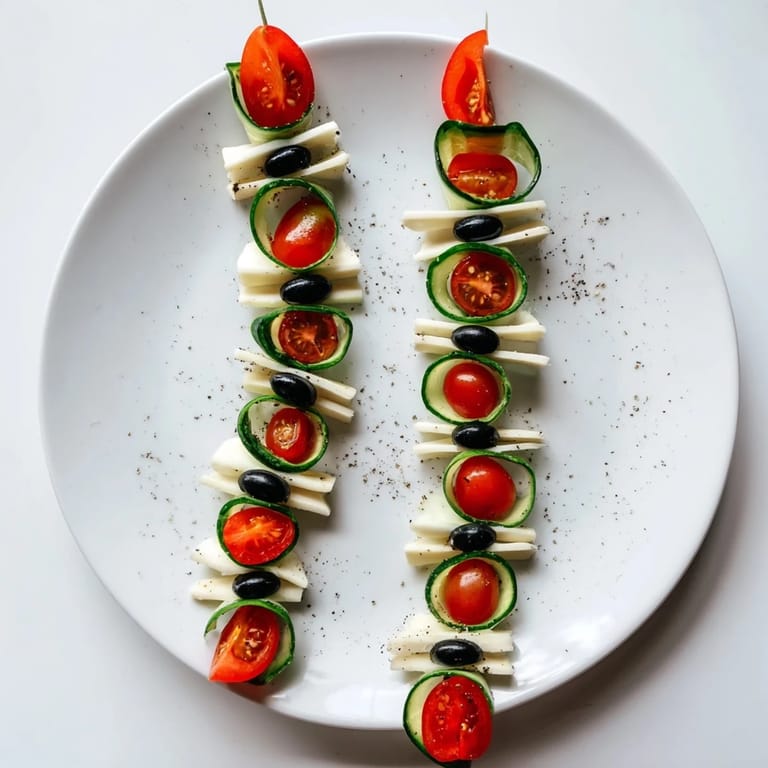 Save
Save My favorite memory is when my ten-year-old nephew came home from school and told his science teacher that he'd eaten DNA for an appetizer. The teacher didn't believe him until I sent her a photo. She used it in her next class to talk about how science exists everywhere, even in what we eat. That moment reminded me that the best recipes aren't just about flavor—they're about creating memories that linger.
Designing Your DNA: Color Theory on a Board
The secret to making this recipe visually stunning lies in understanding contrast. The olives and tomatoes work because they're opposites on the color wheel. Similarly, the pale mozzarella against the golden cheddar creates visual rhythm without being jarring. When you're choosing your ingredients, think about what colors will make each other sing. Dark basil leaves against bright peppers, pale cheese against deep olives—nature already knows how to create beautiful combinations. I've experimented with adding thin rings of red onion, yellow bell pepper, even white radish slices. Each one teaches me something new about how colors interact when you're not cooking them, just arranging them. This appetizer is less about precise technique and more about trusting your eye.
Adapting for Dietary Needs Without Losing the Magic
When my friend Emma went vegan, I was worried I'd lose this recipe. Then I discovered marinated tofu, and honestly? It's better than the salmon in some ways. The key is marinating it in a ginger-soy mixture for at least an hour so it soaks up flavor. For the cheese rungs, cashew-based cheese alternatives have come such a long way—they melt slightly in warmth just like real cheese, and they photograph beautifully. I've also discovered that using nutritional yeast mixed with a little oil creates these pale golden strands that look remarkably similar to real cheddar. The helix works just as powerfully with plant-based ingredients. In fact, it becomes even more interesting when people realize they're looking at chemistry that happens to be entirely vegan.
The Science of Serving and Pacing
Here's something I didn't expect when I created this dish: people eat it differently than other appetizers. With this helix, they pause. They take photos. They discuss it before eating. This actually works in your favor because it means the board stays fresh longer than if everyone dove in immediately. I've learned to use mini skewers tucked under the cheese rungs—they're not just for show, they actually keep everything in place if someone needs to move the board or if it's sitting in a spot with air circulation. The toothpicks also make eating more elegant; instead of people putting their fingers directly on the vegetables, they can spear what they want. It transforms this from casual appetizer into something that feels more refined, which is funny because it's really just arranged vegetables and cheese.
- Set the board on a sturdy, level surface away from direct heat or sunlight, which can wilt the basil and soften the cheese
- Position it at eye level if possible—people take better care with food they can see clearly, and it photographs infinitely better
- Keep extra ingredients prepped in the kitchen so you can refresh the board during longer parties without it looking picked over
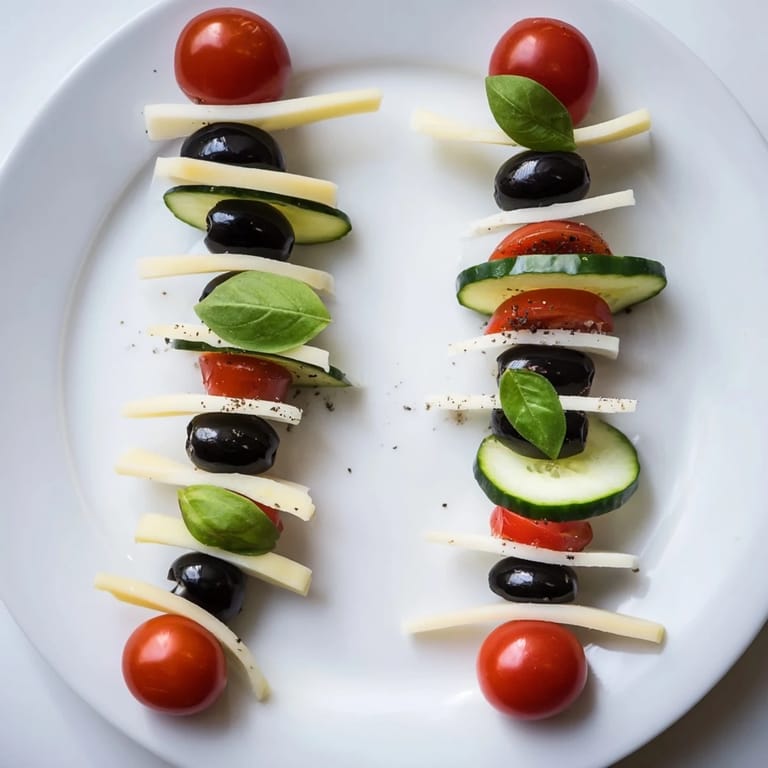 Save
Save This recipe taught me that food can be playful without being silly, clever without being pretentious. It's perfect for when you want to impress people but also remind them that the best moments in cooking happen when we stop taking ourselves so seriously. Make it your own, trust your instincts on colors, and watch your guests' faces light up when they realize they're eating edible science.
Recipe FAQs
- → What ingredients form the parallel lines?
The lines are created using black olives, cherry tomatoes, cucumber, roasted red peppers, and optional smoked salmon or marinated tofu strips for variation.
- → How do the cheese rungs contribute to the dish?
Thin strips or cubes of mozzarella and cheddar connect the parallel lines, mimicking the double helix’s base pairs and adding creamy textures.
- → Can this appetizer be adapted for vegan diets?
Yes, replacing dairy cheeses with plant-based alternatives and smoked salmon with marinated tofu creates a vegan-friendly version.
- → What is the best way to serve this appetizer?
Arrange the components on a large serving board, lightly drizzle with olive oil, season with fresh black pepper, and offer crackers or gluten-free options on the side.
- → Are there recommended pairings for this dish?
It pairs well with crisp white wines or sparkling water with lemon, enhancing its fresh and vibrant flavors.
- → How long does preparation take?
Preparation takes about 25 minutes, with no cooking required, making it a quick and elegant option for gatherings.