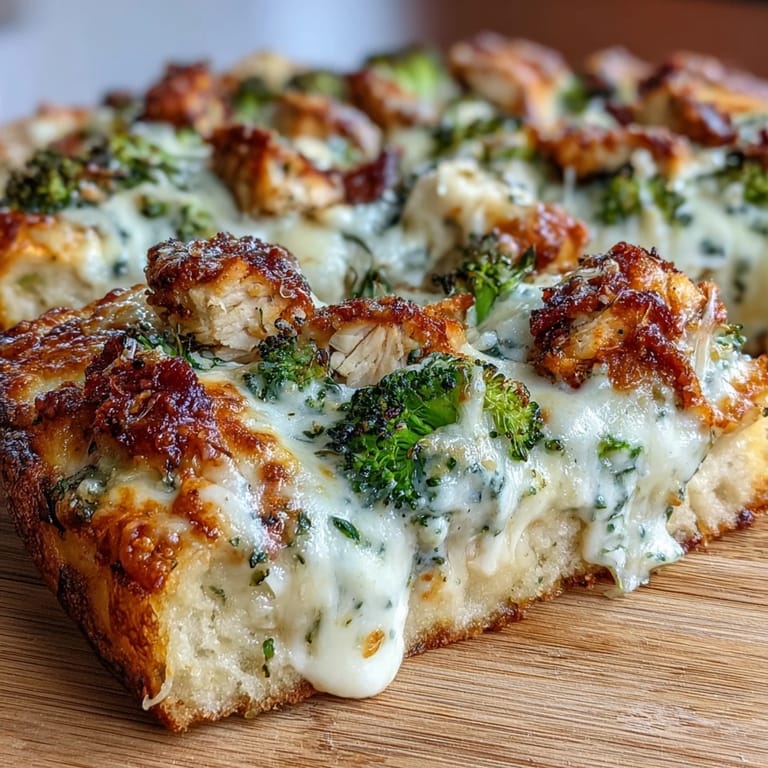
 Save
Save My neighbor showed up one weeknight with a rotisserie chicken and asked if I could turn it into something memorable for her family. I'd never made a white sauce pizza before, but there was something about the challenge that felt right—creamy, garlicky, completely different from the red sauce pizzas I'd been making for years. The moment that sauce came together and I caught its rich aroma, I knew this would become a regular in my rotation.
I still remember making this for my brother's unexpected dinner party when he texted me an hour before guests arrived. My hands were shaking a little as I whisked that sauce, worried the milk would break or the garlic would burn, but something about the quiet focus of cooking under pressure made it perfect. When everyone came back for seconds, my brother caught my eye and smiled—that's when I realized this pizza had become something I'd make again and again.
Ingredients
- Pizza dough (about 300 g or 10 oz): Use store-bought for speed or homemade if you want that slightly chewy texture—either way works beautifully here.
- Unsalted butter (2 tablespoons): This is the foundation of your sauce, so don't skip it or use margarine; the flavor difference matters.
- Garlic cloves (2, minced): Fresh garlic is non-negotiable—the 30 seconds in hot butter transforms it from sharp to sweet and aromatic.
- All-purpose flour (2 tablespoons): This thickens your sauce into something creamy and coating rather than thin and runny.
- Whole milk (1 cup or 240 ml): Cold milk whisked in gradually prevents lumps, so resist the urge to dump it all in at once.
- Grated Parmesan cheese (1/2 cup or 50 g): Freshly grated tastes sharper and melts more evenly than pre-grated, though pre-grated works in a pinch.
- Salt and freshly ground black pepper: Season to taste after the sauce is done cooking, as Parmesan brings its own saltiness.
- Cooked chicken breast (1 cup or 125 g), diced or shredded: Rotisserie chicken saves time and adds moisture—tear it apart rather than cutting for better texture.
- Broccoli florets (1 cup or 100 g), blanched and chopped: A quick 2-minute blanch before chopping keeps them crisp on the pizza instead of turning mushy.
- Shredded mozzarella cheese (1 1/2 cups or 150 g): Low-moisture mozzarella melts more evenly than fresh; don't use fresh buffalo mozzarella or it'll turn into rubber.
- Olive oil (1 tablespoon): A light drizzle before baking helps the crust crisp up and adds subtle richness.
- Crushed red pepper flakes and fresh parsley (optional): Add heat and color at the end—they're small touches that make the pizza feel finished.
Tired of Takeout? 🥡
Get 10 meals you can make faster than delivery arrives. Seriously.
One email. No spam. Unsubscribe anytime.
Instructions
- Heat your oven and prepare:
- Preheat to 475°F (245°C) and slide a pizza stone in if you have one—it will help your crust bake evenly. This only takes about 10 minutes, so start here and work on your dough while it warms up.
- Shape and place your dough:
- On a lightly floured surface, gently stretch or roll your dough into a 12-inch circle, working from the center outward. Transfer it to a parchment-lined baking sheet or pizza peel dusted with cornmeal so it won't stick.
- Build your creamy white sauce:
- In a small saucepan over medium heat, melt the butter and immediately add your minced garlic—30 seconds is enough for it to become fragrant without browning. Stir in the flour until it forms a paste, cook for 1 minute while stirring, then slowly whisk in the cold milk while keeping the heat steady, whisking constantly until the sauce thickens into something smooth and coating, about 2-3 minutes total.
- Season and cool the sauce:
- Pull the pan off the heat and stir in your Parmesan, salt, and pepper—taste it and adjust if needed. Let it cool for just a minute so it's still spreadable but not piping hot.
- Spread sauce and add toppings:
- Pour that creamy sauce onto your dough and spread it evenly with a spoon or spatula, leaving a half-inch border around the edges for the crust. Layer your chicken and chopped broccoli evenly, then top with shredded mozzarella.
- Final touches before baking:
- Drizzle with olive oil and scatter red pepper flakes if you like a little heat. Slide it into your preheated oven.
- Bake until golden and bubbly:
- Bake for 12-15 minutes, watching for the crust to turn golden and the cheese to bubble at the edges. If your oven runs hot, check at 12 minutes—better slightly underbaked than charred.
- Rest, garnish, and serve:
- Let it cool for 2-3 minutes so the cheese sets just enough to slice cleanly. Scatter fresh parsley on top if using, slice with a pizza cutter or sharp knife, and serve while the cheese is still warm and melting.
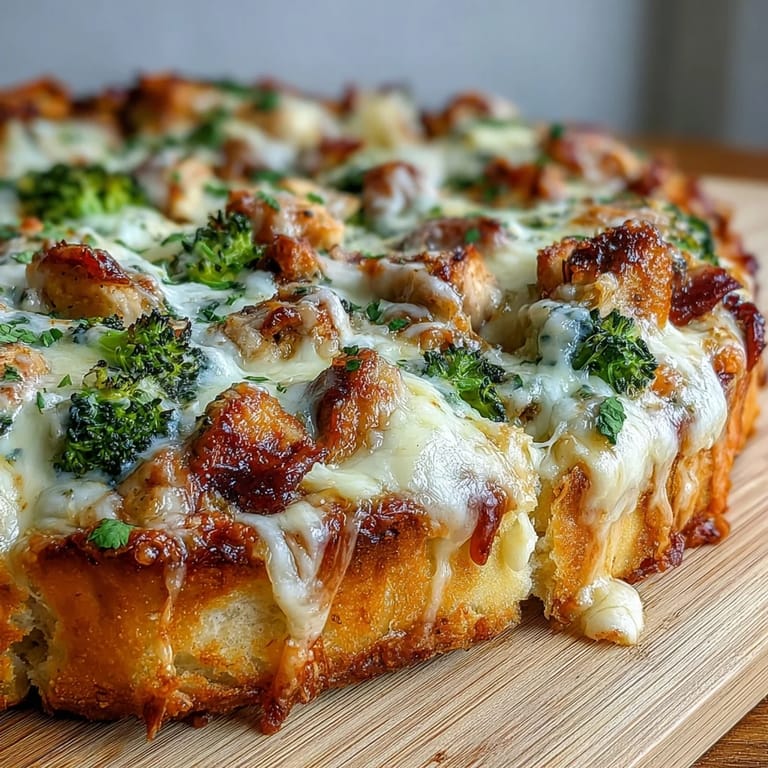 Save
Save What struck me most was how my picky eater—the one who usually picks cheese off pizza—ate two slices without complaint. That white sauce must have tasted fancy enough to bypass all her usual protests, and watching her enjoy something I made felt like winning.
The Secret Behind the Sauce
A proper white sauce, or béchamel, is simpler than it sounds but demands respect. The three-step process of fat, flour, then milk is one of cooking's most reliable formulas, and once you understand why each step matters, you'll use it everywhere—on vegetables, in lasagna, under fish. The key is temperature control and patience; rushing any part shows up as lumps or a thin, watery sauce that slides off the pizza.
Why Broccoli Works on Pizza
Most people think of pizza as a vehicle for meat and cheese, but broccoli brings a slight bitterness and tender crunch that balances the richness of the cream sauce. It's one of those ingredient combinations that shouldn't work but absolutely does—the florets soften in the oven while holding enough structure to add texture, and the white sauce brings everything together so seamlessly you forget it's even vegetables.
Custom Variations That Actually Work
Once you nail this version, you'll start seeing possibilities everywhere. Caramelized onions instead of chicken, roasted mushrooms mixed with the broccoli, or even sun-dried tomatoes stirred into the sauce all feel natural and right. The beauty of a white sauce base is its neutrality—it welcomes almost any topping without fighting for attention.
- Try a squeeze of lemon juice into your finished sauce for brightness that cuts through the richness.
- Swap half the mozzarella for sharp provolone if you want a more complex cheese flavor.
- Add a small pinch of nutmeg to your sauce—it's barely noticeable but makes everything taste more refined.
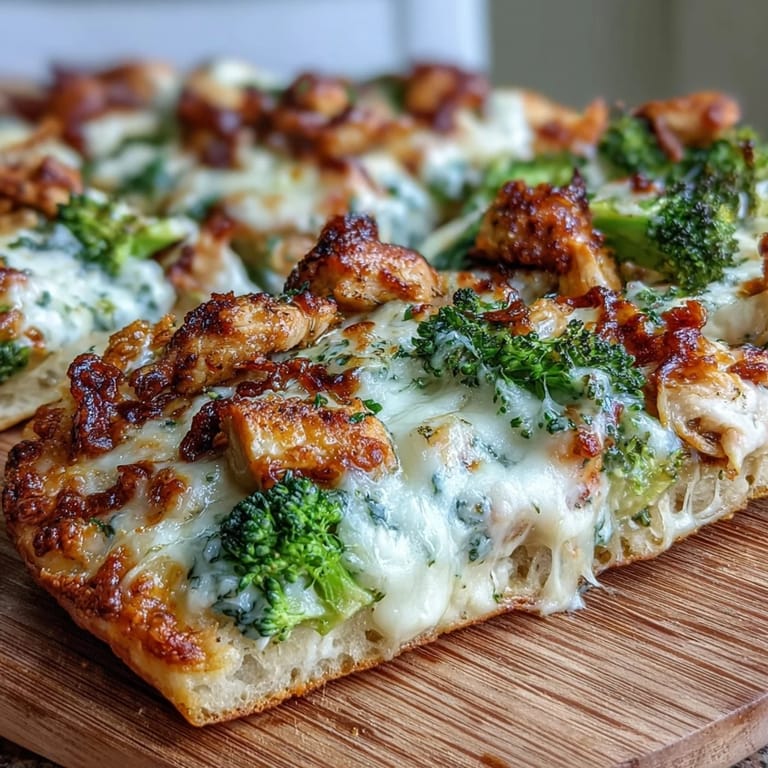 Save
Save This pizza became my go-to when I need to impress without stress—it looks elegant but tastes like comfort, and somehow that combination makes people happy. Make it once and you'll understand why it's worth the small effort.
Recipe FAQs
- → Can I make the white sauce ahead of time?
Yes, prepare the garlic-Parmesan sauce up to 2 days in advance and store it in an airtight container in the refrigerator. Reheat gently on the stove before spreading on the dough.
- → What's the best way to blanch the broccoli?
Boil water in a pot, add broccoli florets for 2-3 minutes until bright green, then immediately transfer to an ice bath to stop cooking. Drain thoroughly before topping the pizza.
- → Can I use pre-cooked rotisserie chicken?
Absolutely. Rotisserie chicken works perfectly and saves time. Just shred or dice about 1 cup of meat, removing skin and bones. It's already seasoned, which adds extra flavor.
- → How do I prevent a soggy crust?
Preheat your oven to 475°F and use a pizza stone if available. Blot blanched broccoli dry with paper towels before topping. Don't overload with sauce, and bake on the lower rack initially.
- → Can I make this vegetarian?
Simply omit the chicken and add more vegetables like mushrooms, bell peppers, or spinach. You could also add artichoke hearts or sun-dried tomatoes for extra flavor and texture.
- → What wine pairs well with this pizza?
A crisp Sauvignon Blanc cuts through the creamy sauce beautifully. For beer lovers, a light lager or pilsner works well. Red wine drinkers might enjoy a light Pinot Noir.