 Save
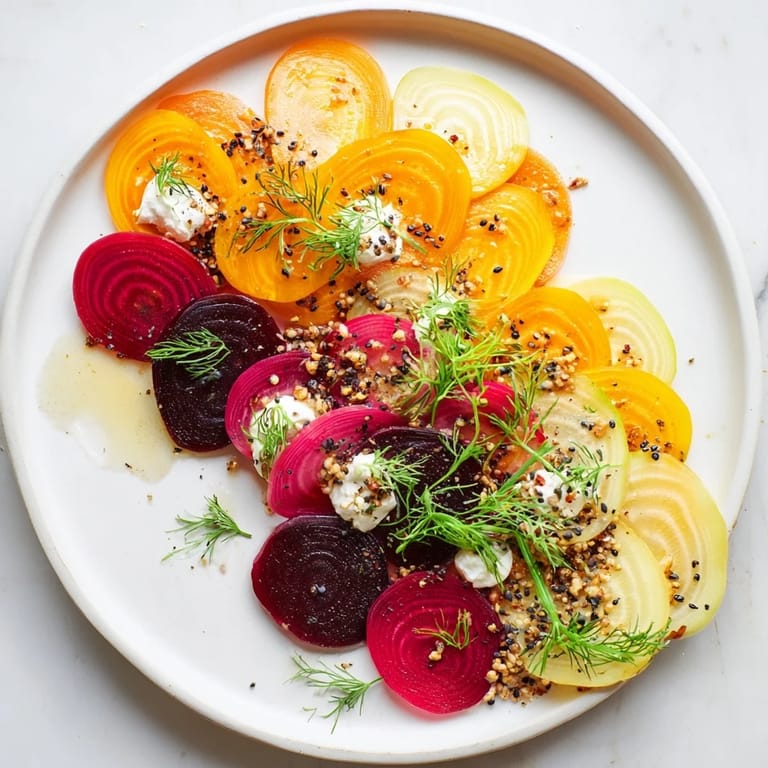
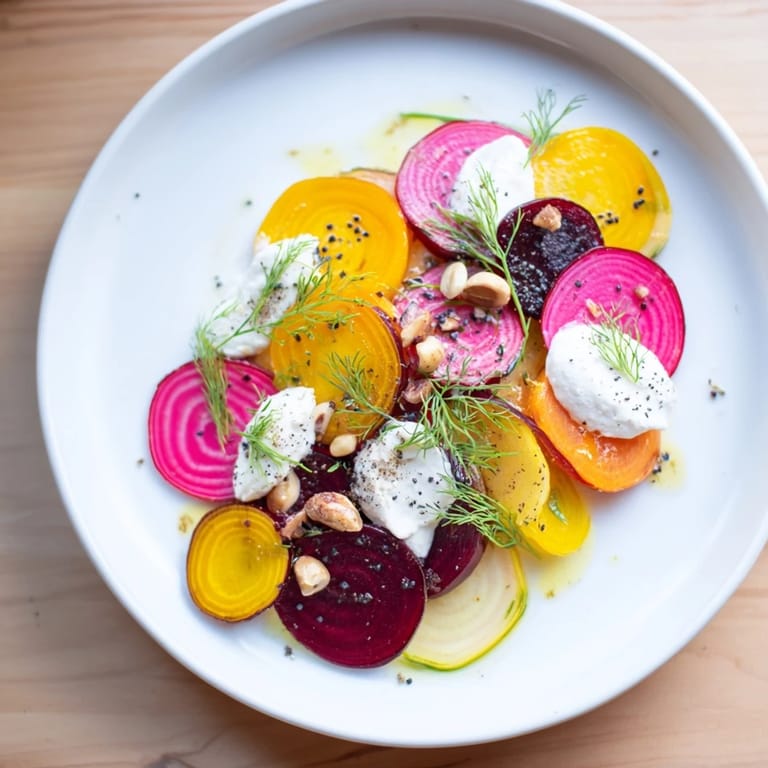
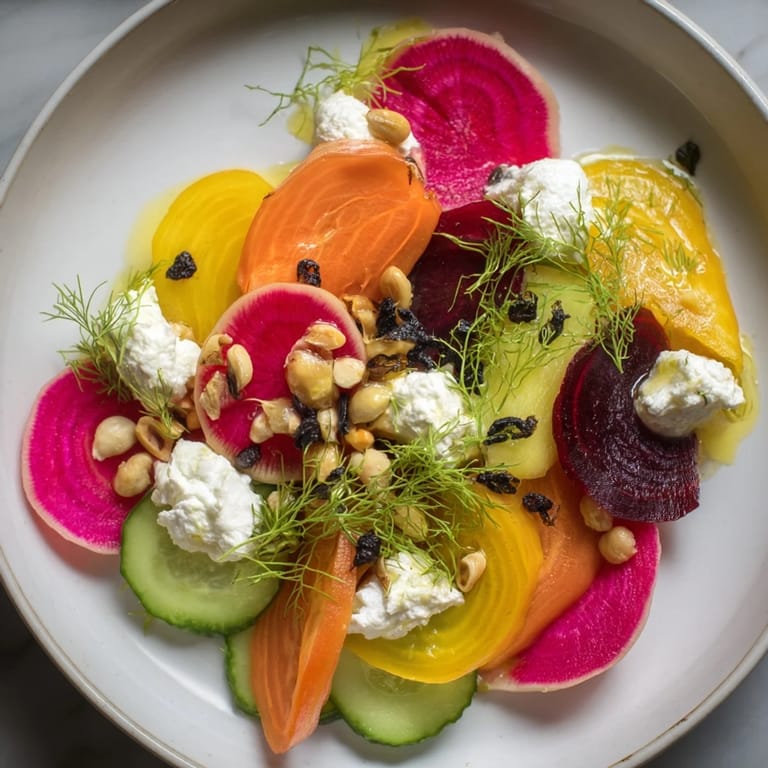
Save I'll never forget the moment I first tried to plate a dish like a painter might approach a canvas. It was at a small dinner party when I decided to stop thinking about food as something to arrange neatly and start thinking about it as visual art. That evening, watching my guests lean in closer to admire the careful gradient of colors and the intentional blur of vegetables fading across the plate, something clicked. Food became storytelling, and this kinetic motion blur dish became my favorite way to tell that story.
I remember making this for the first time when my sister came home from traveling through Europe, and she kept talking about how modern restaurants were plating food like artists. I wanted to show her that I could bring that same sense of sophistication to my own table, and the moment she saw this arranged on the plate, her eyes lit up. We spent more time photographing it than eating it, but that's exactly how I knew it worked.
Ingredients
- Golden beet: The sweetness of golden beets is milder than red ones, so they become the gentle anchor in your color story. I learned to slice them thin enough to see light through them, which makes the arrangement feel almost ethereal.
- Red beet: This is your deepest color, your drama. Use it sparingly in the dense cluster where you want visual weight.
- Watermelon radish: The secret weapon of this dish. When you slice it, those interior rings create natural concentric circles that feel intentional and beautiful. It's genuinely magical.
- Persian cucumber: The pale green provides visual contrast and its delicate crunch keeps each bite interesting. Regular cucumbers work, but Persians are shorter and less watery.
- Baby carrots: Bias-sliced, they become little ovals that feel almost sculptural. The orange catches light beautifully against the paler vegetables.
- Creamy goat cheese: Room temperature is crucial. Cold goat cheese becomes hard to dollop, and at room temperature it stays creamy and melts slightly into the vegetables. I bring mine out 30 minutes before plating.
- Toasted hazelnuts: The toasting step isn't optional. Raw hazelnuts taste flat, but toasting brings out a warmth that grounds the whole dish. I rough-chop mine so you get distinct nutty bites.
- Black sesame seeds: These are tiny flavor and color powerhouses. They add an earthy, almost nutty note that surprises people.
- Microgreens: Arugula or radish varieties have the peppery bite that makes sense here. They're delicate enough to feel refined but strong enough in flavor to matter.
- Fresh dill: Just the fronds, not the woody stems. Dill has this brightness that lifts everything around it.
- Extra virgin olive oil: This dressing needs good oil because it's doing half the flavor work. Don't use anything but excellent olive oil here.
- Fresh lemon juice: Bottled will make you regret this dish. Fresh lemon brings acidity and brightness that feels like sunshine on the plate.
- Honey: Just a teaspoon, but it balances the lemon's sharpness and pulls all the vegetable flavors forward.
Tired of Takeout? 🥡
Get 10 meals you can make faster than delivery arrives. Seriously.
One email. No spam. Unsubscribe anytime.
Instructions
- Make your dressing first and breathe:
- Whisk together your olive oil, lemon juice, honey, salt, and pepper in a small bowl. Taste it as you go, adjusting until it feels bright and balanced. This is your flavor foundation, so get it right before you start arranging anything. Set it aside and take a breath because the next part is where the magic happens.
- Create your dense cluster:
- On your platter or plate, start overlapping your vegetable slices tightly on one side. This doesn't need to be perfect. Think of it more like shuffling cards where each slice leans slightly on the next one, creating layers and visual depth. Pack them closer than you think you need to. This is where your color intensity lives.
- Fade into the distance:
- As you move across the plate away from your dense cluster, gradually space the vegetable slices further apart. This transition is what creates that motion blur effect. It should feel intentional but organic, like the vegetables are slowly dispersing into air. There's no single right way to do this, which is the most freeing part.
- Dot your creamy moments:
- Using a small spoon or your fingers, add small dollops of goat cheese into the dense vegetable cluster. These should feel generous and abundant where the vegetables are packed, then sparse as you move toward the edges. The goat cheese anchors the arrangement and adds creaminess that balances all the crunch.
- Add texture with nuts and seeds:
- Scatter your toasted hazelnuts and black sesame seeds with the same intentionality as your vegetables. More in the dense area, fading toward the edges. This is where you're adding crunch and depth of flavor.
- Crown with greens and herbs:
- Finish with your microgreens and dill fronds, again concentrating them where the other elements are dense and letting them thin out toward the edge. These delicate additions are your final flourish and should feel like an afterthought even though you're being very intentional.
- Drizzle and finish:
- Pour your dressing across the platter with a light hand, using more on the dense side and letting it be sparse as you move to the edges. This final step brings everything together and adds gloss to your creation. Serve immediately while everything is crisp and your artwork is pristine.
 Save
Save There's a moment during every dinner party when someone stops mid-conversation to really look at their plate, and their expression shifts from curiosity to genuine delight. That moment is what this dish creates. It's food that asks to be noticed, to be appreciated, to be photographed before it's eaten. And somehow that makes it taste even better.
Choosing Your Vegetables
The beauty of this dish is that it's structured around visual contrast and the interplay of colors rather than rigid requirements. The vegetables I've listed here work beautifully together, but you're encouraged to think of this as a template rather than a prescription. In spring, I might use pink radishes and green garlic. In summer, I reach for heirloom tomato slices and purple-tinted microgreens. In fall, I've experimented with thinly sliced apple, roasted parsnips, and candied walnuts in place of hazelnuts. The key is to choose vegetables that have visual distinction from each other and that offer a range from mild to peppery or slightly sweet. Trust your eye to tell you what works.
The Science Behind the Arrangement
There's something deeply satisfying about how this dish engages your brain. When you see the kinetic blur effect, your eye naturally follows the motion from dense to sparse, which guides you through the plate even though the food isn't moving at all. It's the same visual principle used in manga and comic books to create a sense of speed. I learned this from watching a plating video from a modernist cooking demonstration, and it completely changed how I think about arranging food. The progression of elements becomes almost musical, with the dense area as the chorus and the sparse area as the fade-out. Every element serves both flavor and composition.
Wine Pairings and Serving Moments
I serve this as the opening act of a dinner party, the thing that sets the tone before anyone takes a bite. A crisp Sauvignon Blanc with its herbaceous notes plays beautifully off the dill and microgreens. A dry sparkling wine feels celebratory and its acidity cuts through the richness of the goat cheese. There's also something magical about serving this with a chilled dry Albariño if you're feeling adventurous. The key is choosing something that feels as carefully considered as the plate itself, because this dish deserves that level of attention from start to finish.
- If you're feeding a crowd, you can prep all your vegetable slices in advance and store them in separate containers with a damp paper towel to keep them fresh
- The dressing can be made hours ahead, but hold the final drizzle until just before serving
- Individual plating looks restaurant-quality, but a large shared platter creates a beautiful centerpiece moment that builds anticipation
 Save
Save Food is memory made visible, and this dish is proof of that. When you plate it with intention, you're not just feeding people, you're creating a moment they'll remember.