 Save
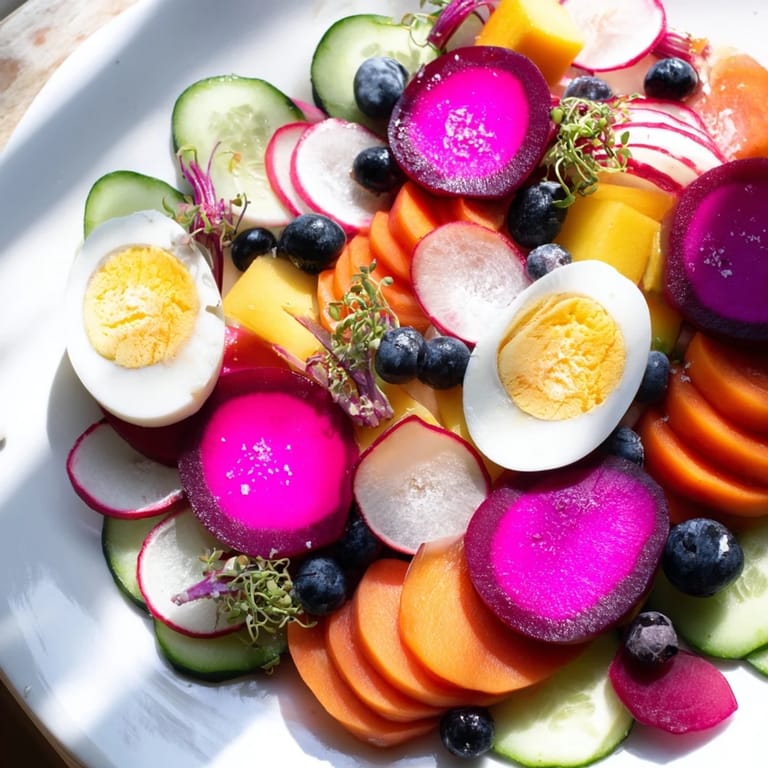
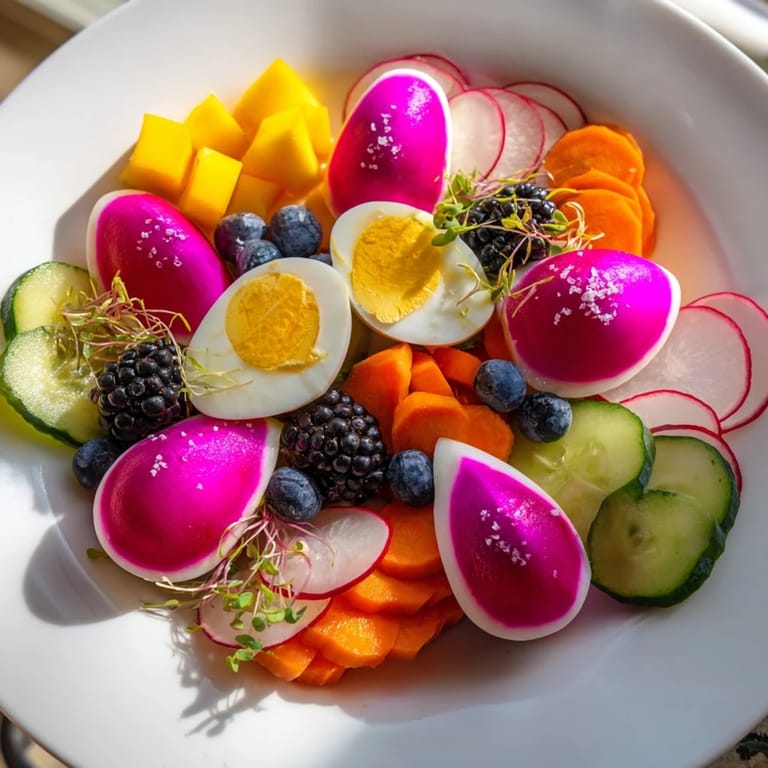
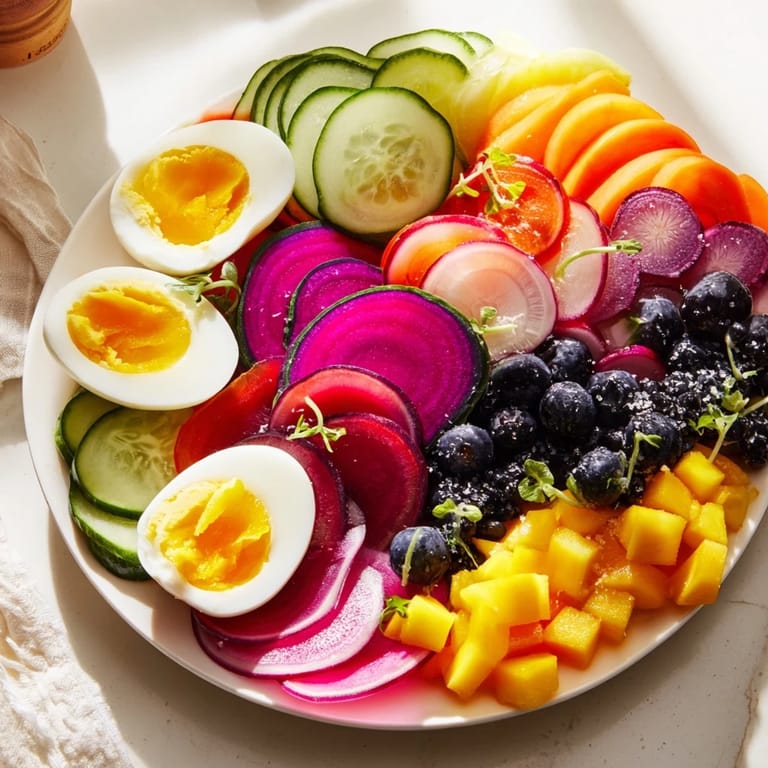
Save There's something about hosting dinner on a Saturday night when the energy feels electric, and you want everyone to walk in and go quiet for just a moment. That's when I started playing around with The Neon Night—this wild arrangement of pickles, beet-stained eggs, and jewel-toned fruits all spread across a black board like an edible landscape. A friend had brought a bottle of wine, another was telling stories, and I realized halfway through dinner prep that I didn't want just another cheese board. I wanted people to see color, taste tang and sweetness colliding, and feel like they'd stumbled into something unexpected.
I remember setting this board down in the middle of the table and watching my neighbor literally lean forward like she was looking at a painting instead of food. She grabbed one of those jewel-toned eggs first, then a handful of pickled carrots, and for a minute everyone just picked quietly, almost reverently, like we were tasting something sacred. That's when I knew this wasn't just a appetizer—it was theater.
Ingredients
- Mini cucumbers: These stay crisp in the pickling liquid way better than regular cucumber slices, and they're just the right bite-sized shape for a board.
- Rainbow carrots: Slice them on the bias so they catch the light—the visual impact matters here as much as the flavor.
- Radishes: Their natural peppery bite cuts through the sweetness of the fruits beautifully, and they hold their crunch longer than you'd expect.
- Red onion: Thin slices soften in the vinegar and lose their harshness, becoming almost mellow and sweet.
- White vinegar: Neutral enough to let the vegetables shine while keeping them crunchy and bright.
- Sugar and salt: Together they balance the sharp vinegar and create that addictive sweet-sour flavor.
- Mustard seeds and peppercorns: These float in the pickling liquid and add subtle spice notes that build as you eat.
- Eggs: Large ones are easier to halve or slice neatly on the board, and six is the magic number for visual balance.
- Beet: One medium beet gives you that gorgeous deep magenta color without overpowering the eggs.
- Apple cider vinegar: It has a slight sweetness that plays nicely with the beet.
- Fresh berries: Blueberries and blackberries stay firm and provide dark pops of color against the pickled pale vegetables.
- Tropical fruits: Kiwi, mango, and dragon fruit bring brightness and contrast—the dragon fruit especially looks otherworldly next to everything else.
- Microgreens and edible flowers: These are the flourish that transforms the board from appetizer to art installation.
- Flaky sea salt: It catches light and adds final texture across the whole arrangement.
Tired of Takeout? 🥡
Get 10 meals you can make faster than delivery arrives. Seriously.
One email. No spam. Unsubscribe anytime.
Instructions
- Build your pickling brine:
- Combine the vinegar, water, sugar, salt, mustard seeds, and peppercorns in a saucepan and bring to a gentle simmer. You'll smell the mustard seeds releasing their oils and the whole mixture will start to smell tangy and alive. Once the sugar and salt have completely dissolved, take it off heat and let it cool for a few minutes.
- Quick-pickle the vegetables:
- Pack your sliced cucumbers, carrots, radishes, and red onion into a heatproof container and carefully pour the still-warm pickling liquid over them. The vegetables will start to soften almost immediately. Let everything cool to room temperature, then cover and refrigerate for at least 2 hours—overnight is even better if you have the time, as the colors deepen and flavors meld.
- Hard-boil the eggs:
- Place eggs in a saucepan, cover generously with cold water, and bring to a rolling boil. Let them cook for 8 to 9 minutes depending on how soft you like the yolk. Immediately transfer them to an ice bath to stop the cooking—this makes them so much easier to peel and gives you that bright yellow center.
- Dye the eggs beet-magic:
- Once the eggs are cool and peeled, layer them with thinly sliced beet in a jar, then pour in the apple cider vinegar, water, sugar, and salt mixture. The eggs will start developing that deep maroon color right away, but let them sit in the fridge for at least 2 hours, or preferably overnight, so the color becomes rich and the flavor penetrates.
- Arrange your neon night:
- Start with your black serving board as your canvas. Begin by placing the halved or sliced beet-dyed eggs in small clusters—they're your jewels, so give them space. Distribute the pickled vegetables in groups, letting their different colors create rhythm across the board. Scatter the fresh fruits, mixing colors so a cluster of blueberries sits near the bright yellow kiwi, and the pink dragon fruit echoes near the beet-stained eggs.
- Final garnish and serve:
- Just before serving, scatter microgreens or edible flowers across the board in the empty spaces—let them fall naturally, not too arranged. Give everything a final sprinkle of flaky sea salt, which catches the light and ties all the colors together. Serve chilled, and watch everyone lean in.
 Save
Save One night, after everyone had left and I was clearing the board, I realized there were barely any pickled vegetables left but plenty of fruit. My partner said, 'That's because they wanted to taste the tang after the sweetness.' I'd never thought about it that way before—that a good board teaches people how to eat, guides them in a flavor journey without them even realizing it.
Making It Your Own
This recipe is genuinely a starting point, not a strict manual. I've experimented with turmeric-dyed pickling liquid (which turns vegetables a deep golden yellow) and once used purple cabbage to make an indigo-tinted brine. The framework stays the same—crisp, tangy pickled vegetables as your anchor and fresh fruit for brightness—but the specific vegetables and colors can shift based on what looks good at the market. Some seasons I add pickled green tomatoes, other times I'll throw in paper-thin slices of fennel because it tastes like anise and catches people off guard.
The Black Board Matters More Than You Think
I'll be honest: I didn't use a black board the first time and the whole thing felt flat. Then someone brought over a gorgeous dark slate board and suddenly the colors seemed to glow. It's the difference between a nice appetizer and something that feels deliberate and special. You don't need anything expensive—a black cutting board works, a dark piece of wood, even a large black plate if you're serving fewer people. The contrast does the work for you.
Timing and Strategy
The beauty of this dish is that the two big components—pickled vegetables and beet-dyed eggs—actually improve with time. Both are best made at least a day ahead, which means your actual party prep is just slicing fresh fruit and arranging everything on the board maybe an hour before guests arrive. This is not a stressful appetizer; it's almost the opposite. The only real time pressure is fruit oxidation, but even that's forgiving if you slice just a little early and keep things covered.
- Prepare pickles and beet eggs the day before or morning of your event.
- Fresh fruit gets sliced within an hour of serving to preserve color and texture.
- Everything sits in the fridge until the last moment, so nothing wilts or warms.
 Save
Save The Neon Night has become my go-to move when I want to feed people something that tastes good and feels like an event. It's the kind of dish that makes hosting feel effortless, even when you've put in the work.
Recipe FAQs
- → How long should the pickled vegetables marinate?
For optimal flavor, refrigerate the pickled vegetables for at least 2 hours, though overnight marinating enhances the taste and texture.
- → What gives the eggs their vibrant color?
The beet-dyed eggs absorb natural color from cooked beet slices soaked in a mixture of vinegar and water, resulting in a rich bright hue.
- → Can I use other fruits besides the listed ones?
Yes, feel free to substitute or add seasonal fruits to maintain the vibrant look and complementary flavors.
- → How do microgreens enhance this platter?
Microgreens add a fresh, delicate texture and a burst of green color, balancing the vibrant vegetables and fruits visually and flavor-wise.
- → Is it necessary to use a black serving board?
While not required, a black board provides a dramatic contrast that makes the bright colors of the ingredients stand out beautifully.