 Save
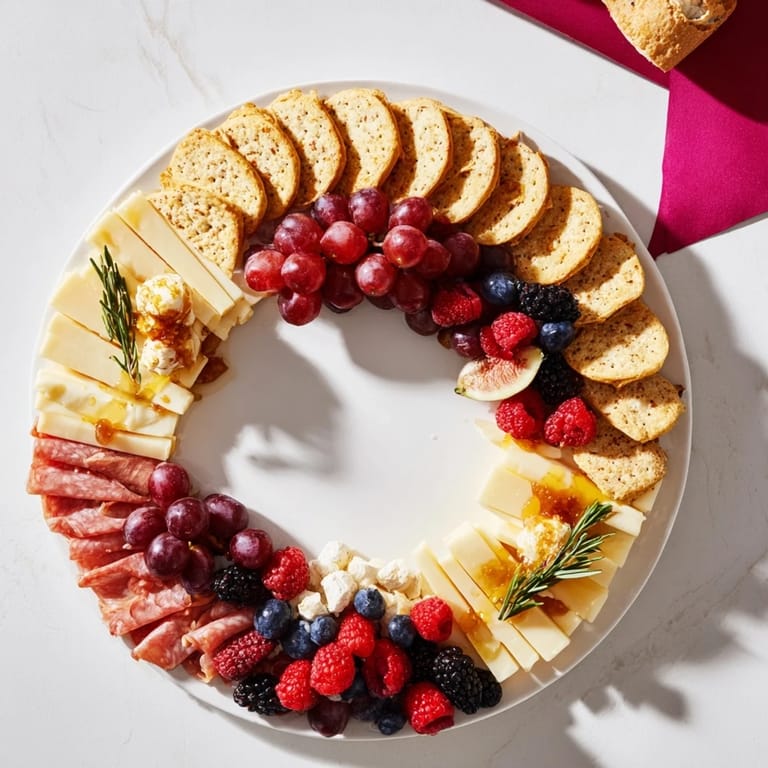
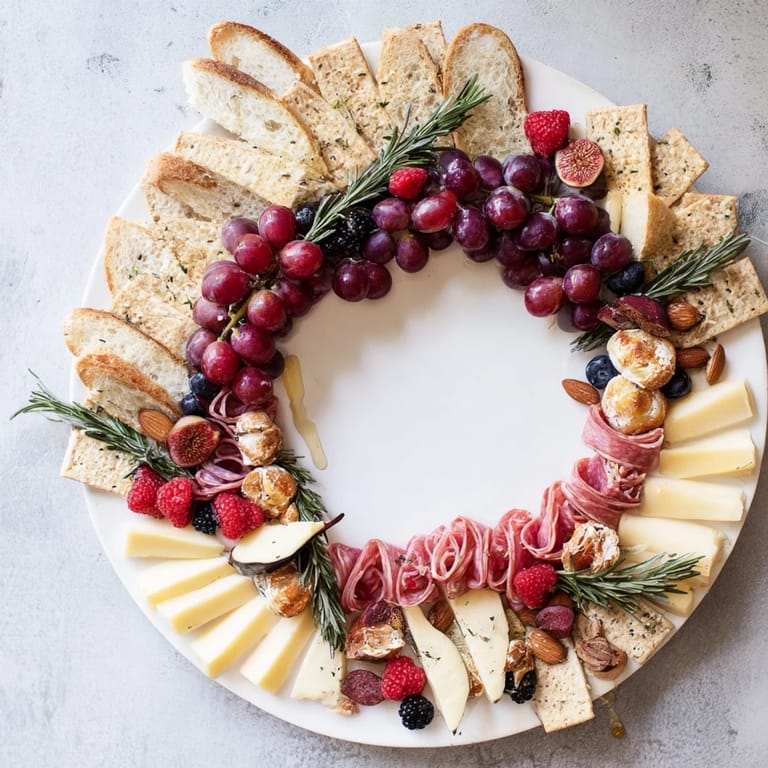
Save I'll never forget the dinner party where a friend brought this stunning circular platter, and everyone stopped mid-conversation just to admire it. The way the ingredients spiraled around like an ancient symbol, with the fanned crackers at the head meeting the grape clusters at the tail, felt like edible art. I was captivated enough to ask for the concept, and when she explained the Ouroboros Circle—that mythical serpent eating its own tail—I understood why it had drawn us all in. Since that evening, I've made it for every gathering, and it's become my signature way to say: this meal is going to be special.
The first time I made this for my book club, one of the members actually gasped when I carried it to the table. What struck me most wasn't the compliment, but how it sparked conversation—people were curious about the arrangement, asking why the grapes were opposite the crackers, debating whether it was meant to be broken or preserved. That's when I realized this platter does something beyond feeding people; it creates a moment of connection before anyone even eats.
Ingredients
- Brie, sliced (100 g): The soft, creamy foundation that anchors the cheese section. Slice it just before assembly so it stays pristine and doesn't dry out.
- Aged cheddar, cubed (100 g): Its sharpness provides contrast to the brie's richness. Cut into generous cubes—they're meant to be grabbed and savored whole.
- Goat cheese, rolled into balls (80 g): These little spheres are visual magic and a textural surprise. Roll them in advance and chill so they hold their shape beautifully around the circle.
- Prosciutto, thinly sliced (80 g): Optional, but it adds elegance and a whisper of salt. Fold each slice loosely as you place it—the ruffles catch the light.
- Salami, folded (80 g): Another optional element that brings depth. The way it folds creates natural visual rhythm in the arrangement.
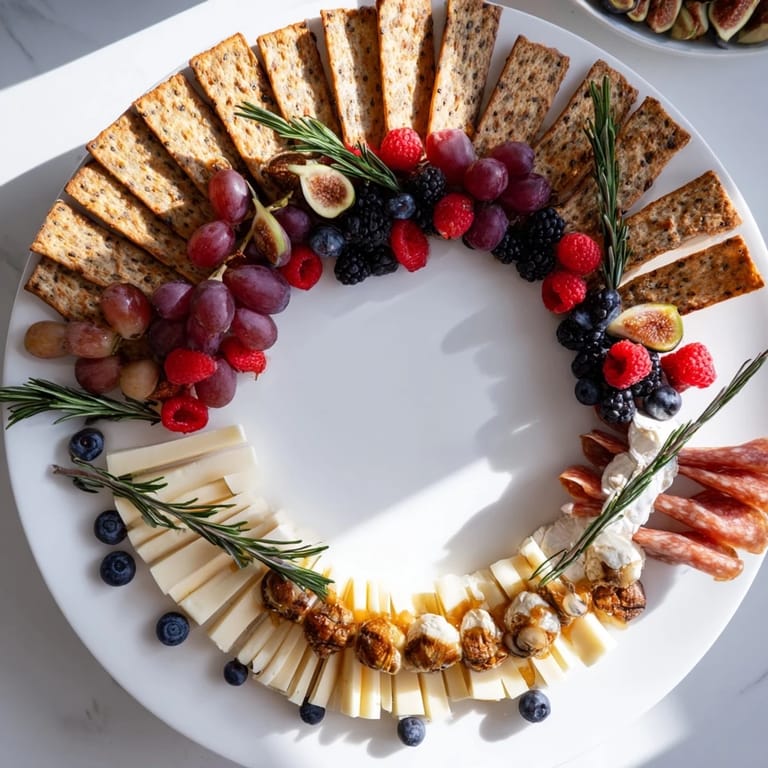
- Artisanal crackers, fanned (1 handful): These become the serpent's head, so choose ones with visual interest. Fan them at the beginning point of your circle for instant drama.
- Baguette slices (6 small): These bridge gaps and follow the curve naturally. Toast them lightly if you want crunch, or leave them soft for contrast.
- Red grapes in small clusters (1 cup): The tail of your serpent, arranged directly opposite the cracker head. Their round perfection closes the circle.
- Mixed berries—blueberries, raspberries, blackberries (1 cup): These fill the spaces with jewel tones and provide little flavor surprises throughout the ring.
- Sliced fig (optional): A subtle luxury that adds sophistication and a lovely earthy sweetness.
- Roasted almonds (1/3 cup): Their warmth complements the cool cheeses and adds satisfying crunch.
- Marcona almonds (1/3 cup): Softer and buttery compared to roasted almonds, they create variation in texture and are a nod to Spanish tradition.
- Honey (2 tbsp): Drizzled over the goat cheese, it's a small touch that transforms those balls into something unexpectedly luxurious. Don't skip this step.
- Fresh rosemary sprigs (1 tbsp): The finishing flourish that smells incredible and adds herbaceous elegance. Use whole sprigs for visual impact.
Tired of Takeout? 🥡
Get 10 meals you can make faster than delivery arrives. Seriously.
One email. No spam. Unsubscribe anytime.
Instructions
- Choose your foundation:
- Select a large round platter or wooden board—this is your canvas. Wooden rounds feel especially warm and intentional, and they photograph beautifully. Let it sit out for a moment so it's not cold when you begin.
- Create the serpent's head:
- At one point on your platter, fan out the artisanal crackers in an overlapping pattern, like feathers spreading outward. This is your visual anchor and the first thing people's eyes will land on. Make sure they're arranged with confidence and intention.
- Begin the circular journey:
- From the base of your cracker head, start placing the cheeses in alternating sections as you move clockwise around the circle. Picture yourself drawing a line with color and texture—brie here, cheddar there, goat cheese balls creating little creamy moments. Leave gentle space between sections; the platter showing through is part of the design.
- Add the meat elements:
- If you're including prosciutto and salami, tuck them between the cheeses with loose, natural folds. They should feel casually elegant, not stiff or overwrought. The ruffles are your friends here.
- Curve the baguette around the ring:
- Take those six baguette slices and position them along the curve, creating a bread pathway that guides the eye around the circle. They'll fill gaps and add structural continuity.
- Create the tail:
- When you reach the point directly opposite your cracker head, place the red grape clusters there. These are the serpent's tail, the point where the circle could theoretically close. Arrange them with the same intentionality you used for the head.
- Fill with jewels and texture:
- Now comes the intuitive part—scatter the mixed berries, almonds, and fig slices into the remaining spaces. Think of it as adding color and dimension. The blueberries and blackberries create pockets of deep color, while raspberries add brightness. Let your eye guide you; if it looks balanced, it is.
- Add the finishing magic:
- Drizzle the honey directly over those goat cheese balls—you want it visible and glossy. Then sprinkle the fresh rosemary sprigs across the arrangement, letting a few rest directly on the cheese. This adds fragrance and a final touch of intentional beauty.
- Complete the circle:
- Step back and look at your creation. The cracker head and grape tail should feel like they're meeting, creating that unbroken ring. If there are any gaps that bother you, add one more cluster of berries or a handful of nuts. This is when you know it's ready.
- Present with presence:
- Bring it to your table with intention and let people admire it before they dive in. Watching them appreciate the composition before breaking it apart makes the effort feel like a gift. Serve immediately while everything is fresh and perfect.
 Save
Save At my partner's birthday dinner, someone asked why I'd chosen this particular platter design instead of the usual scattered board. I found myself talking about cycles and continuity, about how food brings us back to the same table again and again, and how this serpent eating its tail felt like a promise that we'd gather like this many more times. The table got quiet for a moment, and then everyone smiled and reached in. That's when I knew this wasn't just about presentation—it was about meaning.
The Art of Visual Arrangement
Building a platter is honestly a lot like painting or choreography. You're thinking about color flow—how the reds of the brie next to the deep purple of the grapes create visual rhythm, how the cream-colored goat cheese balls offer breathing room for the eye. The crackers being fanned creates movement, suggesting that energy flowing around the circle. When people see it, they're not just looking at food; they're experiencing the care you took to arrange it thoughtfully. The empty spaces are just as important as the full ones—they prevent the whole thing from feeling chaotic and let each ingredient shine.
Customization and Seasonal Play
This recipe is genuinely a template, not a dictation. In summer, I swap the mixed berries for fresh stone fruits and add dried apricots for visual depth. In fall, I've added sliced pears, candied walnuts, and tiny portions of fig jam. In winter, pomegranate seeds replace some of the berries for that festive jewel-box quality. The principle stays the same—alternating colors, textures, and densities around the circle—but your interpretation makes it personally yours. That's the beauty of this design; it's flexible enough to celebrate what's available right now.
Making It Work for Your Guests
Whether you're feeding vegetarians, vegan guests, or people with nut allergies, this platter adapts gracefully. Remove the meats and you've got something elegant for your plant-based friends. Swap the traditional cheeses for cashew-based alternatives and suddenly it's vegan-friendly. Keep the nuts on one section so people with allergies know exactly where to avoid. The circular design is also forgiving—if someone needs gluten-free, they skip the crackers and baguette without missing the entire experience. The key is being thoughtful about these accommodations, maybe even labeling a small herb sprig next to the honey or nuts so people feel confident eating.
- Consider doing a completely plant-based version with vegan cheeses, extra nuts, and dried fruits for better texture contrast.
- Always have a separate small board nearby with allergen information clearly marked if any guests have concerns.
- Prep duplicates of any expensive or special ingredients separately so you're not stressed about running out of the visual anchor pieces.
 Save
Save Every time I make this, I'm reminded that cooking isn't just about sustenance—it's about creating moments people will remember. This platter does that without requiring you to spend hours at the stove. Bring it out with confidence and watch your table transform.
Recipe FAQs
- → What cheeses work best for the platter?
Brie, aged cheddar, and goat cheese offer a balanced mix of creamy, sharp, and tangy flavors perfect for the presentation.
- → Can I omit the meats for a vegetarian option?
Yes, simply exclude prosciutto and salami to keep the platter vegetarian-friendly without sacrificing taste.
- → How should the crackers be arranged?
Fan artisanal crackers at one point of the circle to create the 'head,' forming a visual starting spot on the platter.
- → Are there any suggestions for fruit substitutions?
Seasonal fruits like figs, berries, or grapes can be swapped depending on availability and preference.
- → What is the purpose of the honey and rosemary?
The honey drizzled over goat cheese adds sweetness, while fresh rosemary sprigs contribute an aromatic herbaceous note.
- → How should I serve the platter?
Present immediately, encouraging guests to break the circle as they enjoy, allowing easy access to each component.