 Save
Save The first time I made this, I wasn't actually trying to impress anyone—I was just procrastinating on dinner prep, scrolling through a platter of cured meats and thinking about origami. Something clicked: what if I folded the prosciutto like I was creasing paper, what if the crackers became wings? Twenty minutes later, my kitchen looked like a small art installation, and suddenly I had created something that felt too beautiful to eat. That's when I realized the real magic of this dish: it's the moment your guests realize something this stunning came from your own hands.
I remember bringing this to a holiday gathering where everyone arrived with store-bought platters, and watching the room go quiet when I set it down was genuinely humbling. One guest asked if I'd taken a plating class, which made me laugh because honestly, it started as kitchen doodling. That evening taught me that sometimes the most impressive things we make aren't complicated—they're just unexpected.
Ingredients
- Prosciutto (100 g, thinly sliced): The delicate backbone of your crane—it holds folds beautifully and brings that salty, refined edge that makes everything taste more intentional.
- Smoked turkey breast (100 g, thinly sliced): Lighter and subtly smoky, it creates visual contrast when layered and adds a gentler flavor note between the richer bresaola and prosciutto.
- Bresaola or pastrami (80 g, thinly sliced): The darkest player—it defines the wing silhouette and brings an earthy depth that grounds the whole composition.
- Whole-grain triangular crackers (16 pieces, 5 cm each side): Your structural foundation; whole grain keeps them sturdy enough to support the meat without tasting bland.
- Black sesame or poppy seed crackers (8 triangular pieces): The accent crackers that add visual drama and a subtle nuttiness that echoes the sesame seeds you'll sprinkle at the end.
- Chives (1 small bunch): Delicate and green, they become your tail feathers with a whisper of onion flavor that won't overpower the delicate meats.
- Carrot (1 small, peeled): The peeler transforms it into gossamer ribbons—use these for the beak and legs, thin enough that they curl slightly and feel almost sculptural.
- Cream cheese (2 tbsp): Your adhesive and secret weapon; a tiny dab holds everything in place while adding a creamy element that bridges all the flavors.
- Black sesame seeds (1 tbsp): These become the eye and scattered texture—they're less common than you'd think, which makes them feel luxurious and intentional.
Tired of Takeout? 🥡
Get 10 meals you can make faster than delivery arrives. Seriously.
One email. No spam. Unsubscribe anytime.
Instructions
- Prepare your carrot ribbons:
- Run your vegetable peeler down the carrot lengthwise, creating thin, flexible strips that feel almost like tissue paper. Cut a few into narrow matchsticks for the beak and legs—you want them delicate enough to bend slightly.
- Fold the body into being:
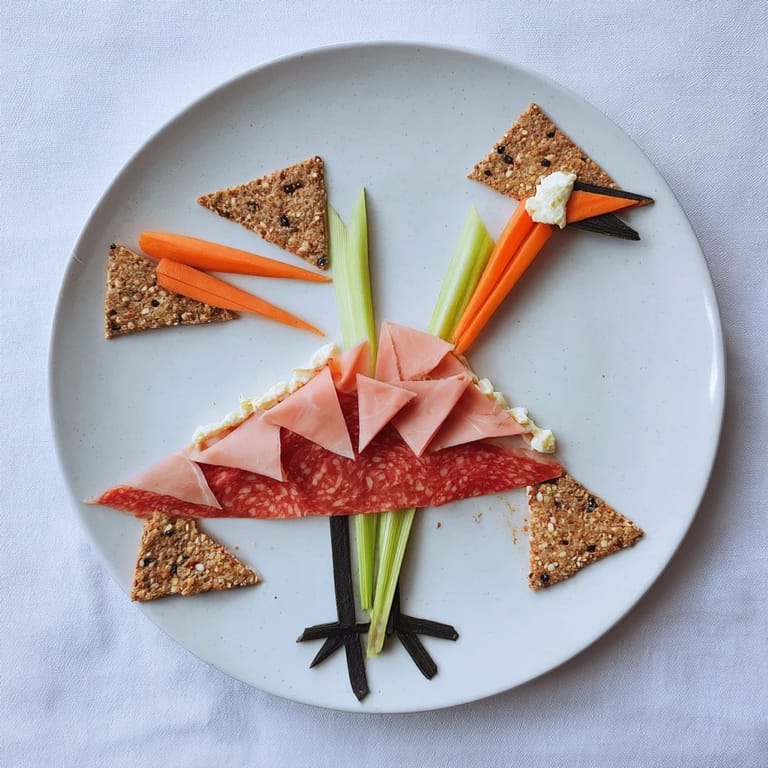
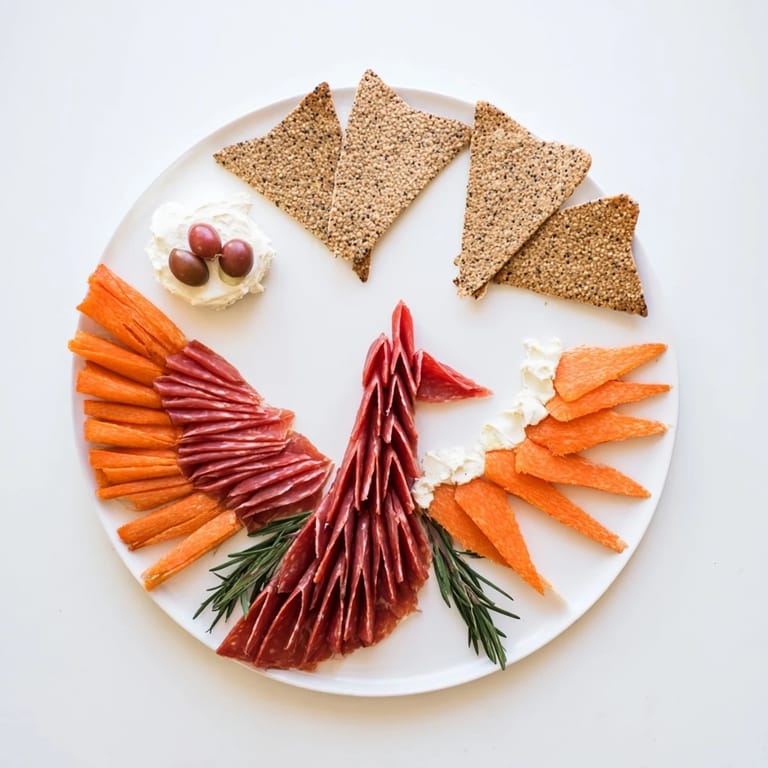
- Take a slice of prosciutto and fold it into a sharp triangle, creasing it firmly so it holds its shape. Layer it with a slice of turkey, folding that the same way, building up three-dimensional depth. This is where your crane starts to feel real rather than flat—you're not just arranging ingredients, you're sculpting.
- Shape the wings:
- Each slice of bresaola becomes a triangle, folded with intention. Arrange them in an upward, fanned motion to suggest wings catching air. Step back and look—this is where the magic starts showing.
- Set your foundation:
- Place triangular crackers beneath and alongside your meat layers, following the imaginary lines of the crane's body and wings. Think of them as the negative space that makes the shape readable—without them, it's just folded meat; with them, it becomes a bird.
- Attach the beak and legs:
- Use a small dab of cream cheese to anchor your carrot strips where the head would be (beak) and at the base (legs). The cream cheese acts like glue without looking like glue—it's pale enough to feel intentional.
- Layer the finishing touches:
- Arrange chives across the wings and tail area for delicate detail. Sprinkle black sesame seeds where the eye should go and scattered across the wing area for texture and depth. Stand back—you've just created art.
- Serve or hold:
- This is best eaten within an hour of assembly, though you can cover it loosely with plastic wrap and refrigerate for up to an hour if needed. The crackers stay crispest when they meet the plate just before eating.
 Save
Save There's a moment that happens with this dish—usually about halfway through assembling it—where you stop thinking of it as an appetizer and start seeing it as something you want to preserve. I found myself taking photos not because I was vain, but because I couldn't quite believe I'd made something that felt like it belonged in a gallery rather than on a kitchen counter. That shift, from mechanics to meaning, is what makes this dish stick with people.
The Art of Thoughtful Plating
This dish taught me something unexpected about cooking: the most impressive things often require no heat, just intention. It's not about technical skill or complicated techniques—it's about the willingness to spend twenty minutes folding instead of rushing. That mindfulness carries through to the plate, and guests feel it. There's something about food that asks for your attention that makes people pay attention in return.
Playing with Substitutions
Once you understand the structure, you can play with it endlessly. Smoked salmon instead of prosciutto brings an entirely different elegance—rosier, more delicate. Tofu slices (pressed and lightly pan-crisped) create an entirely vegetarian version that's somehow even more striking visually. I've made versions with herb-crusted crackers, versions with thinly sliced beets for color, even one experimental version with smoked duck that nobody let me forget about. The point is that once you understand that this is a platform for flavors and colors you love, you stop following the recipe and start creating.
Building Confidence with Folding
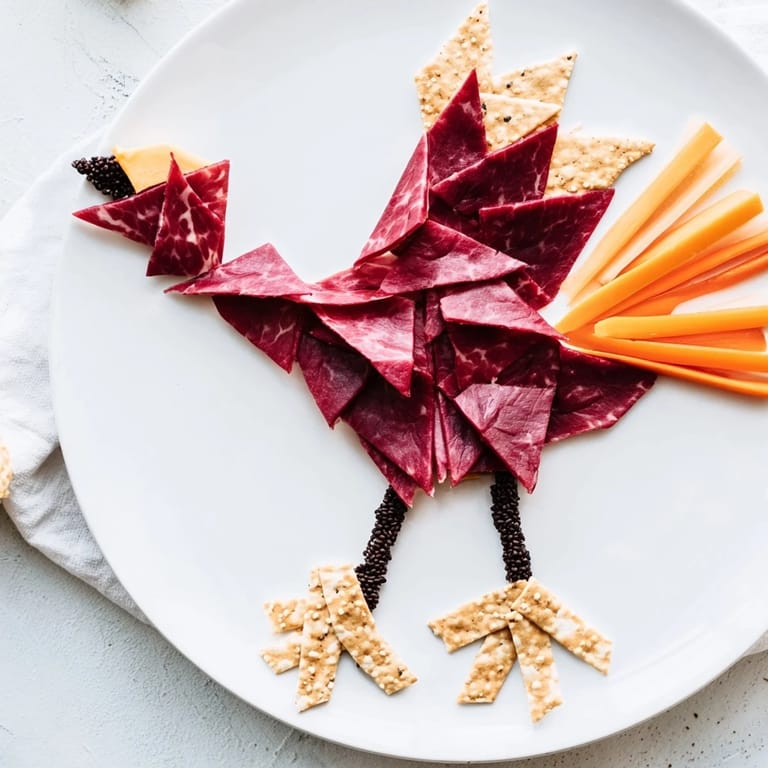
The first crane I made was imperfect—my triangles were uneven, my layers slightly askew, and honestly, it looked more like a confused chicken than a graceful bird. But something shifted when I stopped trying to make it perfect and started focusing on making it intentional. Messy folds can be charming; uneven layers create visual texture; imperfection is often more beautiful than precision.
- Crease firmly but don't panic if a slice tears—overlap it with another piece and the damage disappears.
- Vary the heights of your layers slightly; perfect uniformity actually looks artificial, while a little irregularity reads as handmade.
- Trust that your composition works even if it doesn't look exactly like a photograph—remember, you made this with your own hands, and that's what makes it beautiful.
 Save
Save This dish is a reminder that sometimes the most generous thing we can offer people is our time and our creativity rather than hours in the kitchen. It says, 'I thought about you while I was making this, and I wanted to create something you'd remember.'
Recipe FAQs
- → What types of meats are used in this dish?
Thin slices of prosciutto, smoked turkey breast, and bresaola or pastrami create layered textures and flavors.
- → How are the crackers incorporated into the presentation?
Triangular whole-grain and black sesame seed crackers are placed beneath and alongside the folded meats to enhance the crane shape.
- → What garnishes add detail to the crane design?
Carrot strips form the beak and legs, chives add feather-like details, and black sesame seeds highlight the eyes and wings.
- → Can this dish accommodate dietary preferences?
Yes, you can substitute cured meats with smoked salmon or tofu slices for pescatarian or vegetarian options.
- → What tools are needed to prepare this platter?
A sharp knife, vegetable peeler, large serving platter, and a small offset spatula or butter knife are recommended for assembly.
- → How long can the platter be prepared in advance?
Once assembled, cover loosely and refrigerate for up to one hour before serving.