 Save
Save I first encountered The Pointillism Dot Matrix at a small contemporary restaurant in Barcelona, where the chef explained that she approached plating like a painter approaches a canvas. That moment stuck with me—the idea that food could be art, not just sustenance. I spent the next three months playing with purees and sauces in my own kitchen, learning to see my plates as blank canvases waiting for color and intention. This dish became my meditation, a way to transform simple vegetables into something that made people pause before taking their first bite.
I remember making this for my sister's dinner party when she was going through a rough patch. She walked into the kitchen, saw the finished plates, and actually teared up—not because it was fancy, but because someone had taken time to make something beautiful just for her. That's when I realized this dish isn't about impressing people with technique; it's about showing them they're worth the care.
Ingredients
- Beetroot puree (80g): Deep crimson and earthy, this is your anchor color. Cook the beetroot until completely tender, then blend until absolutely smooth with just a whisper of olive oil and salt. I learned to strain mine through a fine mesh to eliminate any graininess that could ruin the visual effect.
- Carrot puree (80g): Bright, optimistic orange that lifts the entire plate. Roasted carrots give a subtly deeper flavor than boiled ones, and I always add a tiny squeeze of lemon juice to wake it up.
- Green pea puree (80g): This is pure spring in a spoon—vibrant and fresh. The secret is not to overcook the peas; they should be tender but still have that bright green color locked in.
- Yellow bell pepper puree (80g): Roasting the peppers first adds a gentle sweetness and deepens the color. This one always reminds me why simple ingredients can be the most beautiful.
- Greek yogurt (60g): Creamy, tangy, and acts as a neutral anchor between the bold vegetable colors. Its richness balances the fresh brightness perfectly.
- Crème fraîche (40g): More luxurious than yogurt, with a subtle tang. I use this sparingly for the most elegant accents on the plate.
- Basil pesto (1 tbsp): Herbaceous and alive—keep it bright green by using tender basil leaves and don't over-process.
- Red pepper coulis (1 tbsp): Sweet, silky, and adds a sophisticated depth. You can make this by blending roasted red peppers with a touch of cream.
- Balsamic reduction (1 tbsp): Dark, glossy, and adds visual drama. I learned to make my own because the complexity matters here.
- Pickled red onions (20g, finely diced): Sharp, acidic, and a textural wake-up call. The fine dice is essential—large pieces look clumsy on this kind of plate.
- Microgreens (20g): Delicate, peppery, and essential for that contemporary restaurant feel. They wilt quickly, so add them last.
- Toasted black sesame seeds (1 tbsp): Nutty, crunchy, and visually stunning against the bright purees. Toast them yourself for better flavor—store-bought sometimes taste stale.
- Pomegranate seeds (1 tbsp): Jewel-like and sweet-tart. They add surprise texture and look like little rubies scattered across the plate.
- Edible flower petals (optional): Use only if you can source them fresh and pesticide-free. I love pansies or violas for their delicate appearance and subtle flavor.
- Sea salt flakes and freshly ground black pepper: These final touches matter more than you'd think. Sea salt has a different minerality that complements the fresh vegetables.
Tired of Takeout? 🥡
Get 10 meals you can make faster than delivery arrives. Seriously.
One email. No spam. Unsubscribe anytime.
Instructions
- Prepare your blank canvas:
- Gather all your tools first—piping bags, squeeze bottles, small spoons—because once you start dotting, you move with intention. There's something meditative about this step, like a painter arranging brushes. I lay everything out and take a breath; this is where you slow down and become intentional.
- Create the purees:
- Blend each vegetable separately until silky smooth—this is non-negotiable. Each puree should look like paint, with no graininess or chunks. I taste each one as I go, adjusting salt and a tiny drizzle of olive oil. The sweetness of the carrot, the earthiness of the beet, the brightness of the pea—they should each sing on their own before coming together on the plate.
- Load your tools:
- Transfer each puree to its own piping bag, and place yogurt, crème fraîche, pesto, coulis, and balsamic reduction in squeeze bottles. Label them mentally or with a small Post-it if you're making this for others. You'll thank yourself when you're in the flow of plating.
- Compose with dots:
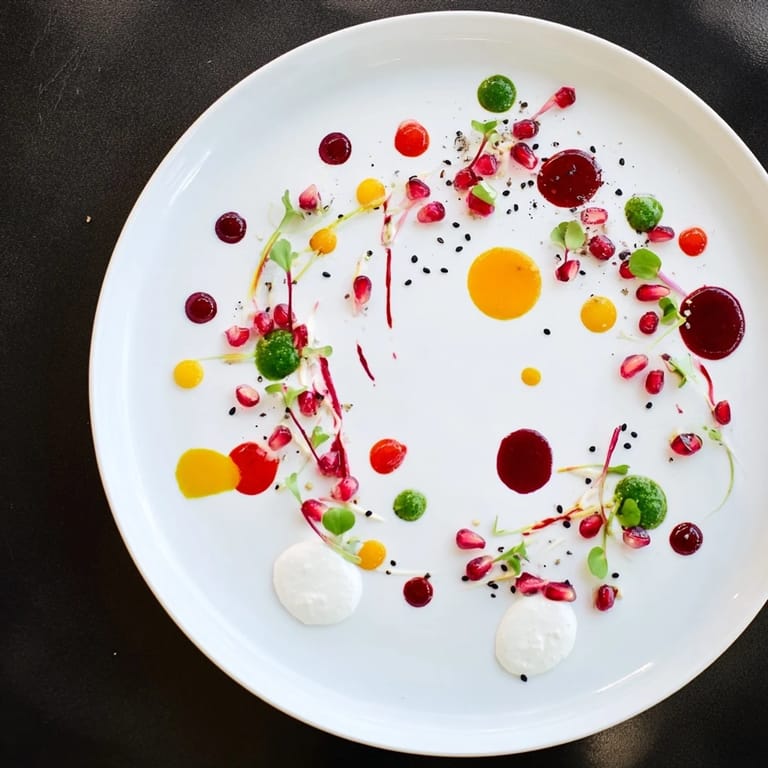
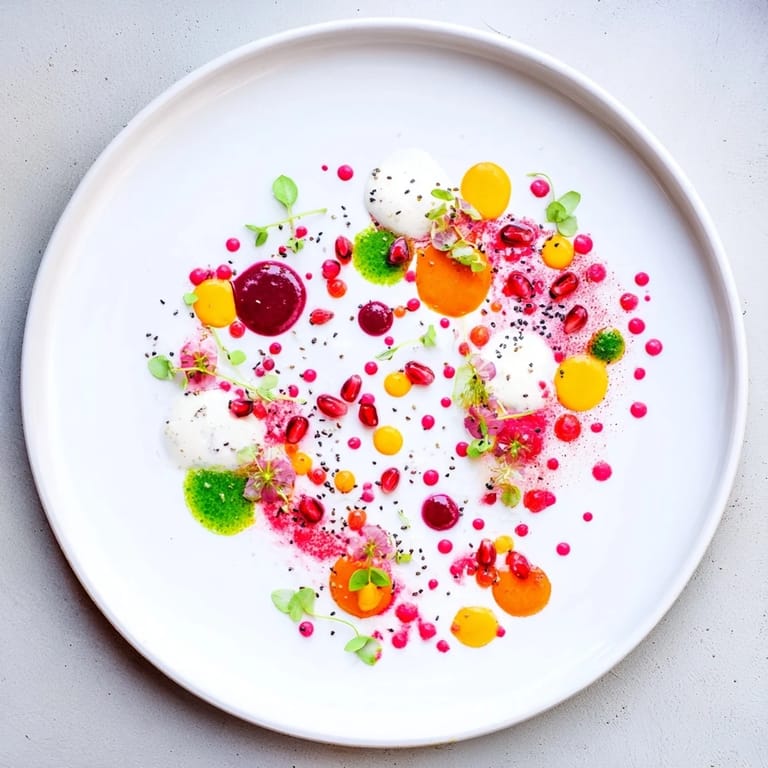
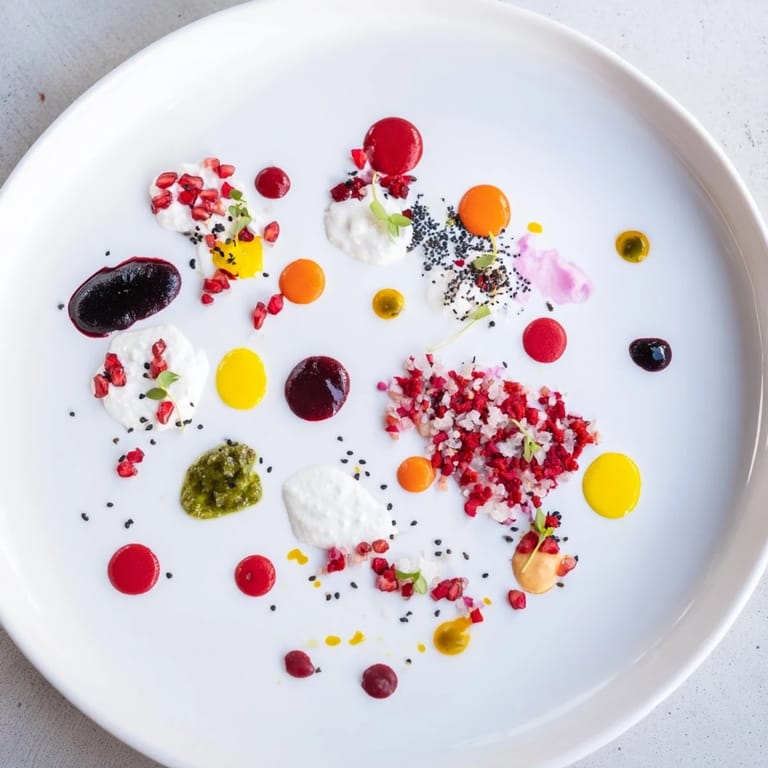
- This is the heart of the whole technique. On each plate, imagine dividing the surface into invisible regions, then scatter dots of each puree—some tiny, some marble-sized—across the plate with intention. Think like a Pointillist painter: no two dots touching, varied sizes, colors placed to complement each other. I usually start with the beet because its deep color anchors the composition, then build around it.
- Layer in the creams:
- Add small dots and lines of yogurt and crème fraîche, allowing them to sit among the vegetable purees. They act like white space in a painting, giving the eye places to rest.
- Add the accent elements:
- Sprinkle pickled onions, sesame seeds, and pomegranate seeds with the precision of someone adding final details. Scatter microgreens with tweezers if you have them, though your fingers work too. This is where the dish gets personality and texture.
- The grand finale:
- A light dusting of sea salt and freshly ground black pepper. These aren't afterthoughts—they're the signature on your artwork. Serve immediately so the visual impact hits before the fork touches down.
 Save
Save The moment that changed everything for me was when a dinner guest—someone who usually rushed through meals—took a photo of her plate before eating it. She was quiet for a moment, fork suspended, just looking. Then she took a bite and closed her eyes. I realized that food that beautiful forces people to be present. It makes them slow down. That's what this dish does.
Understanding the Pointillist Approach
The magic of this dish isn't in any single ingredient; it's in how they're arranged. Pointillism is a painting technique where tiny dots of pure color sit beside each other, and from a distance, your eye blends them optically into something unified. The same principle applies here. Each puree, each accent, each little jewel of flavor sits alone but contributes to a harmonious whole. When you approach the plate with this mindset—not as a chef making a dish, but as an artist composing—the entire experience shifts. You stop thinking about combinations and start thinking about balance, contrast, and visual flow.
Building Your Color Palette
The vegetables I've chosen create a natural gradient from warm to cool tones, but this is where you get to make the dish your own. I've experimented with purple sweet potato puree for deeper jewel tones, with avocado for subtle green variations, with roasted cauliflower for creamy white notes. The yellow bell pepper is my favorite because it's happy—it lifts the entire composition. Consider the colors you're drawn to, the ones that make you feel something when you see them together. That emotional response is what makes a plate memorable. A friend once told me she added beet greens pesto to her version, and suddenly the whole plate told a story about using the entire vegetable. That's the kind of personal touch that transforms a recipe into your own creation.
Making It Your Own
This recipe is a framework, not a prison. I've made it vegetarian because the vegetables are the stars, but I've also added crispy prosciutto for richness, or a quail egg yolk as a final golden dot. I've tested it with vegan yogurt for friends with dairy restrictions, and honestly, it worked beautifully—the colors stayed vibrant, the technique remained the same. The beauty of this approach is that it adapts to what you have, what your guests need, and what story you want to tell on the plate. One autumn, I added toasted pumpkin seeds and a whisper of smoked paprika to one sauce, and suddenly the dish felt seasonal. Trust your instincts. If you love a flavor, find a way to include it on that plate.
- Vegan version: Use cashew cream instead of crème fraîche, and quality plant-based yogurt that has enough richness to stand out
- Seasonal adaptation: Spring calls for peas and asparagus; summer invites tomato coulis and basil; autumn welcomes butternut squash and sage-infused oils; winter appreciates root vegetables and earthier elements
- Texture matters as much as flavor—always include something crunchy, something creamy, something bright, and something luxurious all on the same plate
 Save
Save This dish taught me that cooking isn't always about feeding people—sometimes it's about inviting them into a moment of beauty. Serve it with crisp, cold wine and watch what happens when food becomes an experience.
Recipe FAQs
- → How are the purees prepared for this dish?
Each vegetable is cooked, blended with olive oil and salt until smooth, then transferred into piping bags or squeeze bottles to create precise dots.
- → What garnishes enhance the textures and flavors?
Pickled red onions, microgreens, toasted black sesame seeds, pomegranate seeds, and edible flower petals add crunch, color, and bright notes.
- → Can this dish be adapted for vegan diets?
Yes, using plant-based yogurt and omitting crème fraîche makes it suitable for vegan preferences without losing texture or flavor.
- → What is the best way to arrange the dots on the plate?
Arrange dots and mounds in a scattered, non-touching pattern varying in size and color to mimic the pointillist art style and balance visual appeal.
- → Which tools are recommended for plating the dots?
Using piping bags, squeeze bottles, and tweezers allows precise placement and varied dot sizes while maintaining cleanliness and detail.