 Save
Save I'll never forget the summer afternoon when my friend brought this stunning River Delta Flow platter to a garden gathering. She'd arranged vegetables in these elegant branching patterns that seemed to flow toward the center like actual tributaries, and I remember standing there mesmerized, watching how guests naturally gravitated toward it—not just because it tasted wonderful, but because the presentation felt like edible art. That moment taught me that the most memorable appetizers are the ones that make people pause and admire before they even take a bite.
I made this for my daughter's art class celebration, and something magical happened. As kids selected their vegetables, they started talking about how the arrangement reminded them of rivers they'd seen, maps they'd studied, and fractals in nature. What began as an appetizer became this unexpected educational moment where food sparked imagination and connection.
Ingredients
- Hummus or Greek yogurt dip (1 1/2 cups): This is your river, so choose something creamy that won't separate or dry out—I've learned that homemade hummus stays fresher longer than store-bought, and it holds its shape beautifully when you sculpt it with the back of a spoon
- Cherry tomatoes (1 cup, halved): These ruby spheres add both color and natural sweetness; halving them gives you flat surfaces that catch the light and stay put on the platter
- Cucumber (1 cup, sliced into sticks): Look for firm, crisp cucumbers and cut them just before serving so they don't weep liquid onto your beautiful arrangement
- Colorful bell peppers (1 cup, sliced into strips): Red, yellow, and orange peppers create that visual drama—the green ones can fade and muddy your color palette, so save those for cooking instead
- Carrots (1 cup, cut into thin sticks): Peel them fresh and soak them in ice water for 30 minutes before arranging if you want them to have that satisfying snap
- Radishes (1/2 cup, thinly sliced): Their peppery bite and jewel-like pink color add sophistication; slice them just before serving so they maintain their crisp texture
- Snap peas (1/2 cup, trimmed): These are nature's perfect vessels—delicate, sweet, and substantial enough to scoop generously through the dip
- Fresh parsley (2 tablespoons, chopped): This isn't just garnish—it adds a fresh herbaceous note that ties all the components together
- Olive oil (1 tablespoon for drizzling): Use a good quality oil since it's visible; the richness complements the creaminess of the dip
- Smoked paprika or zaatar (1 teaspoon, optional): This sprinkling elevates the entire platter from simple to intentional, adding warmth and a hint of mystery
Tired of Takeout? 🥡
Get 10 meals you can make faster than delivery arrives. Seriously.
One email. No spam. Unsubscribe anytime.
Instructions
- Create your river foundation:
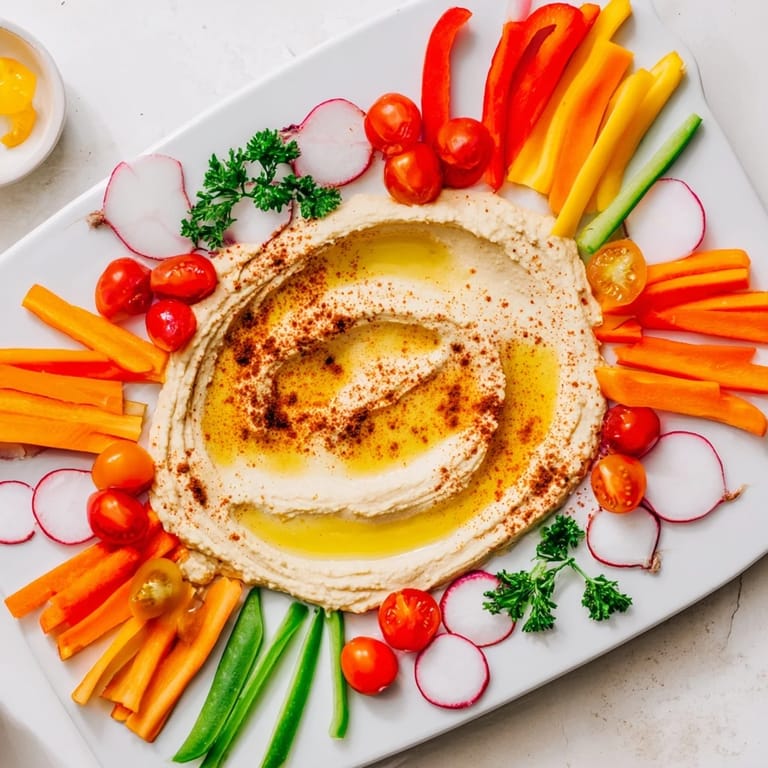
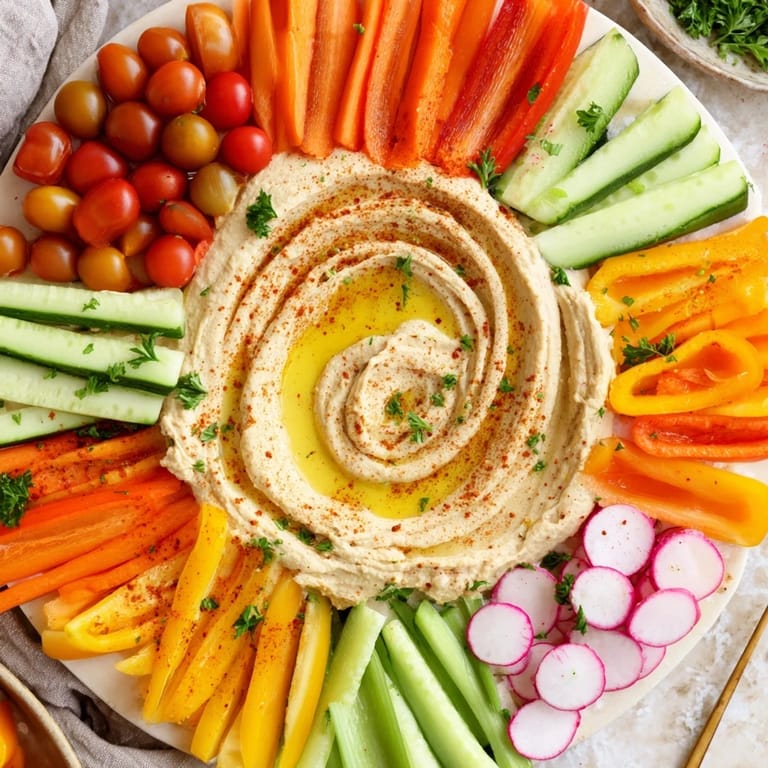
- On your largest, flattest platter, spoon the hummus in a winding, generous line down the center—think of it like mapping the course of an actual river, with gentle curves and natural-looking bends. Use the back of a small spoon to smooth it into a cohesive stream, and don't worry about it being perfectly symmetrical; the slight irregularities actually make it feel more alive and authentic.
- Map your tributaries:
- Now comes the meditative part where your arrangement becomes a work of art. Starting from the edges of the platter, arrange your vegetable pieces in branching lines that taper as they approach the central river of hummus. Alternate colors and shapes intentionally—a line of orange carrots, then red tomatoes, then yellow peppers—so the eye naturally follows each tributary toward the center, just like water flowing downhill.
- Anoint the river:
- Drizzle that beautiful olive oil across the surface of your hummus in a thin, artistic pattern. It'll catch the light and add a subtle sheen that makes everything look more luxurious and inviting.
- Add your finishing flourish:
- Sprinkle the smoked paprika or zaatar generously but thoughtfully across the hummus—this is your moment to add warmth and depth, and those spices will hint at the Mediterranean soul of this dish.
- Complete the composition:
- Scatter your chopped fresh parsley across the entire arrangement, letting it settle into the natural gaps between vegetables. This final green element brings everything together and adds a last-minute freshness.
- Serve with intention:
- Bring this to the table immediately while everything is at peak crispness and the colors are singing. Have extra vegetables or pita chips nearby for guests who want to extend the experience, and watch how people interact with it—they'll start at the edges and work their way toward the river, just like the design intended.
 Save
Save I remember my grandmother watching me arrange this platter for the first time, and she said something I've never forgotten: 'You're not just arranging vegetables—you're telling a story about where they grow, how water shapes the land, and how simple, honest ingredients can become poetry on a plate.' That's when I realized this appetizer was really about slowing down and honoring the beauty that nature and your own hands can create together.
The Magic of Interactive Platters
There's something about a beautifully arranged platter that shifts the entire energy of a gathering. People slow down, they engage with the food differently, and suddenly an appetizer becomes a focal point for conversation and connection. When you invest those extra fifteen minutes in thoughtful arrangement, you're giving your guests a gift that goes beyond nutrition—you're creating a moment worth remembering.
Playing with Color and Contrast
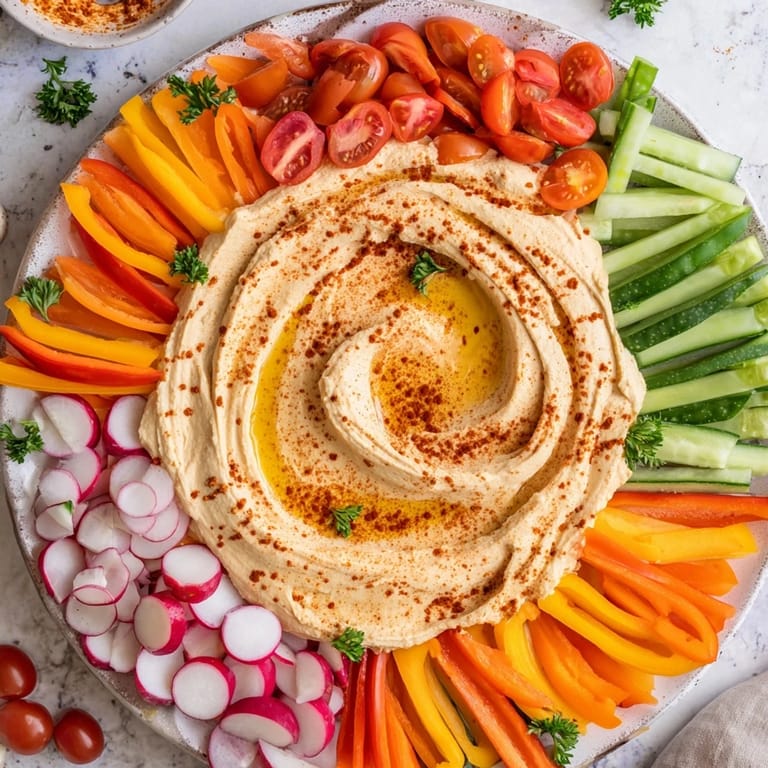
The River Delta Flow succeeds because of its color choreography. Each vegetable catches light differently—the translucence of radishes, the matte softness of tomatoes, the bright clarity of bell pepper strips. When you arrange them with intention, you're using color theory whether you realize it or not. Opposite colors on the wheel (like orange and purple radish) create visual electricity, while analogous colors (reds and oranges) create harmony. Pay attention to how your vegetables interact with each other, and let contrast guide your hand.
Variations That Expand the Experience
Once you master the basic River Delta Flow, the variations become endless and deeply personal. I've made versions with roasted beet hummus stained a deep burgundy, with bright green baba ghanoush that tastes of smoke and eggplant, with cool white tzatziki that speaks of summer and cucumber. Each dip shifts the entire mood of the platter. You can also layer in unexpected textures—shards of crispy pita chips, creamy burrata cheese, candied nuts—or add edible flowers and microgreens for that fine-dining touch. The underlying principle stays the same: honor your ingredients, arrange with intention, and let simplicity be your greatest sophistication.
- Try roasted vegetable variations for cool-weather gatherings, which adds smokiness and deepens the color palette
- Experiment with different dips monthly to discover your signature flavor combination that becomes your signature dish
- Remember that the best platters reflect what's freshest at your market that week, so let seasonality guide your choices
 Save
Save Every time I make this River Delta Flow, I'm reminded that the best entertaining isn't about complexity—it's about presence, intention, and celebrating the honest beauty of fresh, simple ingredients. This platter has taught me that the most meaningful meals are the ones where people actually connect with each other, and that happens when you give them something worth admiring.
Recipe FAQs
- → What dips can be used in place of hummus?
You can substitute with Greek yogurt dip, beet hummus, baba ghanoush, or tzatziki to vary flavors while maintaining the creamy center.
- → How should the vegetables be prepared for this platter?
Slice vegetables into sticks or thin slices to mimic river tributaries—all should be fresh and colorful to enhance visual appeal.
- → Can this platter accommodate dietary restrictions?
Yes, it is naturally vegetarian and gluten-free. Use dairy-free dips if avoiding dairy and check for allergen ingredients.
- → What is the purpose of olive oil and smoked paprika here?
Olive oil adds richness and shine, while smoked paprika or zaatar provides an optional smoky, aromatic touch enhancing the flavor profile.
- → Is this dish served warm or cold?
This platter is served cold, making it a refreshing and easy appetizer suitable for all occasions without heating.