Save
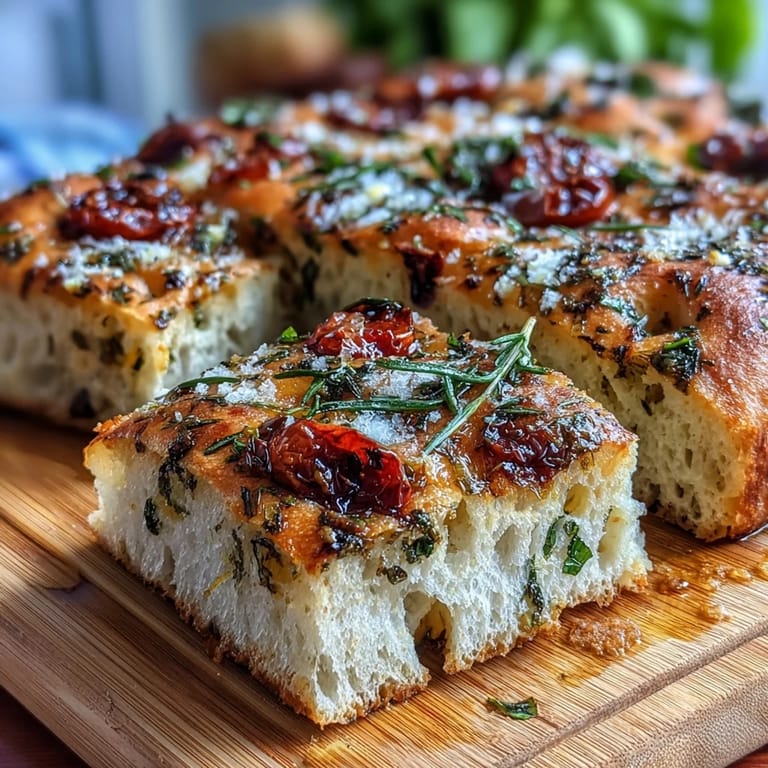
Save The first time this focaccia came bubbling out of my oven, I was surprised by how the kitchen filled with the earthy rush of rosemary and basil. As I pressed my fingers into the dough, I could almost hear the faint crackle from olive oil under my hands. Chopping chives and tearing basil felt oddly meditative, and I couldn’t help but sneak a few taste tests as I plucked tomatoes from the vine. Spring afternoons always seem to stretch a little longer, and baking bread like this matches that slower pace. This focaccia brings a little sunshine, no matter the weather outside.
Last year, I brought a tray of this to a neighborhood picnic—my hands sticky with olive oil, basil clinging to my fingertips. The moment I set it down, a friend snapped off a corner still warm, and we traded stories as the loaf slowly disappeared. Focaccia draws people around, even those who weren’t hungry yet. Its golden crust was like an irresistible invitation that day. Sometimes the best memories are drawn out by something simple, shared, and fragrant.
Ingredients
- Bread flour: Provides a chewy, springy crumb; always measure with a scale for best results.
- Fine sea salt: Enhances both flavor and rise; don't substitute with table salt unless you adjust the amount.
- Active dry yeast: Brings the dough to life – be sure the water is lukewarm to avoid killing the yeast.
- Lukewarm water: Helps yeast bloom; I always test with my wrist for a baby-bath temperature.
- Extra-virgin olive oil: Adds richness and keeps everything tender; use plenty for that glossy top.
- Cherry tomatoes: Their juiciness bursts on the finished bread, so halve them to avoid sogginess.
- Fresh rosemary leaves: These infuse every bite with woodsy fragrance.
- Fresh thyme leaves: Offers subtle lemony notes; I gently rub the leaves first to release oils.
- Fresh chives: A subtle onion hit – chop just before adding to keep them bright.
- Fresh basil: Torn just before use, it perfumes the bread with classic spring flavor.
- Flaky sea salt: Adds crisp crunch on every bite; don't skip if you want bakery results.
- Freshly ground black pepper: Allows for a touch of gentle heat; grind generously for complexity.
Tired of Takeout? 🥡
Get 10 meals you can make faster than delivery arrives. Seriously.
One email. No spam. Unsubscribe anytime.
Instructions
- Blend the dry base:
- Start by combining bread flour and fine sea salt in a large mixing bowl, and let your fingers sift through the soft powder for even distribution.
- Activate the yeast:
- Mix yeast with lukewarm water in a small bowl and watch as it turns foamy and fragrant after five minutes, signaling it's ready.
- Form the dough:
- Pour the yeast mixture and olive oil over the flour, mixing with a wooden spoon until it gets sticky and begins to string between the spoon and bowl.
- First rise:
- Transfer the sticky dough to a lightly oiled bowl, cover with a damp towel, and let it puff up somewhere warm until doubled in size, usually about an hour or so.
- Shape and dimple:
- Oil a baking tray generously, turn out the fluffy dough, and use your oiled fingertips to press and gently stretch it to fill the tray, leaving deep dimples.
- Second proof:
- Cover the tray and give the dough a final 30 to 40 minute nap, watching it rise and jiggle as you check.
- Preheat & prepare:
- Set your oven to 220°C (425°F), drizzle olive oil onto the dough, then tumble cherry tomatoes, mixed herbs, and flaky salt all over the surface.
- Bake:
- Slide the tray into the center of the oven and bake for 22 to 25 minutes until your kitchen smells like an Italian bakery and the bread is a deep golden brown.
- Cool and serve:
- Let the focaccia cool a little on the tray before slicing, then serve while warm or at room temperature as steam escapes with every cut.
 Save
Save The time my cousin dropped by unexpectedly, she caught me mid-dimpling, fingers coated in olive oil and herbs. We laughed as she helped, sneaking tomatoes and reminiscing about travel fiascos while the dough rose in companionable silence. By the time the focaccia hit the table, it had become the centerpiece of a spontaneous feast, each bite a backdrop for bursts of conversation and little kitchen joys.
Ways to Make It Your Own
There's a world of possibility in the toppings. Sometimes I swap basil for dill or toss in thinly sliced red onions for extra bite. Extra Parmesan gently melted on top at the last five minutes makes it more decadent. Roasted garlic or olives tucked into the dough before baking always gets rave reviews. Each variation tells a little story all its own.
What to Serve With Spring Herb Focaccia
This bread easily becomes a meal with a fresh green salad or a bowl of garlicky white bean soup. Sometimes I brush yesterday's leftover slice with more olive oil and crisp it under the broiler to go with eggs in the morning. Even simple dips like olive oil with a swirl of balsamic elevate each bite. It also makes a fabulous foundation for sandwiches layered with soft cheese and crisp vegetables. Don't be afraid to try it as a savory breakfast with sliced avocado and a sprinkle of chili flakes.
Troubleshooting and Quick Fixes
If your focaccia seems a little lackluster, a final drizzle of olive oil and a quick extra flash in a hot oven revives the crust's crunch. If dough feels too sticky to handle, rub a little oil on your hands and trust that stickiness makes for a fluffier crumb. Never be shy about experimenting with flavors—once, I added lemon zest and it brought a zippy freshness that disappeared in minutes.
- Let overproofed dough recover by gently re-stretching it in the tray.
- Underbaked bottoms are rescued by finishing the bread directly on a hot oven rack for the last three minutes.
- Use parchment if your tray is prone to sticking, since focaccia is happiest when it lifts out cleanly.
 Save
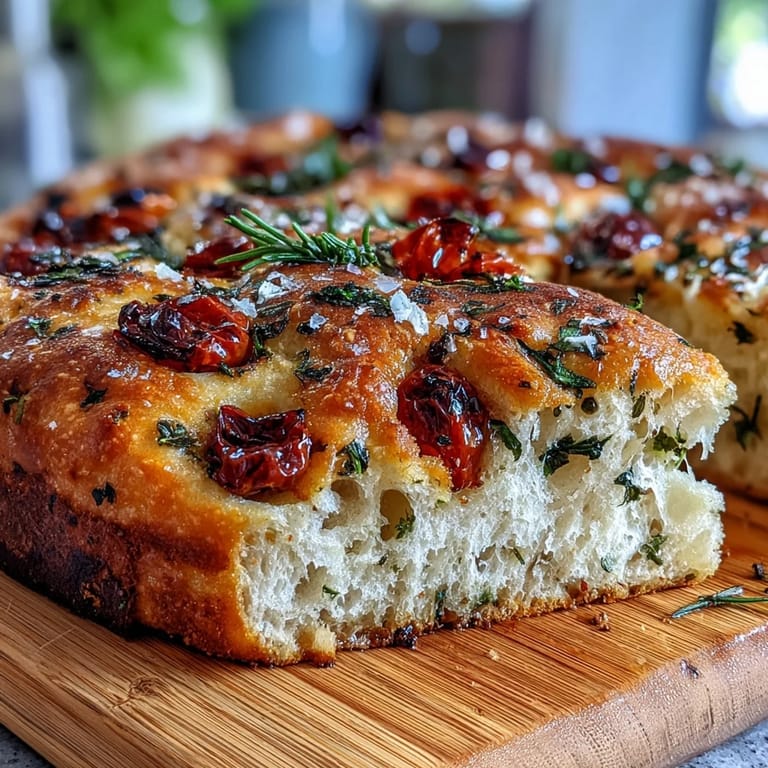
Save However you top it, this focaccia has a way of bringing people together—one golden slice at a time. May your kitchen always smell as inviting as this bread tastes.
Recipe FAQs
- → How wet should the dough be?
The dough should be slightly sticky and tacky rather than dry. Use a wooden spoon or scraper to mix until it holds together, then oil your hands when shaping to prevent sticking.
- → Can I shorten the rising time?
Warm environments speed up fermentation; a warm oven (turned off) or a sunny spot can reduce rising to the lower end of the range. Avoid rushing—full rise gives the open crumb and light texture.
- → How do I prevent soggy tomatoes on top?
Halve cherry tomatoes and gently press them into the dough so juices mingle with the surface instead of pooling. Pat larger tomatoes dry and scatter them sparingly; a brief high oven temperature helps evaporate excess moisture.
- → Any good herb substitutions?
Swap or add fresh dill, parsley, tarragon, or oregano depending on taste. Combine robust herbs like rosemary with delicate basil or chives for layered flavor.
- → Best way to reheat leftovers?
Warm slices in a 180°C (350°F) oven for 5–8 minutes to refresh the crust, or toast individual slices until edges crisp. Avoid microwaving to maintain texture.
- → Can I add cheese for extra flavor?
Yes—fold grated Parmesan into the dough or sprinkle on top before baking for a nutty, savory finish. Add sparingly to prevent a greasy surface.