 Save
Save There's something about the way a grocery store impulsively steered me toward the bins of loose vegetables one Wednesday afternoon that changed how I cook weeknights. I wasn't planning a pasta dinner, but the reds and yellows and greens practically assembled themselves in my basket—chicken breasts, peppers, zucchini, cherry tomatoes, broccoli—and by the time I got home, I realized I'd accidentally built the most forgiving, colorful dinner. That's when I learned that sometimes the best dishes aren't recipes you hunt down; they're the ones that unfold from what's actually in front of you.
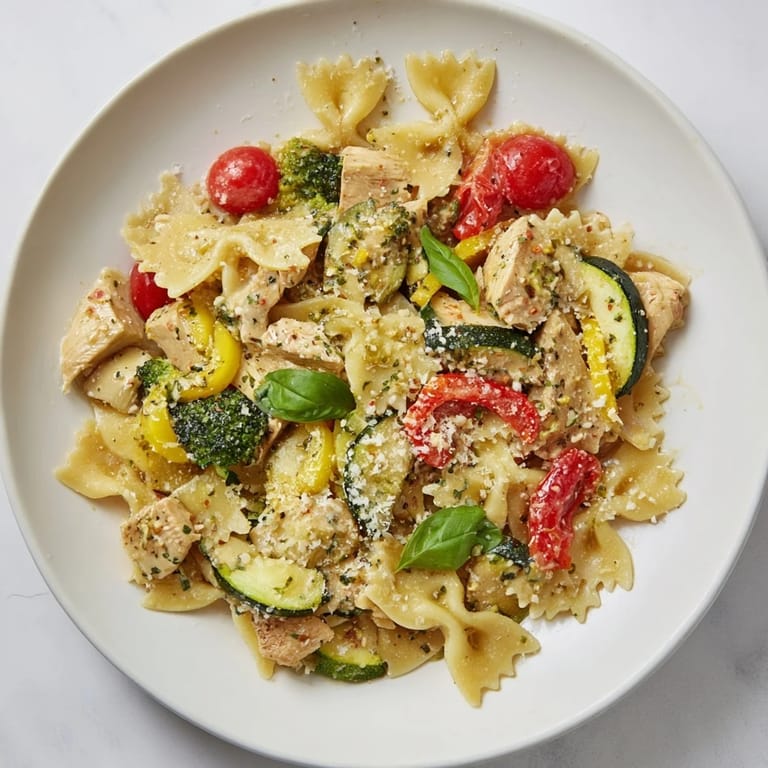
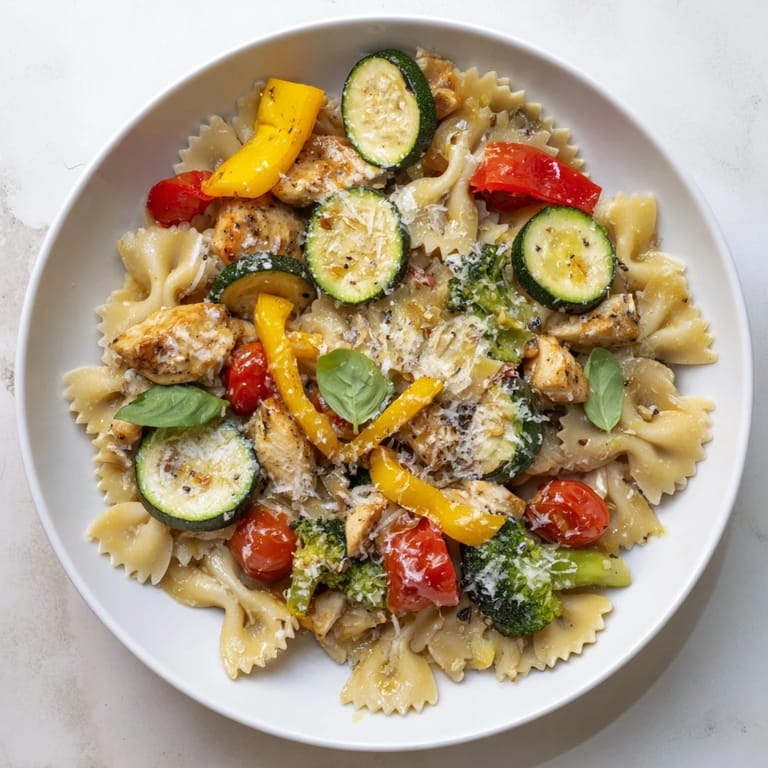
I made this for my sister on a Tuesday when she'd had a rough day, and watching her fork through the colors—the red peppers catching the kitchen light, the green broccoli visible in every bite—she said it felt like spring on a plate, even though it was October. That moment taught me that sometimes feeding people isn't about impressing them with complexity; it's about giving them something alive and honest.
Ingredients
- Chicken breasts: Cut them into bite-sized pieces so they cook through quickly and distribute throughout the pasta instead of sitting as big chunks.
- Red bell pepper: Sweet and slightly tangy; slice it thick enough that it holds its shape rather than dissolving into mush.
- Zucchini: The quiet one in the vegetable group—it absorbs flavor and keeps things tender without demanding attention.
- Yellow squash: Milder than zucchini, it adds brightness and a delicate texture that disappears if you overcook it.
- Cherry tomatoes: Always halved so they release their juice into the pasta at the last second, creating little pockets of flavor.
- Broccoli florets: Cut them small enough to toss easily but substantial enough that they don't vanish into the sauce.
- Penne or farfalle pasta: These shapes trap sauce in their crevices, which is the whole point; spaghetti won't do the same work.
- Heavy cream: Not too much—just enough to soften everything without making it feel rich or heavy in your stomach.
- Parmesan cheese: Freshly grated melts into the pasta better than pre-grated, and the flavor is noticeably sharper and cleaner.
- Garlic: Thirty seconds of sautéing is all it takes; any longer and it turns bitter and angry.
- Olive oil: The fat that carries flavor, especially important since the sauce is built on restraint.
- Italian herbs: Dried oregano, basil, and thyme blended work better here than fresh basil, which should stay for garnish only.
Tired of Takeout? 🥡
Get 10 meals you can make faster than delivery arrives. Seriously.
One email. No spam. Unsubscribe anytime.
Instructions
- Start the pasta water:
- Fill a large pot with water, salt it generously so it tastes like seawater, and bring it to a rolling boil while you prep everything else. This step feels mundane but it's your insurance policy—pasta that goes into unsalted water stays bland no matter what you do after.
- Cook the pasta al dente:
- Watch for that moment when the pasta still has the tiniest bit of resistance in the center, not soft all the way through. Scoop out and reserve half a cup of the starchy cooking water before you drain it; this will become your secret weapon for creating a light sauce.
- Sear the chicken until golden:
- Heat olive oil in a large skillet over medium-high heat until it shimmers, then add the chicken pieces and resist the urge to move them around constantly. Let them sit for a minute or two so they develop a golden exterior that actually tastes like something, then flip and finish cooking through.
- Build the vegetable foundation:
- After the chicken comes out, a fresh hit of oil and minced garlic goes in, and you'll smell when it's ready—exactly thirty seconds and the whole kitchen shifts into that moment right before delicious happens. Add the peppers, zucchini, and yellow squash next, and let them soften without turning into mush, maybe four or five minutes of stirring.
- Add the bright notes:
- The cherry tomatoes and broccoli go in together, along with the cooked chicken, and you're essentially assembling rather than cooking at this point. Two more minutes and they warm through without losing their life.
- Bring it together gently:
- The cooked pasta goes in with the cream, cheese, and herbs on a lower heat, and here's where the magic happens—you toss everything until the cream softens the pasta and the cheese melts into a sauce that's barely there but absolutely present. If it feels too thick, add a splash of that reserved pasta water and watch how it loosens everything into silk.
- Taste and adjust:
- Salt and pepper are not optional at the end; this is where you make sure every element is actually singing and nothing feels flat or anonymous.
 Save
Save There was a night when I made this for four friends who showed up unexpectedly around dinnertime, and instead of panicking, I realized I could have dinner on the table in less than forty minutes without it feeling rushed or apologetic. That's when this dish became less about a recipe and more about permission to feed people without exhausting yourself.
The Power of the Five
The five vegetables aren't arbitrary—they're a deliberate rhythm of colors and textures that keeps the dish interesting in every bite. Red pepper brings sweetness, zucchini and yellow squash add delicate flesh, broccoli brings earthiness and structure, and cherry tomatoes provide the last-minute brightness that prevents everything from tasting like one thing.
Why Cream, Not Butter
I learned early on that butter would make this heavy and almost greasy, while cream just softens everything and disappears into the pasta, letting the vegetables and the cheese do the talking. The Parmesan actually becomes the star here, not hidden behind something richer.
Making It Your Own
This recipe is flexible without being shapeless—you can swap the vegetables based on the season or what you find, but keeping the ratio of five types stays true to what makes it sing.
- Swap chicken for crumbled tofu, white beans, or chickpeas if you're avoiding meat, and adjust the cooking time accordingly.
- Use whole wheat pasta if you want more fiber, though cook it a minute less than the package says since it tends toward mushiness.
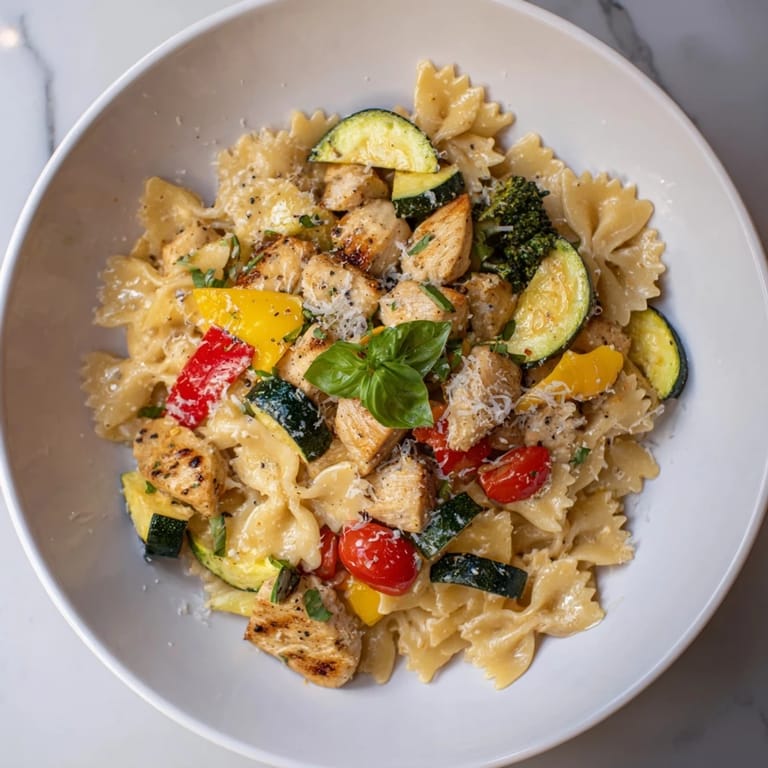
- Fresh basil at the end is optional but it transforms the whole thing if you have it, especially in summer when it's abundant and cheap.
 Save
Save This dish is proof that the best dinners often come from impulse and instinct rather than planning, and that feeding people something simple and colorful counts for more than you'd think. Make it on a Wednesday when you need something easy, or when you want to remind yourself why cooking for others matters.
Recipe FAQs
- → Can I use a different pasta shape?
Yes, penne or farfalle work best, but any pasta that holds sauce well will suit this dish.
- → How do I prevent the chicken from drying out?
Cook chicken over medium-high heat until golden and just cooked through, then remove promptly to avoid overcooking.
- → What vegetables can I substitute?
Feel free to swap in seasonal vegetables like asparagus, snap peas, or spinach for variety.
- → Is it possible to make this vegan?
Replace chicken with tofu or chickpeas and omit dairy, using plant-based cream and cheese alternatives.
- → How do I achieve a creamy sauce without it being too heavy?
Add reserved pasta water gradually with cream and cheese, stirring to create a light, silky sauce.