 Save
Save I discovered this dish at a gallery opening in Brooklyn where a chef friend was experimenting with food as visual art. Watching people approach the plate like they were admiring a painting before taking that first bite completely changed how I think about appetizers. That evening, I realized food could be just as much about what your eyes experience as what your palate tastes, and I became obsessed with recreating that feeling at home.
I made this for a dinner party where I was nervous about impressing some food-focused friends, and instead of stressing about technique, I leaned into the geometry and presentation. Someone asked for the recipe before dessert arrived, and another guest started photographing it like it belonged in a magazine. That's when I knew this wasn't just about ingredients anymore, it was about creating a moment.
Ingredients
- Cucumber: The blank canvas of this dish, its mild flavor and crisp texture ground everything and its clean taste refreshes your palate between sweeter elements
- Golden beet: Earthiness and sweetness in one vegetable, and cooking it ahead means you're not rushing on prep day
- Watermelon radish: This is the showstopper ingredient that makes people lean in for a closer look, its peppery bite cuts through richness beautifully
- Avocado: Creamy and luxurious, choose one that yields slightly to pressure but still holds its shape when cut
- Feta cheese: Buy it as a block so you control how you cut it, crumbled feta falls apart in this composition and ruins the geometry
- Mango: Sweet and aromatic, it's your dessert note hidden in an appetizer, pick one that smells fragrant at the stem
- Extra virgin olive oil: Quality matters here because there's nowhere for it to hide, this is your seasoning and your shine
- Lemon juice: A squeeze of brightness that ties every element together and prevents avocado from browning
- Flaky sea salt and cracked black pepper: These finish the composition like an artist's final brushstrokes
- Microgreens or fresh herbs: Choose basil for sweetness or cilantro for brightness depending on your mood
Tired of Takeout? 🥡
Get 10 meals you can make faster than delivery arrives. Seriously.
One email. No spam. Unsubscribe anytime.
Instructions
- Gather your geometric toolkit:
- Lay out your sharpest chef's knife and any small cookie cutters you have, they're not mandatory but they make the work feel intentional. Fill a bowl with water and lemon juice so you can drop cut avocado in immediately, this keeps it from browning while you work.
- Transform your vegetables:
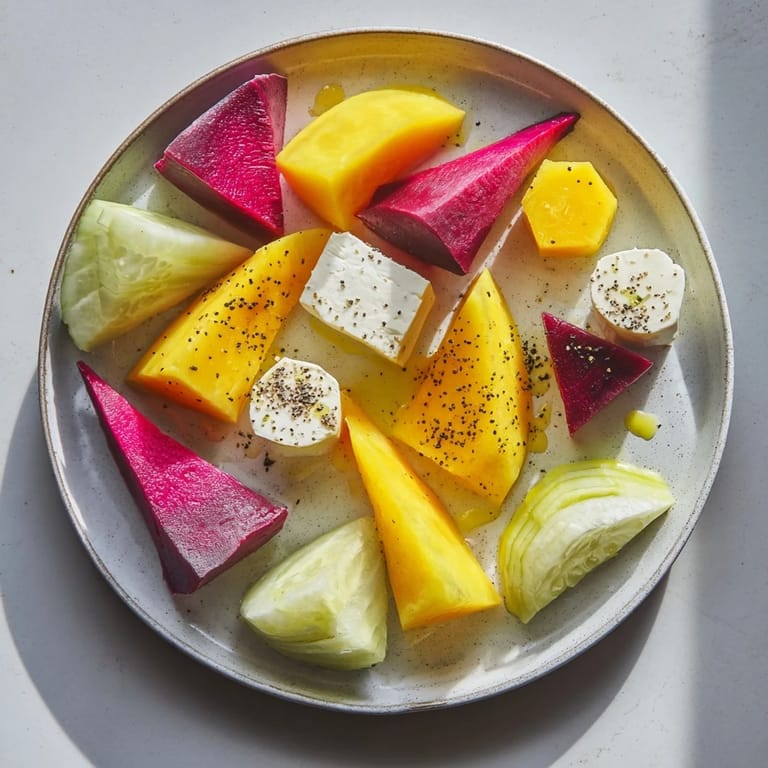
- This is where the magic happens. Cut your cucumber into irregular triangles, then switch to parallelograms for the beet, then hexagons for the radish if you're feeling ambitious. The non-uniform shapes are the whole point, they create visual rhythm and tension on the plate. Aim for pieces about the thickness of a pencil so they're substantial enough to pick up but delicate enough to feel refined.
- Shape your supporting players:
- Halve your avocado and slice it into neat wedges, then cube your mango into different sizes so the arrangement feels less predictable. Cut the feta into cubes or rectangular prisms that coordinate with your vegetable shapes without exactly matching them.
- Build your edible mosaic:
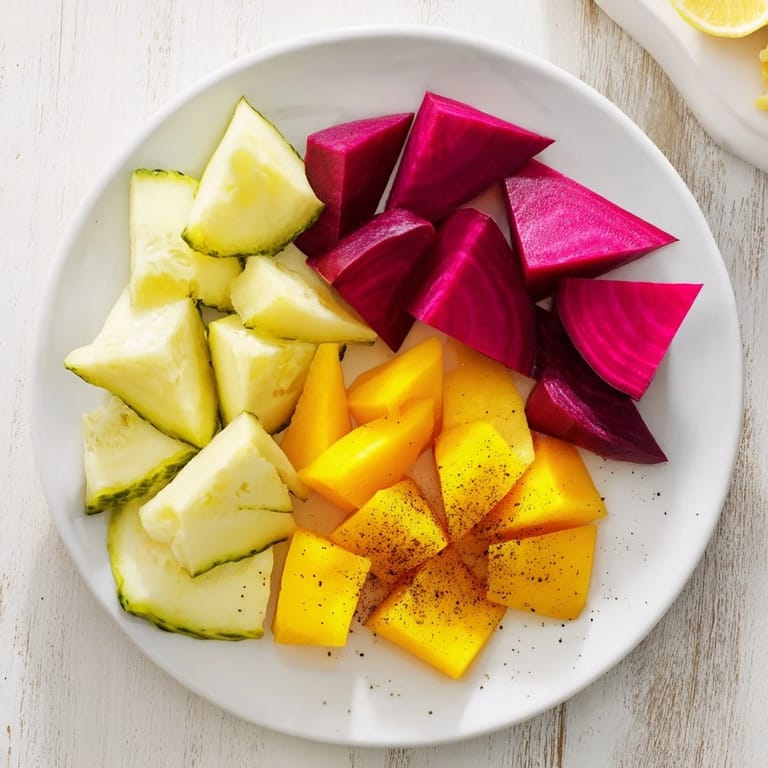
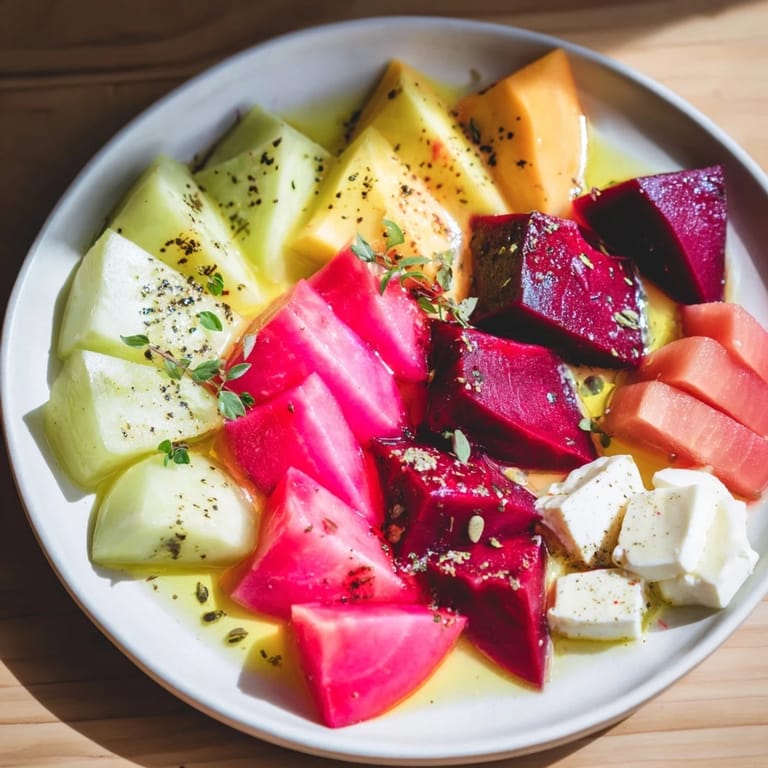
- Use a large flat white or neutral platter so the colors pop like stained glass. Start at one corner and work your way across, placing pieces close together but never overlapping. Step back frequently to assess the balance of colors and shapes, adjust as you go. You're arranging a composition, not just putting food on a plate.
- Season with intention:
- Drizzle your olive oil in thin streams across the arrangement, then finish with lemon juice. The oils will pool slightly in the low spots, creating visual interest. Sprinkle salt and pepper unevenly so some pieces get more seasoning than others, this rewards exploration.
- Add the finishing layer:
- Scatter microgreens or herbs across the composition as your final flourish, they add airiness and color. Serve immediately so the clean lines stay crisp and the presentation feels alive.
 Save
Save My favorite moment with this dish came when a friend who usually just eats whatever's in front of them actually paused and looked at the plate for a long moment before eating. They said it felt wrong to mess it up, and that made me realize I'd created something that existed in that beautiful space between food and art.
The Geometry of Flavor
Each shape serves a purpose beyond aesthetics. Thin triangles of cucumber deliver brightness fast, while thicker cubes of cheese linger on your tongue. The varied sizes mean your mouth experiences different intensities as you work your way through the arrangement. This is intentional design applied to taste, where visual surprise translates into flavor surprise.
Choosing Your Colors Wisely
Color is your first ingredient. Golden beets, watermelon radish, ripe mango, pale avocado, and white feta create a palette that feels curated and intentional. If you want to push it further, try purple carrots, yellow bell peppers, or even pink peppercorns for texture. The rule is simple, everything on that plate should be something you'd want to look at for five minutes straight.
Making It Your Own
This is a framework, not a rulebook. Swap ingredients based on what's in season and what appeals to you, firm tofu replaces feta perfectly for vegan guests and takes on flavors beautifully. Try other fresh herbs like dill or microgreens like pea shoots or sunflower sprouts. The key is maintaining the principle, unexpected geometric shapes arranged with intention on a clean surface.
- Cold ingredients work best here, chill everything slightly before serving so textures stay crisp
- Pair with something effervescent and dry like Sauvignon Blanc or a light sparkling wine
- Serve with small cocktail picks so guests can graze without using full silverware
 Save
Save This dish taught me that presentation isn't pretentious, it's generous. When you arrange food with care, you're telling your guests they matter enough to slow down for. Serve this cold, serve it with intention, and watch what happens when food becomes something people want to admire before they taste it.
Recipe FAQs
- → What vegetables work best for geometric cutting?
Firm, crisp vegetables like cucumbers, golden beets, and watermelon radishes hold their shape well when cut into geometric forms.
- → How can I cut irregular geometric shapes precisely?
Using a sharp knife or small cookie cutters helps achieve clean, consistent shapes for an artistic presentation.
- → Can I substitute the feta cheese for another ingredient?
Yes, firm tofu can be used as a vegan option while maintaining texture and shape.
- → What seasonings enhance the flavor without overpowering?
Light drizzles of extra virgin olive oil, fresh lemon juice, flaky sea salt, and cracked black pepper complement the natural flavors nicely.
- → How should I serve this appetizer to preserve its appearance?
Arrange pieces closely without overlapping on a flat platter and serve immediately to maintain crisp lines and vibrant colors.