 Save
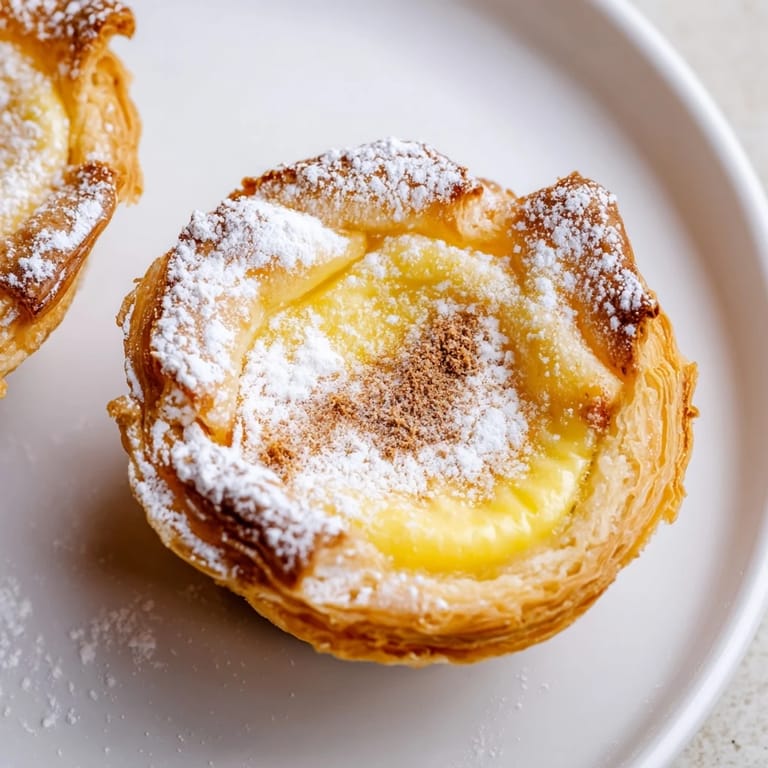
Save My first bite of a Portuguese egg tart happened on a narrow Lisbon street corner, the kind of place where a baker had been making the same recipe for thirty years without changing a thing. The custard was still warm, the phyllo impossibly crisp, and it tasted like someone had bottled sunshine and cinnamon together. I spent the next week trying to recreate that exact moment in my kitchen, and after a few attempts and one spectacularly burnt batch, I finally understood the magic: it's all about the balance between delicate pastry and silky, vanilla-scented filling.
I made these for my sister's book club once, and they were gone before anyone sat down to actually discuss the book. The conversation completely derailed into people asking for the recipe, and I remember my sister's friend literally closing her eyes after the first bite like she was transported somewhere. That's the moment I realized these tarts were more than just a dessert—they were permission to slow down and enjoy something really, truly good.
Ingredients
- Phyllo pastry: Use it straight from the fridge and keep the unused sheets covered with a damp towel so they don't dry out and shatter.
- Unsalted butter, melted: This is your glue and your golden color, so don't skip the brushing step between each layer.
- Whole milk: Full-fat matters here because it makes the custard silky instead of thin and sad.
- Cornstarch: The secret to a filling that stays creamy and doesn't weep liquid all over your plate.
- Heavy cream: This is what transforms custard into luxury; don't try to substitute it with anything lighter.
- Granulated sugar: Start with this amount and taste your custard; you can always add a touch more, but you can't take it back.
- Egg yolks: Room temperature yolks mix more smoothly into the warm milk, which means fewer lumps.
- Pure vanilla extract: The real thing makes all the difference in how the filling tastes when it cools.
- Ground cinnamon: A half teaspoon in the filling and another teaspoon for dusting, because cinnamon is essentially edible joy.
- Powdered sugar: The final flourish that makes these look like they came from a proper bakery.
Tired of Takeout? 🥡
Get 10 meals you can make faster than delivery arrives. Seriously.
One email. No spam. Unsubscribe anytime.
Instructions
- Heat your oven and prep the phyllo:
- Set the oven to 200°C (400°F) and lay out your phyllo sheets on a clean surface. Brush each sheet generously with melted butter, then stack three sheets on top of each other to build enough layers for structure.
- Cut and shape the cups:
- Using a knife or pizza cutter, cut your stacked phyllo sheets into squares large enough to drape over the muffin tin cups. You want them to hang over the sides slightly so they can crisp up properly.
- Press into muffin tins:
- Gently fit each stack into the muffin cup, being careful not to tear the delicate pastry. It's okay if they're not perfect—they'll look rustic and charming, which is exactly what these should be.
- Bake the empty cups:
- Put the phyllo shells in the oven for 8 to 10 minutes until they're just starting to turn golden at the edges. You're looking for barely-set, not crispy yet, because they're going back in after you add the filling.
- Make the custard filling:
- In a medium saucepan, whisk milk and cornstarch together until the cornstarch dissolves completely—any lumps now will stay in your final filling. Pour in the heavy cream, then add sugar, egg yolks, vanilla, cinnamon, and a pinch of salt.
- Cook the custard gently:
- Place the saucepan over medium heat and whisk constantly for 5 to 7 minutes as the mixture thickens. You'll notice it changing from pourable to silky, and that's exactly when you know it's done—take it off the heat before it gets too thick.
- Fill the tarts:
- Divide the warm custard evenly among the phyllo cups, filling them about three-quarters full. Working with warm custard is easier and helps it settle into the shells without creating air pockets.
- Bake until set:
- Return the filled tarts to the oven for 8 to 10 minutes until the custard is just set on top but still has a little jiggle to it. The tops should be lightly golden, and the whole kitchen will smell like a Portuguese bakery.
- Cool and finish:
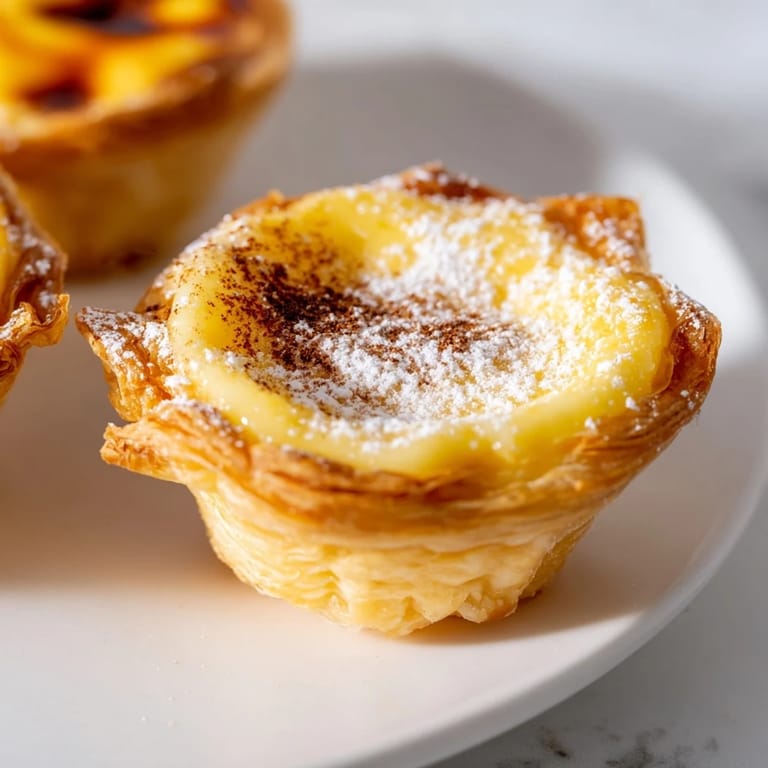
- Let the tarts cool for a few minutes until you can handle them without burning yourself. While they're still warm, dust generously with a mix of cinnamon and powdered sugar.
 Save
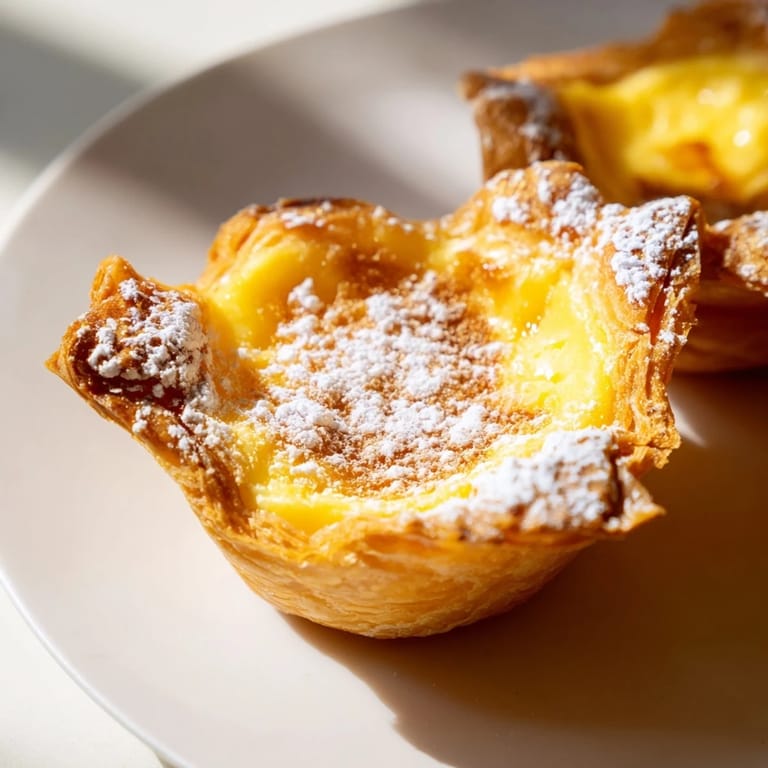
Save There's something deeply satisfying about biting through that shattered-glass crisp phyllo and landing on the soft, spiced custard underneath. It's the kind of texture contrast that makes your mouth happy, and it explains why Portuguese bakeries have lines out the door every single morning.
Serving and Pairing
These tarts are best enjoyed slightly warm, when the phyllo still has some of its crackle and the custard is soft but holds its shape. I've found that pulling them out of the oven and letting them sit for just five minutes strikes the perfect balance—any longer and they cool down too much, any sooner and you'll burn your mouth chasing that first perfect bite. They pair beautifully with a glass of chilled white port, which is how they're traditionally served in Lisbon, but honestly, strong espresso or even a cup of tea works just as well.
Storage and Make-Ahead
If you have leftovers (which seems unlikely, but I'm an optimist), store them in an airtight container in the refrigerator for up to three days. To refresh them, pop them back into a 180°C (350°F) oven for about five minutes to restore some of the phyllo's crispness. They also freeze beautifully before baking—assemble everything, freeze the filled tarts on a tray, then transfer them to a freezer bag for up to a month. Bake directly from frozen, adding just a couple of minutes to the baking time.
The Art of Mastering Phyllo
Phyllo has a reputation for being temperamental, but honestly, it just needs respect and a little moisture. I learned this the hard way after my first attempt left me with shattered pastry and bruised hands from trying to wrestle it into shape. The key is keeping it covered and working quickly but gently—phyllo actually wants to cooperate with you. Think of it less as a fragile enemy and more as a partner that responds well to calm, confident handling. Once you've made one batch of these tarts, you'll understand the rhythm, and phyllo will feel like an old friend instead of a challenge.
- Always butter every single layer, even the ones you think might not need it.
- If a sheet tears, keep going—overlapping pieces create rustic charm.
- Room temperature phyllo is easier to work with than cold phyllo straight from the fridge.
 Save
Save These Portuguese egg tarts are proof that some of the best things in life come from the simplest ingredients treated with a little care. Make a batch and watch how quickly they disappear.
Recipe FAQs
- → What makes the phyllo cups crisp?
Brushing each phyllo sheet with melted butter and baking until golden creates a flaky, crispy texture that holds the custard well.
- → How do I ensure the custard sets properly?
Cook the custard over medium heat, whisking constantly until it thickens, then bake briefly in the phyllo cups to achieve a smooth, set filling.
- → Can I prepare the tarts ahead of time?
Yes, you can bake the phyllo cups in advance and store the custard separately, assembling and finishing the tarts just before serving.
- → What can I serve alongside these tarts?
These tarts pair beautifully with chilled white port or a rich espresso to balance the creamy, cinnamon flavors.
- → Are there any common allergens in these tarts?
They contain eggs, dairy, and wheat from the phyllo pastry, so be mindful of allergies related to these ingredients.