 Save
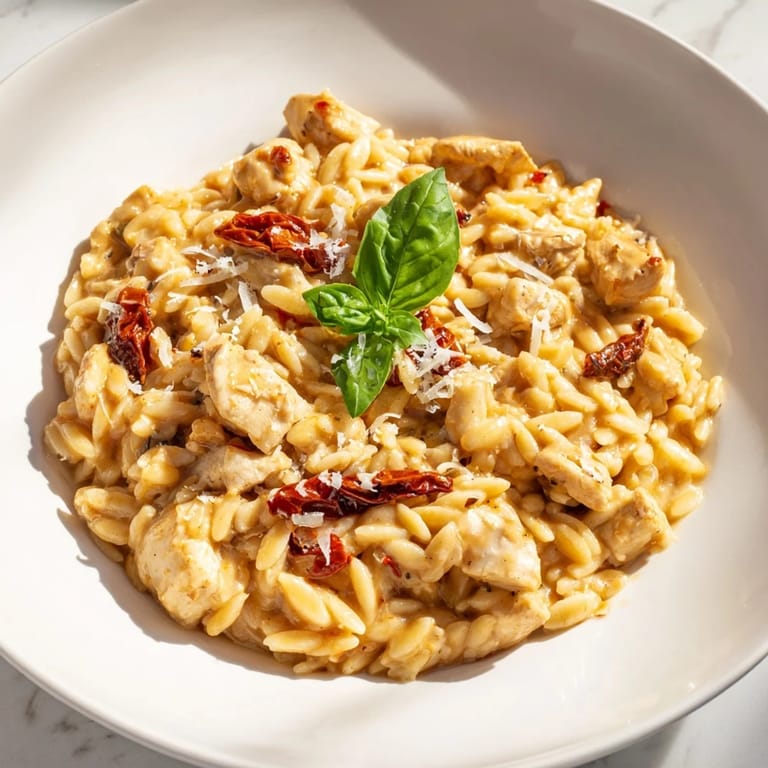
Save The smell hit me before I even saw the pan: garlic, cream, and something faintly sweet from the tomatoes. My neighbor had invited me over on a rainy Tuesday, promising comfort food that didn't require an oven. She stood at the stove stirring orzo into a bubbling skillet, tossing in spinach with one hand while telling me about her trip to Tuscany years ago. That night, I went home with the recipe scribbled on a grocery receipt, and I've been making it ever since.
I made this for my brother the week he moved into his first apartment. He had nothing but a single skillet and a wooden spoon, and I wanted to show him that good food didn't require a full kitchen. We stood side by side, browning chicken and stirring orzo until it turned creamy and golden. He ate two servings that night and texted me a photo of his attempt the following Sunday. It wasn't perfect, but it was his, and that made me proud.
Ingredients
- Boneless, skinless chicken breasts: Cut them into even pieces so they cook at the same rate, and don't skip the seasoning step or they'll taste flat.
- Italian herbs: A simple dried blend adds warmth without overpowering the other flavors, and it's something you probably already have in your cabinet.
- Olive oil: Use a good quality one because it's the base of your flavor, and it helps the chicken get that golden crust.
- Garlic: Fresh cloves are essential here, they bloom in the hot oil and fill your kitchen with the kind of smell that makes people wander in asking what's for dinner.
- Yellow onion: Dice it small so it melts into the sauce and adds a gentle sweetness that balances the tangy tomatoes.
- Sun-dried tomatoes in oil: Drain them well but save the oil for another use, and slice them thin so they distribute evenly.
- Baby spinach: It wilts down to almost nothing, so don't be shy with the amount, and it adds a pop of color and a bit of earthiness.
- Orzo pasta: This tiny pasta drinks up the broth and cream, becoming plump and tender right in the pan.
- Chicken broth: Low-sodium is best because you can control the salt level yourself, and it keeps the sauce from tasting too salty once the Parmesan goes in.
- Heavy cream: This is what makes the sauce luxurious and cling to every piece of orzo, you can lighten it slightly but don't skip it entirely.
- Parmesan cheese: Freshly grated melts smoothly and tastes infinitely better than the pre-shredded stuff, which can make the sauce grainy.
- Crushed red pepper flakes: Optional, but a pinch adds a gentle heat that wakes up the whole dish without making it spicy.
- Fresh basil: Torn and scattered on top just before serving, it adds a bright, herbal note that feels like summer.
Tired of Takeout? 🥡
Get 10 meals you can make faster than delivery arrives. Seriously.
One email. No spam. Unsubscribe anytime.
Instructions
- Season the chicken:
- Toss the bite-sized pieces with salt, pepper, and Italian herbs until every surface is lightly coated. This step takes 30 seconds but makes all the difference in flavor.
- Sear the chicken:
- Heat olive oil in a large, deep skillet over medium-high heat, then add the chicken in a single layer. Let it sit undisturbed for a few minutes so it gets golden and caramelized, then flip and cook until just done, about 5 to 7 minutes total, and set it aside on a plate.
- Soften the aromatics:
- In the same skillet, add the diced onion and cook for 2 minutes until it turns translucent and smells sweet. Stir in the minced garlic and let it sizzle for about a minute, just until fragrant.
- Add the sun-dried tomatoes:
- Toss in the sliced tomatoes and stir them around for a minute so their tangy, concentrated flavor blooms in the warm oil. The pan should smell amazing at this point.
- Toast the orzo:
- Add the orzo to the skillet and stir it well, coating each grain with the oil and aromatics. This quick toast gives the pasta a slightly nutty flavor.
- Deglaze and simmer:
- Pour in the chicken broth, scraping up any browned bits stuck to the bottom of the pan, then reduce the heat to medium-low. Those bits are pure flavor and will enrich the sauce.
- Add cream and chicken:
- Stir in the heavy cream and nestle the cooked chicken back into the skillet. Let everything simmer gently, uncovered, for 8 to 10 minutes, stirring occasionally, until the orzo is tender and the sauce has thickened into something creamy and luscious.
- Finish with cheese and spinach:
- Stir in the grated Parmesan and the chopped spinach, cooking for another 2 to 3 minutes until the spinach wilts and the cheese melts into the sauce. If it looks too thick, add a splash of broth or water to loosen it up.
- Taste and adjust:
- Taste the sauce and add more salt, pepper, or a pinch of red pepper flakes if you like a little heat. Trust your palate here.
- Serve:
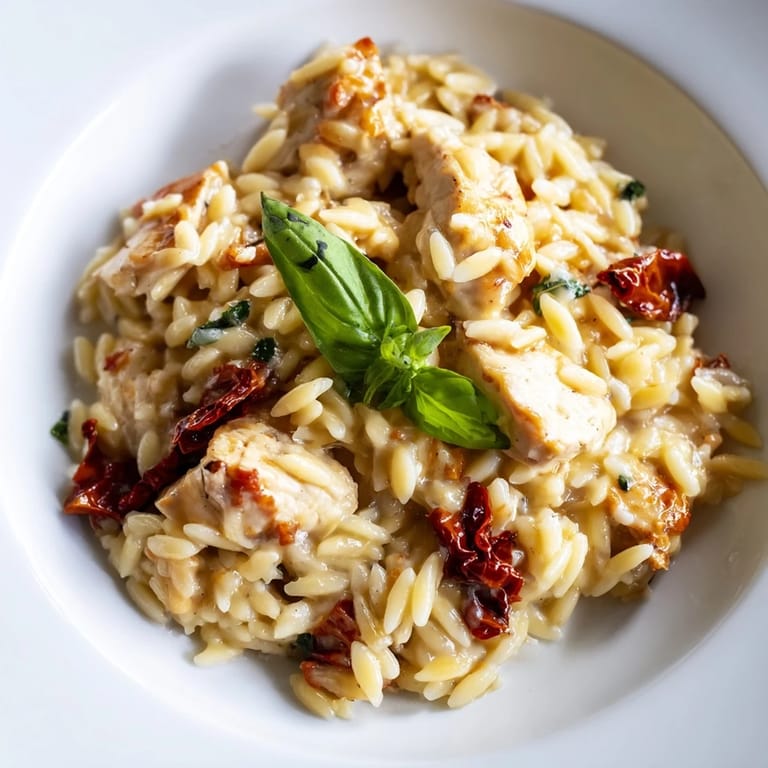
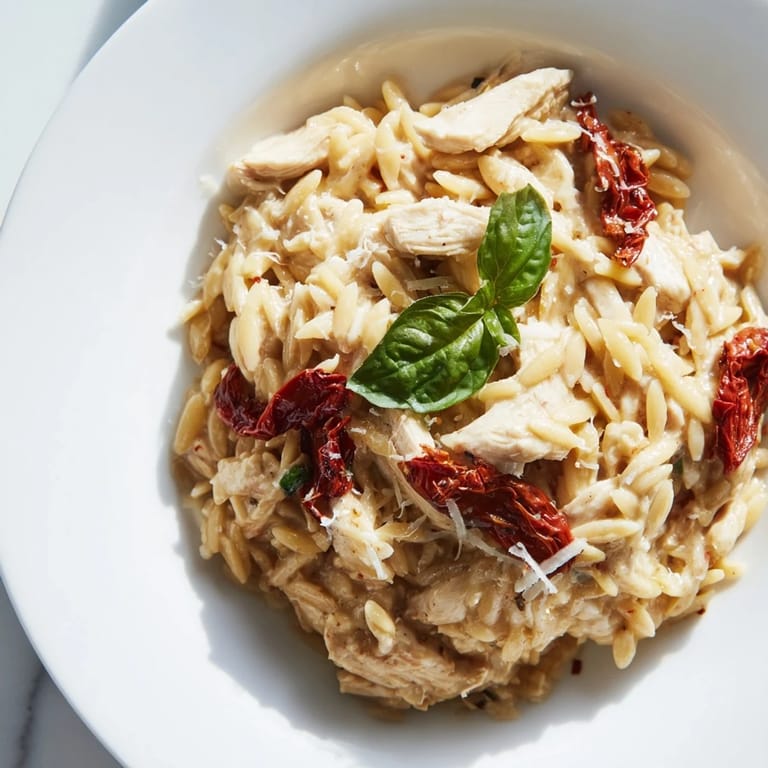
- Spoon the orzo into shallow bowls, making sure everyone gets chicken, tomatoes, and plenty of creamy sauce. Garnish with torn basil and extra Parmesan, and serve it hot.
 Save
Save One evening, I made this for a friend going through a rough week. We didn't talk much while we ate, just sat at the table with our bowls and let the food do its job. She looked up halfway through her second helping and said it tasted like a hug. I've never forgotten that, and now I make it whenever someone I care about needs comfort without words.
Making It Your Own
You can swap the chicken for shrimp if you want something lighter and quicker, just toss them in at the very end so they don't overcook. I've also used rotisserie chicken when I'm tired, shredding it and stirring it in during the last few minutes. For a vegetarian version, skip the meat entirely and add more vegetables like zucchini, bell peppers, or mushrooms. The sauce is rich enough to carry the dish on its own, and the orzo stays hearty and satisfying.
Pairing and Serving Ideas
This dish doesn't need much on the side, but a simple green salad with lemon vinaigrette and a crusty piece of bread for dipping into the sauce make it feel complete. I've served it with garlic bread, roasted asparagus, and even just a handful of arugula tossed on top for a peppery bite. A chilled glass of Pinot Grigio or a lightly oaked Chardonnay complements the creamy sauce beautifully. If you're feeding a crowd, double the recipe and use a wide, deep braiser so everything cooks evenly.
Storage and Reheating
Leftovers keep well in an airtight container in the fridge for up to three days. The orzo absorbs more liquid as it sits, so when you reheat it, add a splash of broth or cream to bring the sauce back to life. I usually warm it gently on the stove over low heat, stirring often, but the microwave works in a pinch if you cover the bowl with a damp paper towel. The flavors deepen overnight, so don't be surprised if it tastes even better the next day.
- Freeze individual portions in freezer-safe containers for up to two months, then thaw overnight in the fridge before reheating.
- If the sauce breaks or looks oily after reheating, whisk in a tablespoon of cream or a splash of pasta water to bring it back together.
- Garnish with fresh basil and Parmesan right before serving, even if it's leftovers, because it makes all the difference.
 Save
Save This is the kind of recipe that makes you feel capable and calm, even on a chaotic weeknight. I hope it fills your kitchen with good smells and your table with happy faces.
Recipe FAQs
- → Can I use chicken thighs instead of breasts?
Yes, boneless, skinless chicken thighs work wonderfully and stay tender. Cut them into bite-sized pieces and cook for 7-9 minutes until golden. They add richer flavor to the cream sauce.
- → How do I prevent the sauce from becoming too thick?
The cream naturally thickens the sauce as the orzo cooks. If it becomes too thick before the pasta is tender, stir in a splash of chicken broth or water gradually. The sauce should coat the back of a spoon but still flow slightly.
- → Is this dish gluten-free?
Standard orzo contains wheat, but you can easily substitute with gluten-free pasta using the same ratio. Cook according to the gluten-free package directions and add to the skillet at the same point in the recipe.
- → What wines pair best with this dish?
A crisp Pinot Grigio complements the sun-dried tomatoes and cream beautifully. Alternatively, try a lightly oaked Chardonnay to echo the richness of the sauce.
- → Can I make this ahead of time?
Yes, prepare through step 7, then cool and refrigerate for up to two days. Reheat gently on the stovetop, adding a splash of broth if needed, before stirring in the spinach and finishing touches.
- → How do I know when the orzo is properly cooked?
Taste the orzo after 8-10 minutes of simmering. It should be tender but still maintain a slight firmness, similar to al dente pasta. Stir occasionally to ensure even cooking and prevent sticking.