 Save
Save My neighbor stopped by on an April afternoon with a bundle of carrots from her garden, still wearing bits of soil, and asked if I could turn them into something special for her daughter's birthday tea. I'd made carrot cake before, but never one that felt this intentional—three layers instead of one, a proper cream cheese frosting thick enough to pipe, walnuts toasted and scattered across the top like edible confetti. That cake became the reason people started requesting it, not just for spring celebrations but whenever they wanted something that tasted like warmth and spice and genuine effort.
I learned the true power of this cake when my daughter brought it to a work potluck and came home with an empty carrier and a stack of recipe requests. She'd watched me layer it that morning, asking why the frosting needed to be so thick, and by the time she left, she understood that sometimes the extra care is exactly what makes someone's day better. Standing in the kitchen together, piping the frosting between layers, felt less like cooking and more like creating something we both believed in.
Ingredients
- All-purpose flour (2 1/2 cups): Sifting it isn't strictly necessary, but whisking it with the leavening agents ensures even distribution and prevents dense pockets.
- Baking powder and baking soda (2 tsp and 1 1/2 tsp): This combination creates lift and tang; don't shortcut by using one or the other.
- Ground cinnamon, nutmeg, and ginger (1 tsp, 1/2 tsp, and 1/2 tsp): These three are the backbone of the flavor profile—fresh spices make a noticeable difference in brightness.
- Eggs (4 large, room temperature): Cold eggs won't incorporate as smoothly and can make the batter break; letting them sit out for 20 minutes changes everything.
- Granulated and brown sugar (1 1/2 cups and 1/2 cup): The brown sugar adds moisture and depth; don't skip it even though granulated alone would technically work.
- Vegetable oil and unsweetened applesauce (1 cup and 1/2 cup): Oil keeps the cake tender, while applesauce adds moisture without extra fat, creating that perfect tender crumb.
- Vanilla extract (2 tsp total): One teaspoon goes into the cake, another into the frosting—this tiny detail ties the whole dessert together.
- Finely grated carrots (3 cups): Grating them fresh matters; they should release moisture as you work, not be dry shreds from a package.
- Chopped walnuts (1 cup plus 1/2 cup for topping): Rough chop the extra ones for decoration—they toast slightly as the cake bakes and add texture that catches light beautifully.
- Cream cheese and unsalted butter (16 oz and 1/2 cup): Both must be softened or the frosting will seize; room temperature is non-negotiable.
- Powdered sugar, sifted (4 cups): Sifting removes lumps and prevents grainy frosting that looks dull instead of cloud-like.
Tired of Takeout? 🥡
Get 10 meals you can make faster than delivery arrives. Seriously.
One email. No spam. Unsubscribe anytime.
Instructions
- Set your oven and pans:
- Preheat to 350°F and grease three 8-inch round pans, lining them with parchment circles so the cakes release cleanly. If you only have two pans, you can bake in batches, though baking all three together keeps everything at the same moisture level and bake time.
- Build your dry blend:
- Whisk flour, baking powder, baking soda, cinnamon, nutmeg, ginger, and salt in a medium bowl until the spices are evenly distributed and there are no lumps hiding in the corners. This step takes less than two minutes but prevents streaky spice distribution.
- Cream the wet base:
- Beat eggs and both sugars together until the mixture becomes pale and slightly thickened, about 2 to 3 minutes on medium speed. This creates air pockets that help the cake rise and lighten; you should see ribbons when you lift the beaters.
- Add oil and fruit:
- Pour in vegetable oil, applesauce, and vanilla, mixing until everything looks cohesive and slightly glossy. The batter will be quite wet at this point, which is exactly right.
- Fold in the dry ingredients:
- Add the dry mixture gradually, stirring just until no streaks of flour remain—overworking develops gluten and makes the cake tough. Stop mixing the moment you can't see white patches anymore.
- Incorporate carrots and walnuts:
- Fold in the grated carrots and chopped walnuts gently, using a spatula to turn the batter over itself rather than beating it. The carrots will release a bit of moisture, making the batter wetter than typical cake batter, and this is perfect.
- Distribute and smooth:
- Divide the batter evenly among the three prepared pans, using a spatula to smooth the tops so each layer bakes at the same rate. An offset spatula makes this easier, but the back of a spoon works too.
- Bake until set:
- Bake for 30 to 35 minutes, checking for doneness by inserting a toothpick in the center—it should come out clean or with just a few moist crumbs, never wet batter. The cakes should be golden around the edges and spring back gently when touched.
- Cool with patience:
- Let the cakes rest in their pans for 10 minutes, then turn them out onto wire racks to cool completely. Trying to frost them while warm will melt the frosting and make the layers slide; a good two hours of cooling ensures stability.
- Prepare the frosting:
- Beat softened cream cheese and butter together until smooth and creamy, then gradually add sifted powdered sugar, vanilla, and salt, beating until light and fluffy. This takes about 5 minutes on medium speed; the frosting should look cloud-like and hold soft peaks.
- Level and layer:
- If your cakes domed slightly, use a serrated knife to level the tops, then place the first layer on a serving plate and spread with a thick layer of frosting. Repeat with the second and third layers, then frost the entire outside generously.
- Decorate and chill:
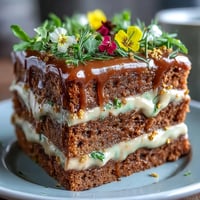
- Scatter extra walnuts across the top and arrange fresh edible flowers or carrot curls if using them, then refrigerate for at least one hour before serving so the frosting sets and the cake becomes easier to slice. A chilled cake also tastes richer and holds its shape beautifully.
 Save
Save The moment when a quiet friend finally spoke up at a dinner party to ask for the recipe—that's when I realized this cake does something beyond tasting good. There's something about the combination of spice, moisture, and that bright cream cheese frosting that makes people slow down and actually taste each bite instead of just eating dessert.
Why the Three-Layer Structure Matters
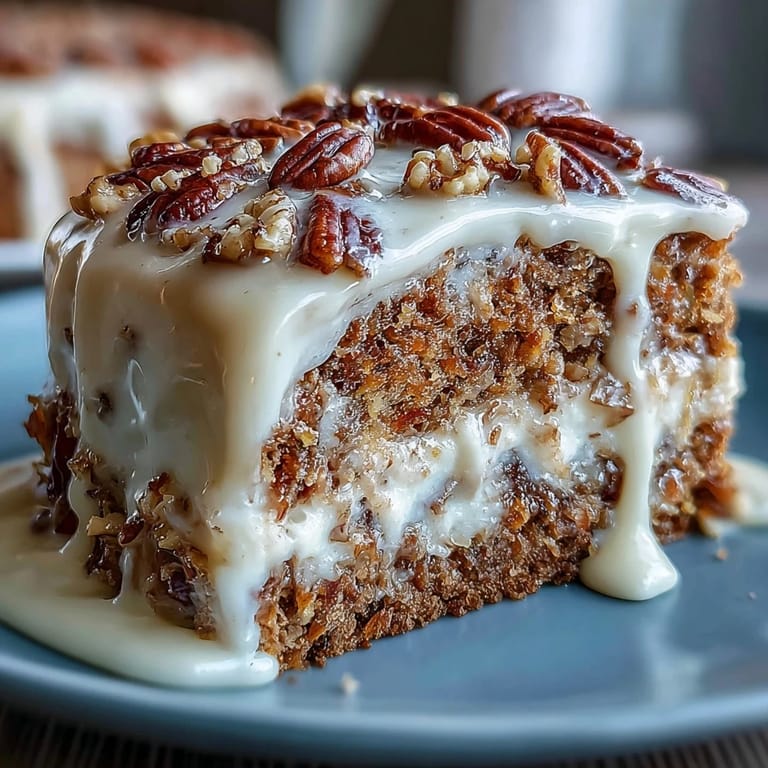
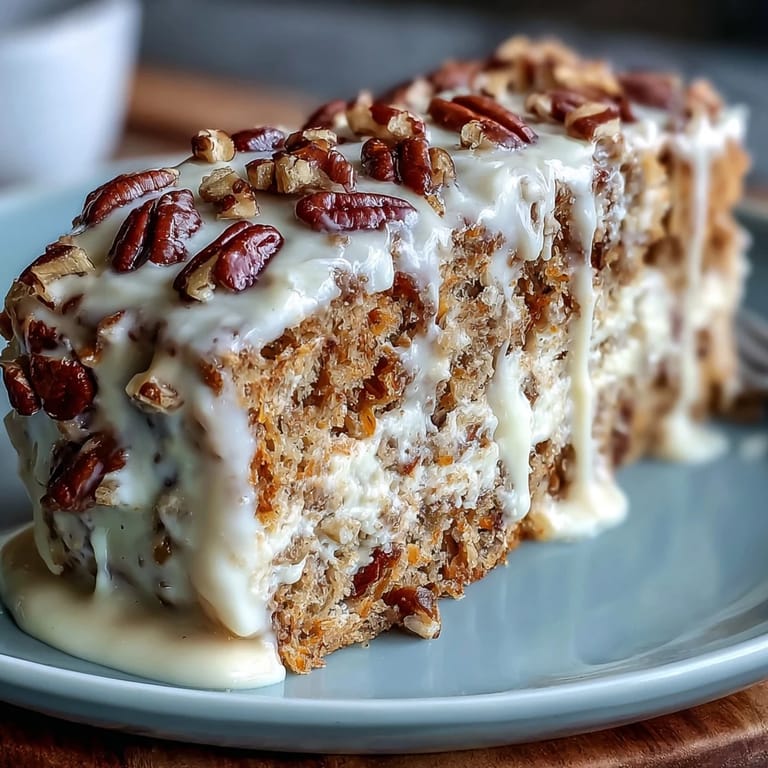
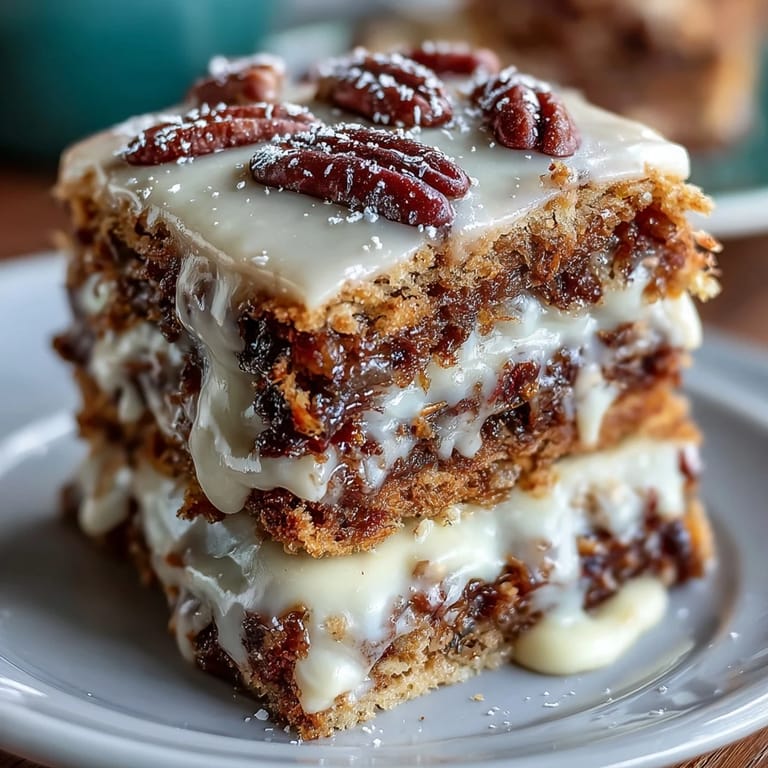
Using three pans instead of one changes the entire experience of eating this cake. Each layer is thinner and bakes more evenly, so you get consistent moisture from edge to center without any dry spots or dense areas. The visual drama of slicing into those white frosting stripes makes people lean forward before they even taste it, and that moment of anticipation is half the pleasure.
The Secret of the Spice Balance
These three spices work together in a way that feels almost choreographed. Cinnamon brings warmth and familiarity, ginger adds brightness and a subtle heat that wakes up your palate, and nutmeg deepens everything with an almost savory complexity. If you reduce any one of them, the cake still works, but it becomes less interesting—the spices need each other to create that memorable flavor that lingers pleasantly after you've finished your slice.
Storage and Make-Ahead Strategies
This cake actually improves slightly if made a day or even two days ahead, as the flavors settle and the moisture redistributes evenly. You can bake the layers, cool them completely, wrap them individually in plastic wrap, and refrigerate for up to three days before frosting. The assembled cake keeps beautifully in the refrigerator for up to four days, though bringing it back to room temperature for 30 minutes before serving makes the frosting less stiff and more luxurious on the tongue.
- Freeze unfrosted cake layers in an airtight container for up to one month and thaw at room temperature before frosting.
- Once frosted and decorated, keep the cake chilled until service to prevent the frosting from softening or sliding on warm days.
- Leftovers actually taste better cold straight from the refrigerator, when the spices are more pronounced and the frosting has a slight bite to it.
 Save
Save This cake has become the one I make when I want to say something without words—when showing up matters more than the occasion itself. It's the dessert that brings people back to your table not because they're obligated, but because they remember how it made them feel.
Recipe FAQs
- → How do the spices enhance the cake?
Cinnamon, nutmeg, and ginger add warmth and depth, complementing the sweetness of the carrots and balancing the overall flavor.
- → What is the best way to grate carrots for this cake?
Use a fine grater to ensure the carrots distribute evenly, contributing moisture and subtle texture without overwhelming the batter.
- → Can walnuts be substituted?
Pecans or chopped almonds can be used as alternatives, offering a similar crunchy texture and nutty flavor.
- → How should the layers be frosted?
Apply a smooth, even layer of cream cheese frosting between each cooled cake layer, then finish by icing the top and sides.
- → What is a good pairing to serve alongside this cake?
A lightly sweet Riesling or chai tea pairs wonderfully, complementing the spices and creamy frosting notes.