 Save
Save My neighbor brought these over one spring afternoon, and I watched her assemble them on my kitchen counter with the kind of casual confidence that made it look effortless. The meringues were impossibly crisp, barely a whisper of sound when she bit into one, and the way the cream and berries tumbled together felt less like cooking and more like edible architecture. I'd been intimidated by pavlovas for years, thinking they required some secret knowledge I didn't possess, but seeing how straightforward the process actually was changed everything. Now they're my go-to when I want something that looks showstopping but won't keep me stressed in the kitchen.
I made these for my daughter's school bake sale last May, and the first batch sold out before lunch ended. One parent came back asking if I could make them again the following week, which was honestly the best compliment. There's something about watching people's faces light up when they bite into the crispy shell and find that cloud of cream waiting for them that makes the careful egg-white beating completely worth it.
Ingredients
- Egg whites: They must be at room temperature and absolutely free of any yolk or fat, or they simply won't whip up to those glossy peaks no matter how long you beat them.
- Superfine sugar: Don't skip this for regular granulated sugar, since the smaller crystals dissolve completely and create that signature glossy, smooth meringue.
- Cornstarch: This tiny addition gives the meringue structure and helps it stay crisp rather than weeping moisture as it sits.
- White vinegar: Just a teaspoon keeps the meringue stable and prevents it from deflating after it comes out of the oven.
- Vanilla extract: I use it in both the meringue and the cream for a cohesive, subtle flavor throughout.
- Heavy whipping cream: Make sure it's properly chilled, and don't overbeat it or you'll find yourself scooping vanilla butter instead of fluffy clouds.
- Fresh strawberries: The maceration step with a bit of sugar and lemon juice draws out their juice and makes them taste even more intensely strawberry-like.
Tired of Takeout? 🥡
Get 10 meals you can make faster than delivery arrives. Seriously.
One email. No spam. Unsubscribe anytime.
Instructions
- Set the stage:
- Preheat your oven to 250°F and line a baking sheet with parchment paper. Having everything ready means you're not scrambling once those egg whites start coming together.
- Beat the whites:
- In a completely clean bowl, beat your room-temperature egg whites on medium speed until soft peaks form. The slightest bit of yolk or oil will sabotage this, so it's worth taking a moment to make sure everything is pristine.
- Add sugar gradually:
- Once soft peaks appear, begin adding the superfine sugar one tablespoon at a time, beating continuously until the mixture becomes stiff, glossy, and thick enough that peaks stand straight up when you lift the beater. This takes patience, but you'll feel the transformation happen.
- Fold in the secret ingredients:
- Gently fold in the cornstarch, vinegar, and vanilla with a spatula, being careful not to deflate all that air you just whipped in. The mixture should remain fluffy and light.
- Shape the nests:
- Spoon or pipe the meringue onto your parchment-lined sheet, creating 6 small nests with a slight indentation in the center where the cream and berries will eventually sit. If you're not confident with piping, a spoon and the back of a teaspoon work beautifully too.
- Bake low and slow:
- Bake for exactly one hour at the low temperature, then turn off the oven and leave the meringues inside with the door slightly ajar to cool completely. This gradual cool-down prevents sudden cracks.
- Macerate the strawberries:
- While the meringues are cooling, toss your sliced strawberries with a tablespoon of sugar and a teaspoon of lemon juice, then let them sit for about 15 minutes. You'll notice them begin to release their own juice, creating a light syrup.
- Whip the cream:
- When you're almost ready to assemble, whip your cold heavy cream with powdered sugar and vanilla until soft peaks form. Stop as soon as peaks appear, since overbeating turns it grainy and unpleasant.
- Assemble and serve:
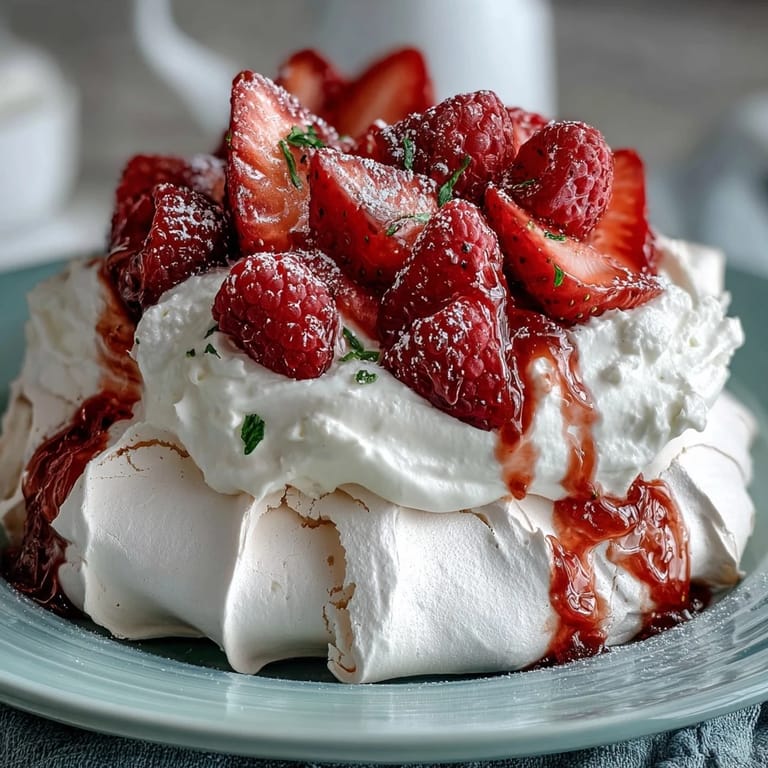
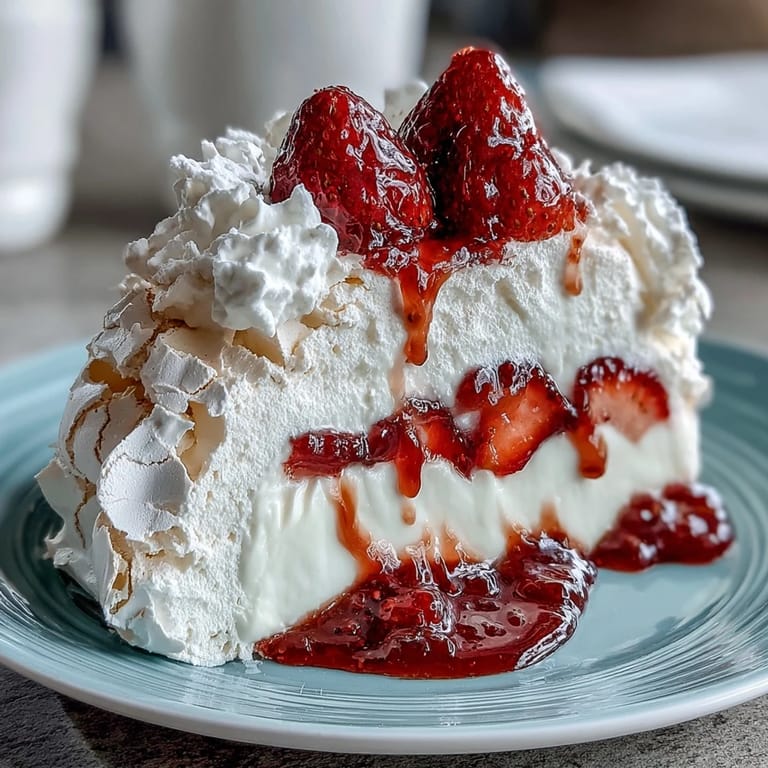
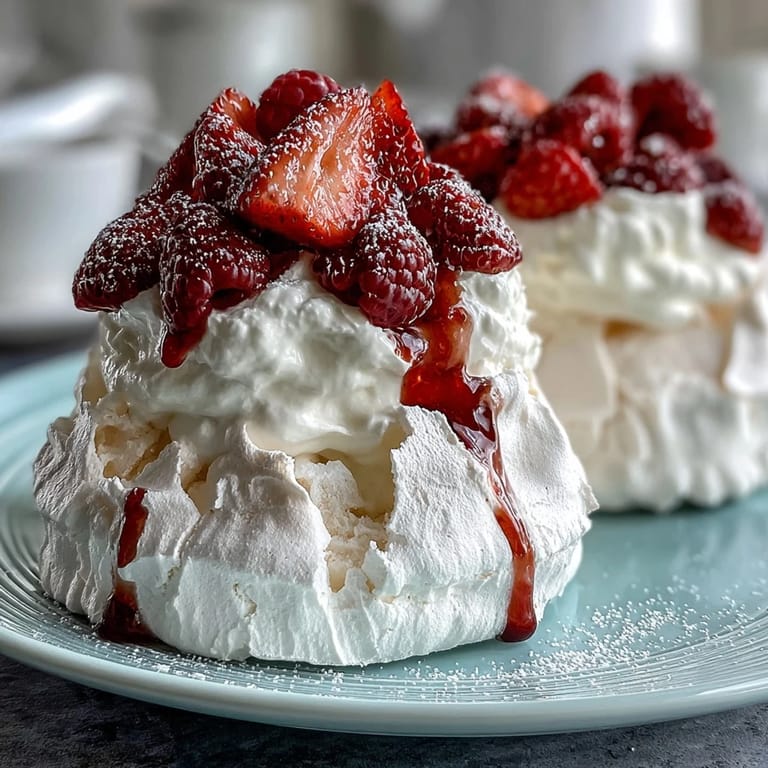
- Place each meringue nest on a plate, fill the center with a generous dollop of whipped cream, and top with the macerated strawberries. Serve right away so the meringue stays crisp and contrasts beautifully with the soft cream.
 Save
Save I made these for my mother's sixtieth birthday brunch, and she got a little teary when she took that first bite. It wasn't really about the pavlovas themselves, but somehow they became part of a morning that felt special and intentional. Now whenever I make them, I think about how food has this quiet power to mark moments we want to remember.
Why Meringue Matters
The beauty of meringue is that it's almost entirely air and sugar, which means every beat of the mixer is actually creating thousands of tiny air bubbles that expand and set as they bake. When you're beating those egg whites, you're literally building the structure of the final dessert. I learned this the hard way one afternoon when I thought I could speed things up by using medium-high speed from the start, and ended up with a dense, deflated mess that tasted fine but didn't have that ethereal quality that makes pavlovas special.
The Strawberry Trick
Macerating the strawberries is such a small step, but it transforms them completely. The sugar draws out their natural juice, and the lemon juice brightens their flavor while preventing that dull taste you sometimes get from berries that have been sitting around. When you spoon these macerated berries and their syrup over the whipped cream, the whole thing becomes more sophisticated than fresh berries alone.
Making Them Ahead
One of my favorite things about this recipe is that the meringues actually improve with a day of rest in an airtight container. Something about sitting overnight makes them even crispier, almost like they're continuing to dry out gently. This means you can focus entirely on assembling them just before your guests arrive, which takes most of the stress out of the equation.
- Store the cooled meringues in an airtight container with parchment between layers to prevent sticking.
- Prepare the strawberries and whipped cream no more than an hour before serving, and assemble each pavlova only moments before it goes to the table.
- If you want to get fancy, you can drizzle the finished pavlovas with a berry coulis or passion fruit pulp right before serving.
 Save
Save These little pavlovas have become my answer to the question of what to make when I want to feel like I've done something special in the kitchen without spending all day there. They're the kind of dessert that makes people feel celebrated without being fussy about it.
Recipe FAQs
- → How do I achieve perfectly crisp meringue nests?
Beat egg whites until stiff, glossy peaks form and bake at low temperature (120°C) for about an hour. Allow meringues to cool in the turned-off oven to maintain crispness.
- → Can I substitute strawberries with other fruits?
Yes, fresh berries like raspberries, blueberries, or a mixed berry medley work well to complement the whipped cream and meringue.
- → What is the purpose of vinegar and cornstarch in the meringue?
Vinegar stabilizes the egg whites while cornstarch helps achieve a crisp exterior and a soft interior texture in the baked meringues.
- → How long should the strawberries macerate for the best flavor?
Macerating sliced strawberries with sugar and lemon juice for at least 15 minutes enhances their natural sweetness and adds a slight tang.
- → Can I prepare mini pavlovas in advance?
Yes, meringue nests can be baked and stored in an airtight container a day ahead. Assemble with whipped cream and strawberries just before serving to maintain texture.