 Save
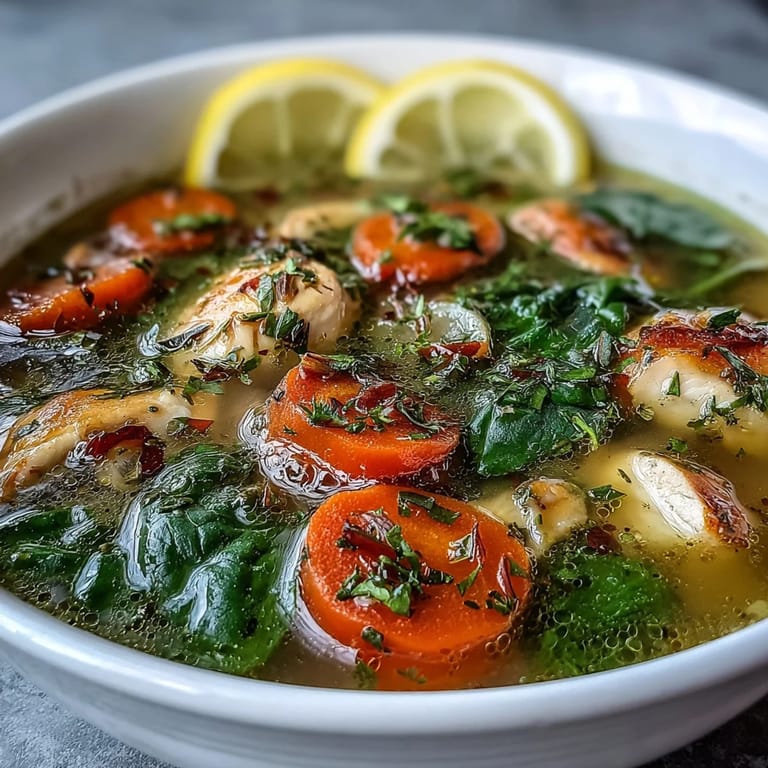
Save My neighbor knocked on my door last winter with a box of vegetables from her garden and asked if I could turn them into something that wouldn't feel heavy. I stood there at my kitchen counter, staring at carrots and celery, when it hit me—a soup that tastes like you're doing something good for yourself. This one-pot wonder came together almost by accident, but it's become the recipe I reach for whenever I need clarity in a bowl.
I made this for my sister when she was trying to reset after weeks of heavy cooking during the holidays. She sat at my kitchen table while the pot simmered, and the smell alone seemed to shift something in her mood. By the time she left with leftovers, she'd already asked for the recipe twice.
Ingredients
- Boneless, skinless chicken breasts (2 medium, about 350 g, cut into bite-sized pieces): Bite-sized means they cook evenly and soak up all the broth flavor—I learned this the hard way after serving undercooked chunks to guests.
- Medium carrots (2, peeled and sliced): The natural sweetness balances the herbs beautifully, and slicing them means they'll soften at the same pace as everything else.
- Celery stalks (2, sliced): This is the backbone of the flavor base; don't skip it or the broth tastes thin.
- Medium zucchini (1, diced): It disappears into the broth and adds body without weighing you down.
- Small onion (1, finely chopped): Finely chopped means it melts into the base rather than sitting there in chunks.
- Garlic cloves (3, minced): Minced raw and cooked for just a minute keeps it bright instead of bitter.
- Baby spinach (150 g): Add it at the very end or it turns to mush; fresh spinach added last keeps its nutritional power intact.
- Small potato (1, peeled and diced, optional): This is your secret if you want the broth to feel more substantial and velvety.
- Low-sodium chicken broth (1.5 liters): Low-sodium is crucial because you're controlling the seasoning; store-bought broths vary wildly in saltiness.
- Water (250 ml): This dilutes the broth just enough so it tastes clean rather than concentrated.
- Lemon juice (1 lemon, plus wedges for serving): Fresh squeezed makes all the difference; bottled tastes flat and one-dimensional.
- Bay leaf (1): It infuses quietly and must be removed before serving or it catches on your teeth.
- Dried thyme (1 tsp, or 1 Tbsp fresh thyme leaves): Fresh is silkier if you have it, but dried thyme is reliable and less woody if you use the leaves, not the stems.
- Dried oregano (1/2 tsp): Just enough to remind you this is Mediterranean-inspired without overpowering everything.
- Fresh parsley (1/4 cup, chopped): Parsley is underrated; it adds a gentle green note that rounds out the broth.
- Fresh dill (2 Tbsp, chopped): Dill is the surprise that makes people ask what's different; add it last so it stays fresh and aromatic.
- Salt and freshly ground black pepper: Always taste before adding more; the broth already carries some salt.
- Olive oil (1 Tbsp): Just enough to gently brown the vegetables without turning this into something heavy.
Tired of Takeout? 🥡
Get 10 meals you can make faster than delivery arrives. Seriously.
One email. No spam. Unsubscribe anytime.
Instructions
- Start the base:
- Heat olive oil in your largest soup pot over medium heat. Add the onion, carrots, and celery, stirring them around for about 5 minutes until they're just starting to soften at the edges. The kitchen should smell sweet and warm at this point.
- Build the aromatics:
- Stir in the minced garlic and cook for about 1 minute until it's fragrant—you'll know it's ready when you can actually smell it in the air. Don't let it sit longer or it starts to taste acrid.
- Sear the chicken:
- Add your bite-sized chicken pieces and stir them around for 3 to 4 minutes until they're lightly browned on all sides. This isn't about cooking them through; it's about giving them a little color and letting them release flavor into the pot.
- Add the broth and main vegetables:
- Pour in the chicken broth and water, then add the diced potato (if you're using it), zucchini, bay leaf, dried thyme, and oregano. Season generously with salt and pepper, then stir everything together so the seasonings distribute evenly.
- Simmer gently:
- Bring the pot to a gentle boil, then turn the heat down to low, cover it, and let it simmer quietly for about 20 minutes. The vegetables should be tender and the chicken completely cooked through; you'll know because a piece will shred apart easily with the edge of your spoon.
- Finish with freshness:
- Stir in the baby spinach, fresh parsley, and fresh dill. Simmer uncovered for just 3 to 4 minutes until the spinach is wilted and bright green. The pot will smell almost too good at this point.
- Brighten with lemon:
- Stir in the fresh lemon juice and taste the whole thing. This is your moment to adjust seasoning—maybe it needs more salt, maybe it needs more pepper. Trust your palate.
- Serve:
- Fish out the bay leaf carefully, then ladle the soup into bowls. Garnish with extra fresh herbs if you have them and serve with lemon wedges so everyone can adjust the brightness to their taste.
 Save
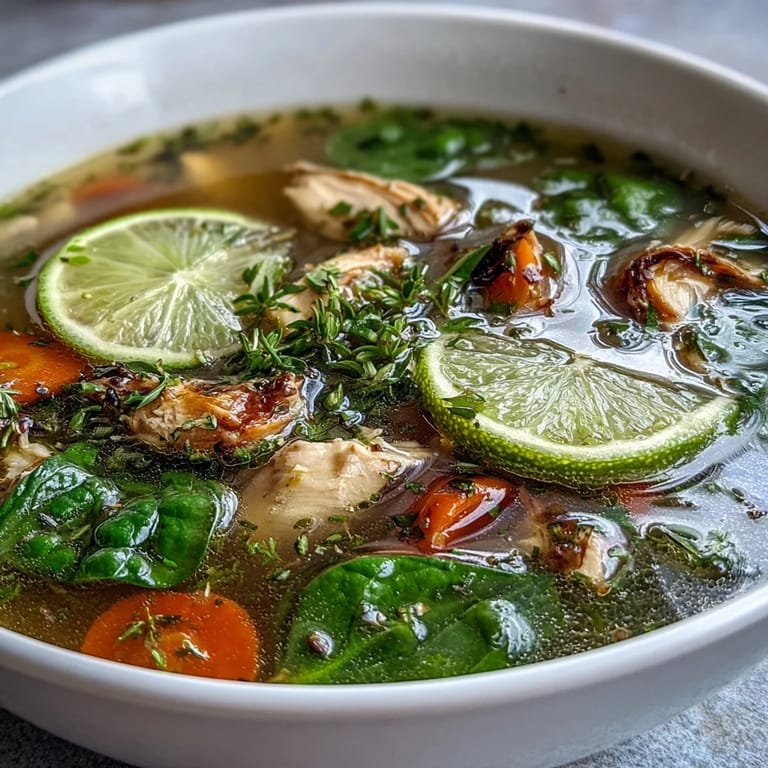
Save Last month, a friend texted me at midnight saying she couldn't sleep because she was worried about everything at once. I made this soup the next morning and brought a container to her house, and she ate it slowly while we sat on her porch. She said later that it was the first thing that day that felt gentle instead of urgent.
Why This Soup Feels Like Self-Care
There's something about a pot of vegetables simmering on the stove that changes the energy of your kitchen. The warmth, the smell, the slow bubbling—it all signals that you're doing something nourishing rather than just going through the motions. This soup isn't flashy or complicated; it's honest and straightforward, which somehow makes it feel more like an act of kindness toward yourself.
How to Customize Without Losing the Soul
The beauty of this recipe is that it's forgiving. If you don't have dill, use more parsley or add a bit of fresh tarragon instead. If zucchini isn't in your fridge, swap in green beans or mushrooms. The structure stays the same—aromatic base, protein, broth, vegetables, fresh herbs at the end—so the soup always feels cohesive no matter what you adjust. I've made it with chickpeas instead of chicken on days when I wanted something lighter, and it's just as satisfying.
Storage and Flavor Development
Refrigerate leftovers in airtight containers and they'll keep for up to three days, though I've kept them longer because soups seem to stay fresher than you'd expect. The flavors genuinely improve as they sit—the herbs settle in, the broth becomes rounder, and it tastes like comfort on day two. If you want to freeze it, I'd suggest leaving out the spinach and dill, then adding them fresh when you reheat. Reheating takes just a few minutes on low heat; don't let it boil or you'll lose some of that bright, herbal quality you worked for.
- Freeze in individual portions so you can grab one bowl whenever you need it.
- Reheat gently on the stovetop rather than blasting it in the microwave, which can make broth taste flat.
- Add fresh lemon juice again when serving leftovers to bring back that brightness that fades slightly with time.
 Save
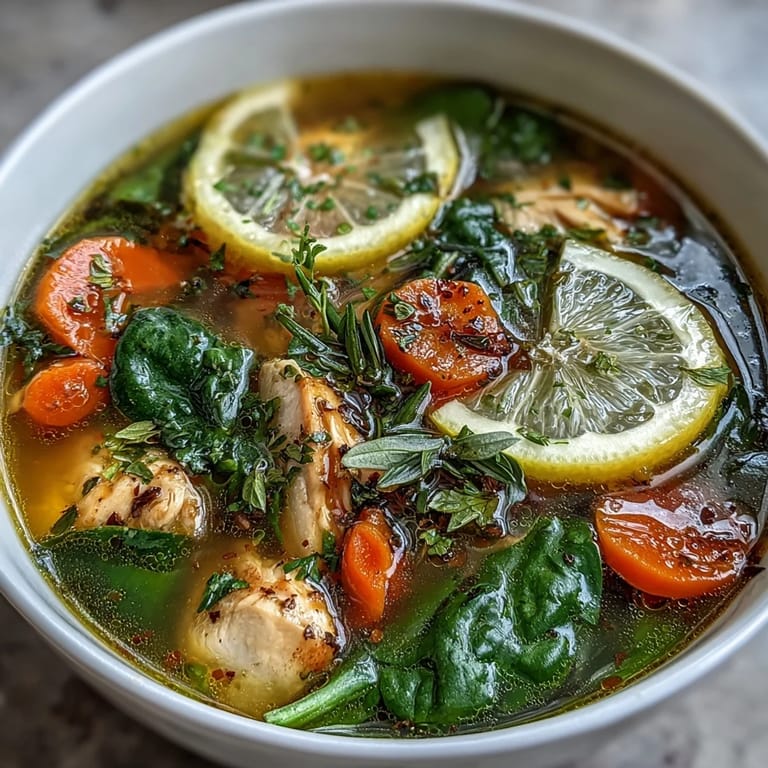
Save This soup has become my answer to so many days—tired mornings, overwhelmed evenings, and moments when I need to feel like I'm taking care of myself. It asks very little and gives back so much more than it should.
Recipe FAQs
- → Can I make this soup vegetarian?
Yes, omit the chicken and substitute with canned chickpeas or white beans for protein and texture.
- → How can I add more flavor to the soup?
Add fresh herbs like thyme and dill, or sprinkle a pinch of chili flakes for a gentle heat boost.
- → What is the best way to store leftovers?
Keep leftovers refrigerated in an airtight container for up to 3 days; flavors will deepen overnight.
- → Can I use different vegetables in this dish?
Yes, feel free to swap or add vegetables based on what you have, such as potatoes for added heartiness or spinach for greens.
- → Is this soup suitable for gluten-free diets?
The soup is naturally gluten-free if using gluten-free broth; always check broth labels to ensure no gluten content.