 Save
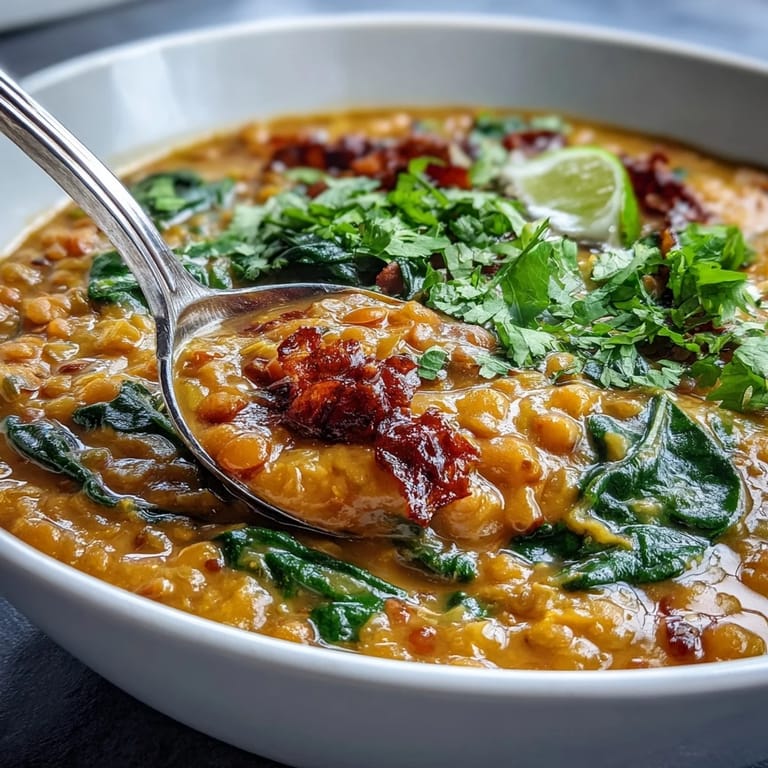
Save There's something about the way a pot of dahl transforms as it simmers—that moment when the kitchen fills with warm spice and you realize dinner is going to be exactly what you needed. I stumbled onto this version one autumn evening when I had half a can of coconut milk sitting in the pantry and a craving for something both comforting and alive. The lime at the end changed everything, cutting through the richness with such brightness that I've made it this way ever since.
I made this for a friend who had just moved into her first apartment, and watching her face when she tasted how silky the lentils had become reminded me why cooking for people matters. She ate three bowls and asked if I could write down the recipe, which I've been sharing ever since without ever feeling like I was repeating myself.
Ingredients
- Red lentils (1 cup, 200 g): Rinse these well before using—the starch on them can make the dahl gluey, and we want creamy, not gluey.
- Yellow onion (1 medium, finely diced): This is your flavor foundation, so don't skip the dicing step; it helps them dissolve into sweetness.
- Garlic (3 cloves, minced) and fresh ginger (1-inch piece, grated): These two create the aromatic backbone that makes people ask what smells so good.
- Curry powder (1 tbsp): Quality matters here; a fresher blend will make the whole dahl sing.
- Ground cumin (1 tsp), turmeric (1/2 tsp), coriander (1/2 tsp), and cayenne (1/4 tsp): Toast these together briefly to unlock their depth—it's a small step that makes a big difference.
- Full-fat coconut milk (1 can, 14 oz/400 ml): Don't use light; the richness is part of what makes this dish special.
- Vegetable broth (2 1/2 cups, 600 ml): A good broth lifts the whole dish, so use one you'd actually drink.
- Fresh baby spinach (3 cups, 90 g): It wilts down dramatically, so don't worry about the volume.
- Tomato (1 medium, diced): This adds a gentle acidity that balances the coconut's sweetness.
- Coconut oil or olive oil (1 tbsp): I prefer coconut oil for the subtle flavor it contributes, but olive oil works beautifully too.
- Lime wedges and fresh cilantro: These aren't optional—the brightness they bring is essential to the final taste.
Tired of Takeout? 🥡
Get 10 meals you can make faster than delivery arrives. Seriously.
One email. No spam. Unsubscribe anytime.
Instructions
- Heat your oil and build the base:
- Warm the coconut oil in a large pot over medium heat, then add the diced onion and let it soften for 3 to 4 minutes until it turns translucent and sweet-smelling. You'll know it's ready when it starts to soften at the edges and releases its natural sugar.
- Wake up the aromatics:
- Stir in the minced garlic and grated ginger and cook for just a minute—you want them fragrant but not browned. This is where your kitchen starts to smell like comfort.
- Toast the spices:
- Add all your dried spices and stir constantly for about 30 seconds so they release their essential oils and the whole mixture becomes deeply aromatic. You'll taste the difference this single step makes.
- Combine the lentils and tomato:
- Mix in your rinsed red lentils and the diced tomato, stirring to coat everything in the spiced oil. Let this sit for a minute so the lentils start to toast slightly.
- Add the liquids and bring to a simmer:
- Pour in the coconut milk and vegetable broth, stirring to combine everything evenly, then bring the whole pot to a gentle boil. You'll see it bubbling around the edges first, then building into a soft rolling boil.
- Simmer until creamy:
- Reduce the heat to low, cover the pot, and let it cook for 20 to 25 minutes, stirring occasionally so the lentils don't stick to the bottom. The red lentils will break down into a creamy texture as they cook, which is exactly what you want.
- Add the spinach:
- Stir in the fresh spinach and let it wilt for about 2 minutes, turning from bright green to a darker, softer shade. It happens faster than you'd expect.
- Taste and adjust:
- Before serving, taste the dahl and adjust the salt, pepper, or cayenne to your preference. This is your chance to make it exactly how you like it.
- Serve with brightness:
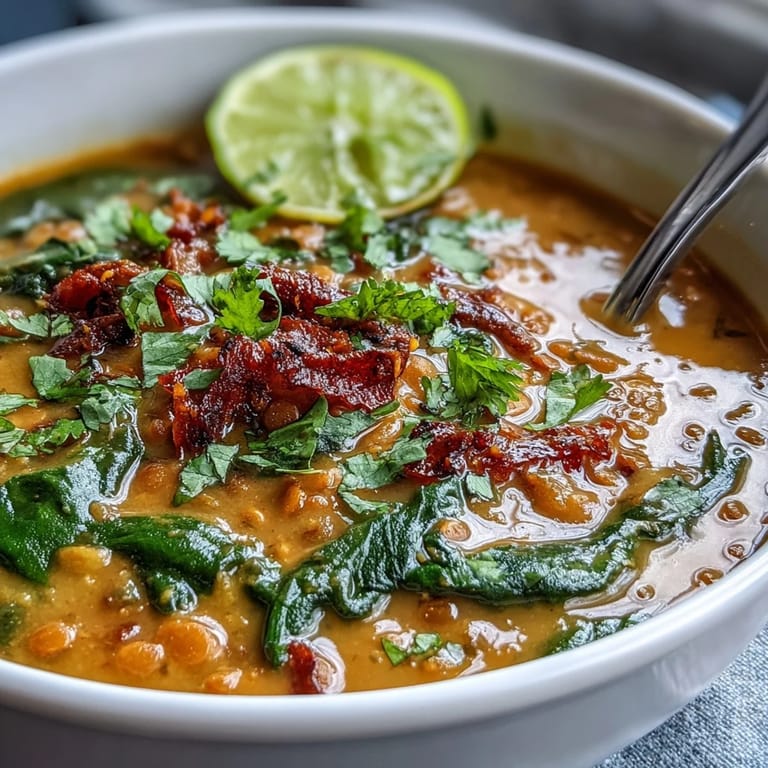
- Ladle the warm dahl into bowls and serve immediately with lime wedges and fresh cilantro scattered on top. The lime juice brightens everything in a way that feels almost magical.
 Save
Save This dahl taught me that the simplest meals often become the ones people remember most, especially when they're made with intention and served with warmth. There's something about a one-pot dinner that says 'I took care of dinner so we could focus on everything else,' and that matters.
Why This Works as a Weeknight Dinner
Dahl doesn't require you to be a skilled cook or plan three days ahead—everything that needs to happen happens in one pot in less than an hour, which means you can go from thinking about dinner to eating it without stress. The kind of meal that allows you to be present instead of frantically chopping vegetables at the last minute is worth its weight in gold on a Tuesday night.
Making It Your Own
Once you've made this basic version a few times, you'll start seeing how flexible it really is. I've added roasted chickpeas for extra protein, swapped spinach for kale on days when the spinach looked tired, and even thrown in diced carrots and bell pepper to make it chunky and more substantial. The foundation is strong enough that it welcomes improvisation.
Serving Suggestions and Storage
This dahl pairs beautifully with fluffy basmati rice or warm naan, which you can make ahead or pick up from a bakery so you're not managing multiple pots. It keeps well in the refrigerator for up to four days and actually tastes better the next day as the spices deepen and meld together, making it excellent for meal prep.
- Serve it over rice or with naan for a more filling meal.
- Leftover dahl reheats gently on the stovetop with a splash of water or extra broth to loosen it up.
- It freezes beautifully for up to three months, so make extra when you can.
 Save
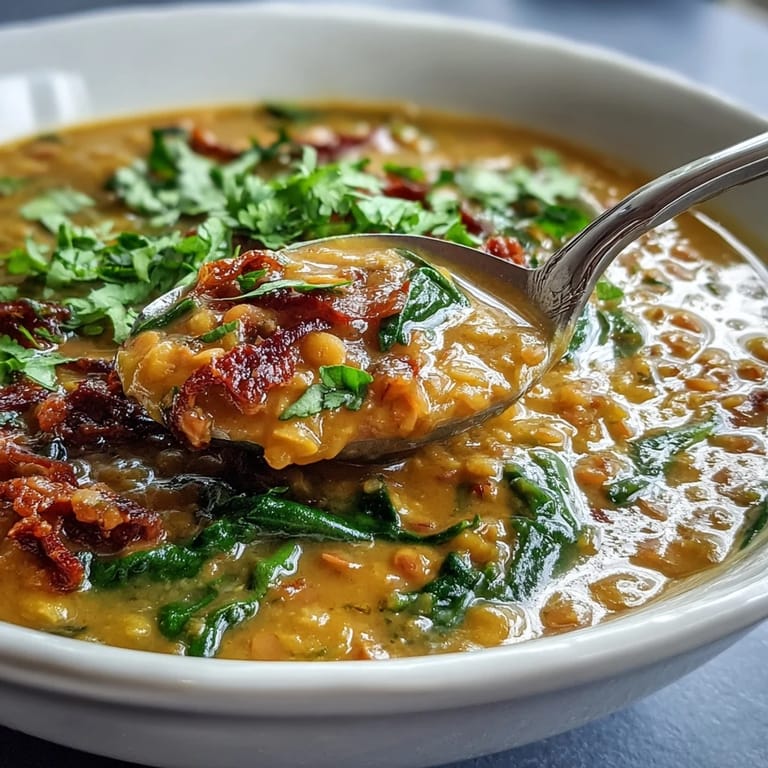
Save This dahl became my answer to so many different moments—tired weeknights, when I'm cooking for people I want to impress, and lazy Sunday afternoons when I just want something nourishing and warm. It's the kind of recipe that earns a permanent spot in your regular rotation.
Recipe FAQs
- → Can I substitute red lentils with other lentils?
Yes, but red lentils cook faster and become creamy. Other lentils may require longer cooking and retain more texture.
- → What can I use instead of coconut milk?
You can replace coconut milk with cashew cream or a dairy-free milk alternative for a similar creamy texture.
- → How do I adjust the spice level?
Modify the cayenne pepper amount to suit your heat preference, or omit it for a milder flavor.
- → Can I add more vegetables to this dish?
Yes, diced carrots or bell peppers can be added along with the tomato for extra texture and flavor.
- → What dishes pair well with this lentil dahl?
Serve it alongside basmati rice or warm naan bread to create a balanced and filling meal.