 Save
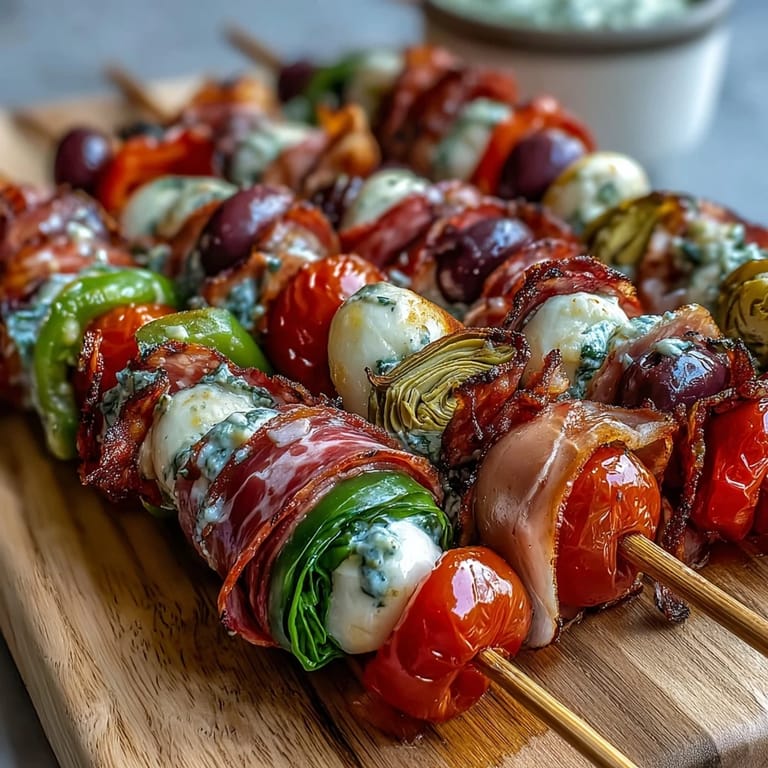
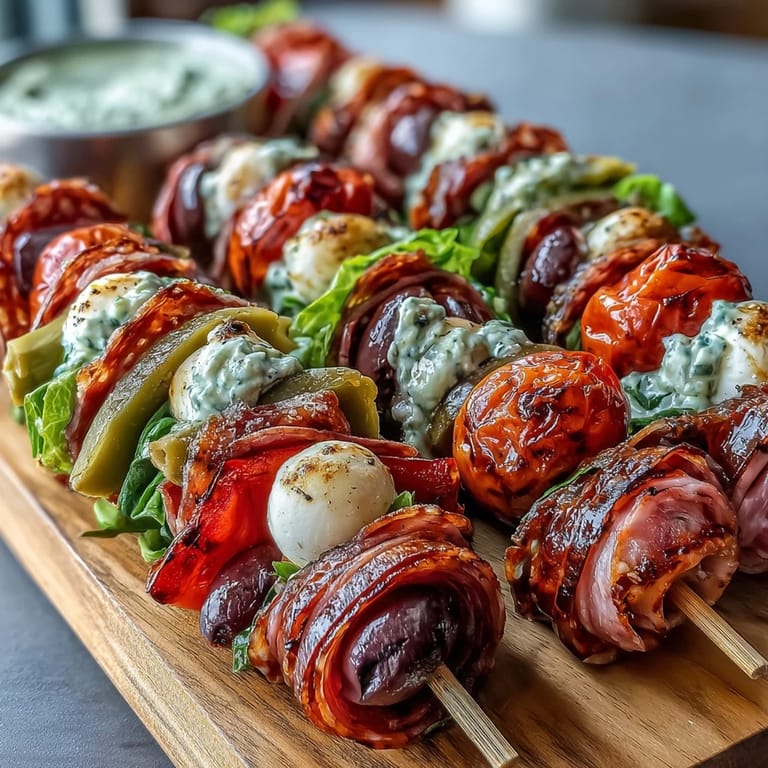
Save My friend Marcus showed up to a summer gathering with these Italian sub skewers last July, and I watched people abandon their chairs to hover around the platter like seagulls at a beach bonfire. The way he'd threaded those meats and peppers with such casual confidence made me curious, so I pestered him for the recipe right there between bites. Turns out, he'd invented them out of pure laziness—he wanted all the flavors of a sandwich without actually making sandwiches. What started as a shortcut became the most portable, elegant thing I'd ever seen him create in a kitchen.
I made these for a potluck at my daughter's soccer field, and watching kids and their parents actually sit down together to eat something I'd brought felt unexpectedly meaningful. One of the dads asked for the recipe, then admitted he'd been intimidated by the aioli until I showed him how it was just egg, mustard, and patience. By the end of that afternoon, three families had asked me to make them again for their own summer plans.
Ingredients
- Genoa salami, deli ham, and mortadella: The holy trinity of Italian sandwich flavor—use the thinnest slices you can find so they fold neatly without overshadowing everything else.
- Fresh mozzarella balls (bocconcini): Small is key here; they should be a single bite, not something you're wrestling with on a stick.
- Cherry tomatoes: Choose ones that are still slightly firm; overripe ones will burst and make your skewer soggy.
- Pepperoncini or banana peppers: The acidity and slight heat are what make these skewers feel alive; don't skip them or use something mild like bell peppers instead.
- Marinated artichoke hearts: Buy them jarred and chop them yourself rather than using the pre-chopped version, which can turn mushy.
- Roasted red peppers: Jarred is fine and actually preferable since fresh ones can be watery; pat them dry before assembling.
- Pitted black olives and romaine lettuce: The olives add brininess and the lettuce prevents everything from sliding around on the stick.
- Egg yolk, Dijon mustard, garlic, and lemon juice: These four ingredients are your aioli foundation—don't use old eggs or bottled lemon juice if you can help it.
- Extra virgin olive oil and neutral oil blend: Using both creates an aioli that's rich but not heavy; pure olive oil alone tends to taste overpowering.
Tired of Takeout? 🥡
Get 10 meals you can make faster than delivery arrives. Seriously.
One email. No spam. Unsubscribe anytime.
Instructions
- Set up your assembly line:
- Lay out all your ingredients in small bowls or on a cutting board so everything is within arm's reach. Thread the skewers slowly and deliberately, alternating textures and colors as you go—the visual appeal matters as much as the taste here.
- Roll and fold the meats:
- Don't just thread a flat slice; fold or roll each piece of salami, ham, and mortadella so they look intentional and catch light differently on the stick. This small detail is what separates "thrown together" from "I planned this."
- Build the aioli foundation:
- Crack your egg into a bowl and make sure no shell gets in—that one tiny piece will haunt you later. Whisk together the yolk, mustard, garlic, and lemon juice for about thirty seconds until they're completely smooth and the mustard color is evenly distributed.
- Emulsify with patience and intention:
- This is where people panic, but honestly, it's just whisking. Start drizzling the olive oil in the thinnest stream possible while whisking constantly; if you dump it all at once, the whole thing breaks and you'll have to start over. After the olive oil thickens, switch to the neutral oil, which whisks in faster.
- Taste and season your aioli:
- A good aioli should taste bright and garlicky with just a hint of mustard warmth. Add salt and pepper in small pinches, tasting as you go—it's easier to add more than to fix something that's become too salty.
- Chill everything before serving:
- Pop the skewers and the aioli into the fridge for at least thirty minutes if you can; cold skewers are somehow more satisfying to eat than room temperature ones.
 Save
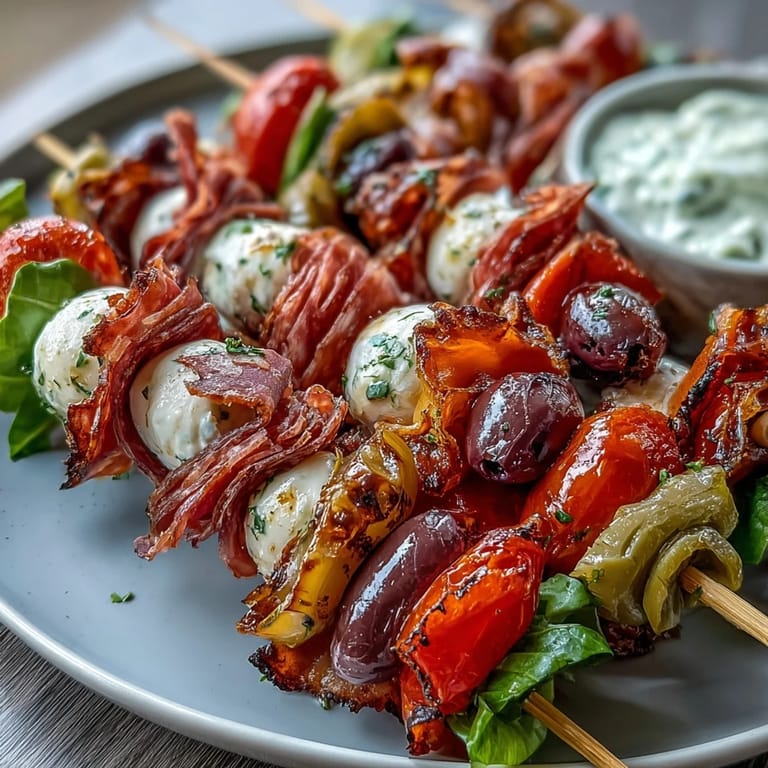
Save There's something almost ceremonial about handing someone a skewer at a picnic and watching their eyes light up when they dip it in aioli for the first time. These became the thing people remembered about that afternoon, not the potato salad or the store-bought dessert.
Why These Skewers Disappeared First
Finger foods have a magic that sits-down dishes don't possess—people eat more of them because there's no guilt in going back for another bite when there's no plate involved. These skewers hit that sweet spot between feeling substantial and being completely guilt-free to grab twice, three times, or until they're gone. The combination of cool cheese, salty meat, and bright pickled vegetables also feels fancy enough for a dinner party but casual enough for a backyard gathering where nobody's really dressing up.
Variations That Actually Work
The beauty of this format is that it adapts beautifully to what you have on hand or what your guests prefer. I've made vegetarian versions by replacing the meats with marinated mushrooms and extra roasted peppers, and honestly, nobody missed the prosciutto. A friend with a gluten-free household swapped the deli meats for grilled chicken breast sliced thin, and it tasted like a completely different dish but worked just as well. The aioli recipe stays the same regardless of what goes on the skewer, which means you've got a workhorse sauce that makes anything taste intentional.
- Swap any deli meat for prosciutto, capicola, or even thinly sliced smoked turkey if that's what's in your fridge.
- Add grilled vegetables like zucchini, eggplant, or asparagus tips for a meatless version that's still deeply satisfying.
- Make a sun-dried tomato aioli by blending a few sun-dried tomatoes into the finished aioli for a different flavor dimension.
The Aioli Secret Nobody Talks About
I spent years thinking aioli was some kind of culinary dark magic until I realized it's just emulsification—the same science that keeps mayonnaise together. The moment you understand that whisking is keeping tiny oil droplets suspended in the egg rather than letting them slick together into a separation, the whole thing becomes less scary and more enjoyable. Room temperature ingredients matter more than people admit; if your egg yolk or oil comes straight from a cold fridge, you're fighting physics the whole time.
 Save
Save These skewers taught me that sometimes the most memorable food isn't complicated—it's just thoughtfully assembled and served with confidence. They're the kind of thing you'll find yourself making again and again because people ask for them.
Recipe FAQs
- → What are the main ingredients?
The skewers feature Genoa salami, deli ham, mortadella, bocconcini mozzarella, cherry tomatoes, pepperoncini, artichoke hearts, black olives, roasted red peppers, and romaine lettuce.
- → How is the aioli prepared?
The aioli blends egg yolk, Dijon mustard, minced garlic, lemon juice, extra virgin olive oil, and neutral oil, whisked until thick and creamy, then seasoned with salt and pepper.
- → Can the meat be substituted?
Yes, you can replace the meats with turkey or chicken, or omit them entirely for a vegetarian version by adding grilled zucchini or eggplant instead.
- → Are these skewers suitable for quick preparation?
Absolutely, these skewers require no cooking and can be assembled in about 20 minutes, making them perfect for easy, portable meals.
- → What pairings complement these skewers?
They pair nicely with crisp Italian white wines or sparkling water with a splash of lemon for a refreshing accompaniment.