 Save
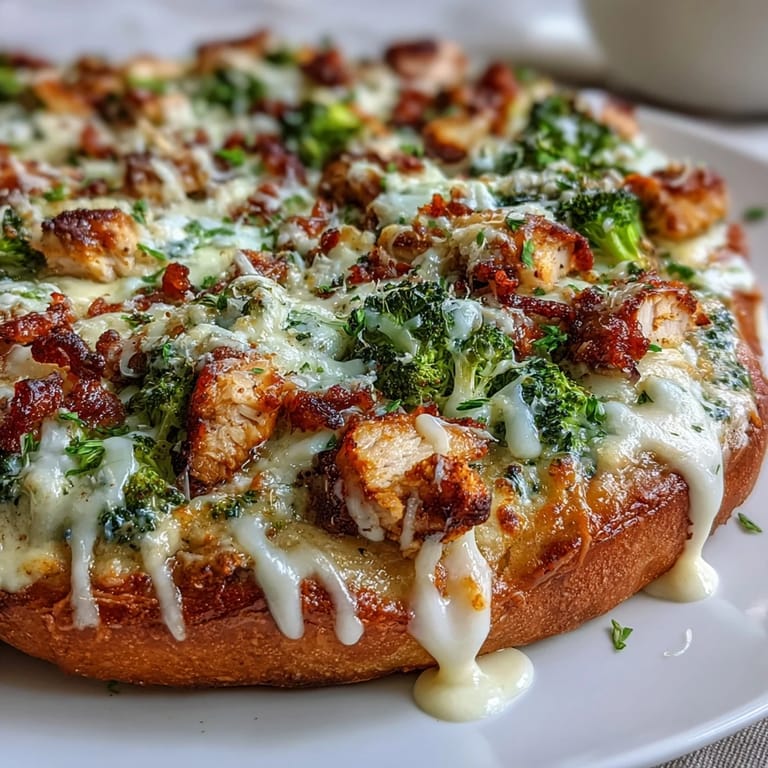
Save There was this Tuesday when my friend Sarah showed up at my door with leftover roasted chicken and broccoli, and I realized my freezer held exactly one ball of pizza dough. What started as a creative use-it-up moment became something I now make deliberately, every couple of weeks. The creamy garlic-Parmesan sauce transforms what could be ordinary toppings into something restaurant-worthy, and the whole thing comes together faster than ordering delivery.
I made this for my family one Sunday night during a particularly stressful week, and watching my teenage son eat three slices without complaint told me everything. My mom, who usually critiques my cooking with the precision of a food critic, actually asked for the recipe. That's the kind of reaction that makes you want to file this under 'keep forever.'
Ingredients
- 1 lb prepared pizza dough: Store-bought works brilliantly here and saves you the stress of yeast timing; I've learned that room-temperature dough stretches without fighting back.
- 2 tbsp unsalted butter and 3 cloves minced garlic: Mince the garlic finely so it distributes evenly through the sauce and doesn't leave sharp little chunks that catch your teeth.
- 2 tbsp all-purpose flour: This is your thickening agent; don't skip the minute of cooking it with butter, or your sauce will taste raw and floury.
- 1 cup whole milk: Cold milk whisked slowly into the roux prevents lumps that are frustrating to fish out later.
- ½ cup grated Parmesan and ¼ cup for topping: Freshly grated Parmesan melts differently than pre-shredded; it creates a silkier sauce, though either works in a pinch.
- 1 cup cooked chicken breast, diced: Rotisserie chicken, leftover dinner chicken, or anything you have saves you cooking time and adds moisture.
- 1 cup blanched broccoli florets, chopped: Blanching prevents the broccoli from releasing too much water on the pizza, which was my first mistake and a soggy bottom crust.
- 1 cup shredded mozzarella: Low-moisture mozzarella melts more evenly; wet mozzarella makes the crust steam instead of crisp.
- Red pepper flakes and fresh parsley: These finish the pizza with a slight heat and brightness that lifts everything else.
Tired of Takeout? 🥡
Get 10 meals you can make faster than delivery arrives. Seriously.
One email. No spam. Unsubscribe anytime.
Instructions
- Heat your oven generously:
- Set it to 475°F and let it preheat fully; if you have a pizza stone, stick it in now so it's radiating heat when your pizza arrives. A properly hot oven is the difference between a crispy crust and disappointment.
- Shape your dough with patience:
- Roll it into a 12-inch circle on floured parchment, then brush the outer edge with olive oil so it browns beautifully. Don't stress if it's not perfectly round; pizza tastes the same whether it looks magazine-worthy or homemade.
- Build the sauce while everything else waits:
- Melt butter over medium heat, add garlic, and let it sizzle for exactly a minute until it fills your kitchen with that smell that makes you hungry. Whisk in flour, then slowly drizzle milk while stirring so lumps never get a chance to form; it should look silky after 2 to 3 minutes of simmering.
- Assemble with intention:
- Spread the sauce evenly across the dough leaving a border, scatter chicken and broccoli so they're distributed fairly, then top with both cheeses and a drizzle of olive oil. This is where you can taste as you go and adjust seasoning if needed.
- Bake until the kitchen smells incredible:
- Slide it into the oven for 12 to 15 minutes; the crust should be golden and the cheese should be bubbling at the edges. Keep an eye on it after 10 minutes because ovens vary, and the difference between perfect and overdone can happen fast.
- Rest and finish:
- Let it cool for just 2 minutes so the cheese sets slightly, then scatter fresh parsley and red pepper flakes if you're using them. The 2-minute wait feels impossible but keeps the cheese from sliding off your slice.
 Save
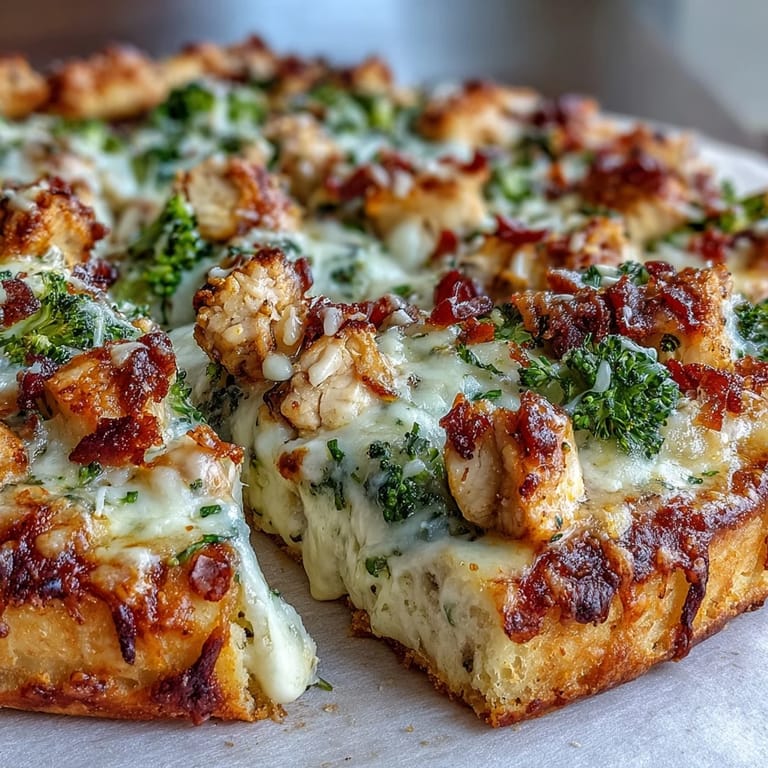
Save This pizza became the thing I make when someone needs comfort food disguised as something effortless and special. There's something about feeding people something you created, something that tastes restaurant-quality but required less than an hour, that feels like a small kind of magic.
The Sauce Matters More Than You Think
The garlic-Parmesan white sauce is honestly the entire reason this pizza works so well. I've experimented with adding cream instead of milk, or extra butter, or different cheeses, and the simple version with those exact proportions is what keeps you coming back. The sauce should coat the dough like a thin blanket, not pool in the center or be so thin it soaks into the crust immediately. A proper béchamel is one of those foundational cooking skills that applies to so many dishes, and this pizza is a delicious excuse to practice it.
Why Broccoli Works When It Shouldn't
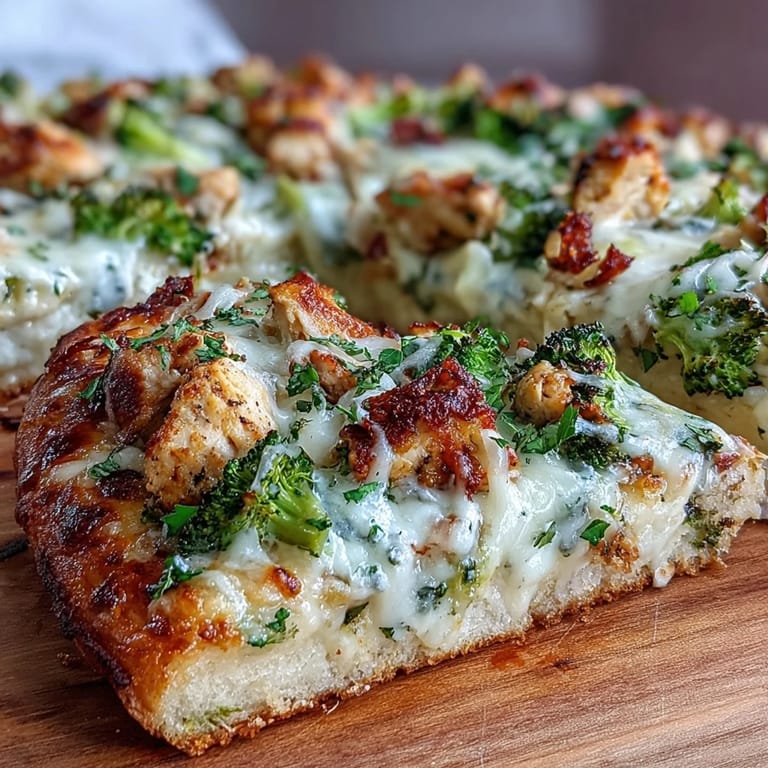
Broccoli seems like a strange pizza topping until you understand the flavor balance. The slight earthiness and subtle bitterness of cooked broccoli contrasts beautifully against the creamy, rich sauce and salty cheese. It's the same reason broccoli works in pasta dishes and cream sauces—the vegetable's texture stays firm enough to provide some resistance when you bite, and it doesn't disappear into mush. I was skeptical the first time too, but now I can't imagine this pizza without it.
Customizing Without Losing Your Way
Once you master the base, you'll want to experiment, and honestly, there's room for creativity here. Roasted garlic adds depth if you have time, mushrooms bring umami, and red onion adds sharpness that plays well with the creaminess. Keeping the sauce and basic structure means you're always starting from something solid, so your variations improve rather than confuse the dish.
- Marinate your chicken in olive oil and Italian herbs before topping so it carries flavor throughout the pizza.
- Blanch broccoli until just tender, then chop it so the pieces distribute evenly instead of creating patches of concentrated green.
- Use low-moisture mozzarella so your cheese browns instead of steaming the crust into submission.
 Save
Save This pizza quietly became one of those recipes you make without thinking, the kind that tastes special every time even though you've made it a dozen times. It's proof that simple ingredients, proper technique, and a little care can create something that feels like a restaurant discovery.
Recipe FAQs
- → Can I use store-bought pizza dough?
Yes, store-bought pizza dough works perfectly. You can also use homemade dough if preferred. Both options yield excellent results with this white sauce and topping combination.
- → Why blanch the broccoli before topping?
Blanching ensures the broccoli cooks evenly in the oven and becomes tender-crisp rather than tough. It also helps maintain the bright green color and prevents the broccoli from drying out during baking.
- → Can I make the white sauce ahead of time?
Yes, prepare the garlic-Parmesan sauce up to 24 hours in advance. Store it refrigerated in an airtight container. Reheat gently on the stove before spreading on the dough, adding a splash of milk if needed to reach spreadable consistency.
- → What vegetables can substitute for broccoli?
Cauliflower florets work beautifully as a substitute. You can also add sliced mushrooms, spinach, or bell peppers. Adjust cooking times slightly depending on the vegetables you choose.
- → Do I need a pizza stone?
A pizza stone helps create a crispier crust but isn't essential. A baking sheet works well too. If using a stone, preheat it in the oven for at least 30 minutes for best results.
- → How do I store leftovers?
Store leftover slices in an airtight container in the refrigerator for up to 3 days. Reheat in a 350°F oven for 5-7 minutes to restore crispness, or use a toaster oven for best results.