 Save
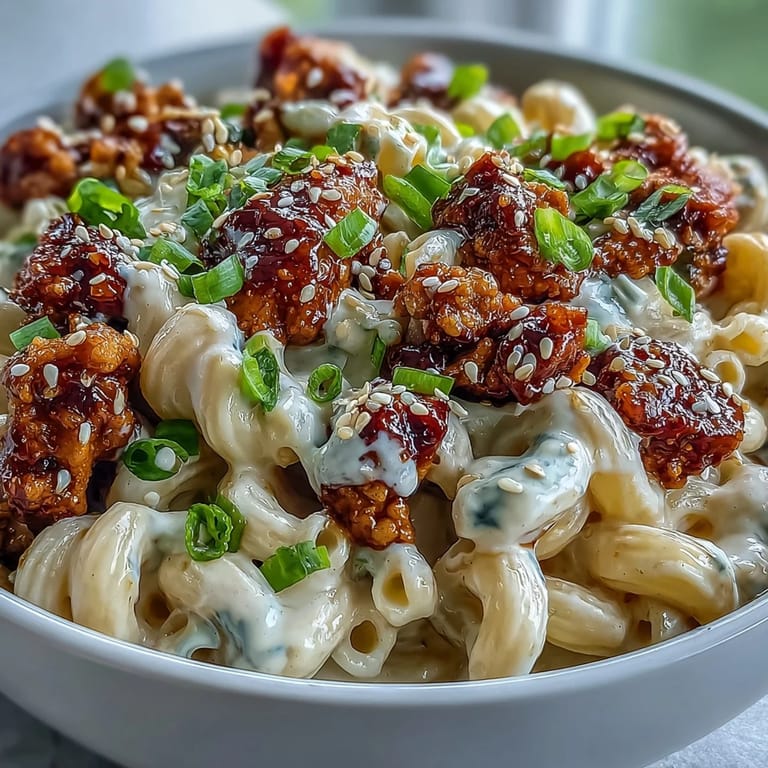
Save My friend texted me at 6 PM asking what I was making for dinner, and without thinking, I said Korean-style turkey mac and cheese. The words just tumbled out, even though I'd never made it before. Ten minutes later, I was standing in my kitchen with gochujang in one hand and a box of elbow pasta in the other, suddenly committed to creating something that shouldn't work but absolutely does. That spicy-sweet Korean twist on an American comfort classic turned out to be exactly what we both needed that night.
I made this for my coworkers during a potluck, and watching their faces when they realized mac and cheese could taste like this was genuinely rewarding. One person asked if I'd actually cooked it myself or ordered from some fancy place, which became a running joke for weeks. That moment taught me that the best recipes are the ones that make people pause mid-bite and ask questions.
Ingredients
- Elbow macaroni, 12 oz: Choose a quality pasta that holds sauce well; I learned the hard way that ultra-thin varieties turn mushy.
- Whole milk, 2 cups: Don't substitute with anything lighter here, as it's what makes the sauce silky and forgiving.
- Unsalted butter, 2 tbsp: This is your base for a proper roux, so use real butter not margarine.
- All-purpose flour, 2 tbsp: This thickens the sauce without any weird taste, just whisk it smooth.
- Sharp cheddar cheese, 1.5 cups shredded: The sharpness cuts through the richness and plays beautifully with the Korean flavors.
- Mozzarella cheese, 0.5 cup shredded: This adds stretch and creaminess without overpowering the cheddar.
- Kosher salt and black pepper: Season gradually so you don't accidentally over-salt the already flavorful turkey.
- Ground turkey, 1 lb: Make sure it's fresh and not too lean, or it can dry out during cooking.
- Gochujang, 2 tbsp: This Korean chili paste is the star, bringing sweetness and heat that transforms everything.
- Low-sodium soy sauce, 1 tbsp: Keeps you in control of saltiness since gochujang and cheese already bring plenty of umami.
- Honey, 1 tbsp: Balances the heat and brings out the slightly sweet undertone of gochujang.
- Toasted sesame oil, 2 tsp: Use the real stuff; the aroma alone signals something special is happening.
- Garlic and ginger, minced and grated: These aromatics ground the dish in authentic Korean flavor.
- Red pepper flakes, 0.5 tsp optional: Only add if you want extra heat; gochujang already delivers plenty of kick.
- Scallions and sesame seeds: These garnishes aren't just pretty; they add freshness and nuttiness that complete the whole experience.
Tired of Takeout? 🥡
Get 10 meals you can make faster than delivery arrives. Seriously.
One email. No spam. Unsubscribe anytime.
Instructions
- Boil the pasta until just shy of tender:
- Cook the elbow macaroni in generously salted boiling water, pulling it out a minute before the package says it's done since it'll cook a bit more in the hot cheese sauce. Drain it well but don't rinse.
- Make a silky cheese sauce from scratch:
- Melt butter over medium heat, whisk in flour to create a paste, then slowly pour in milk while whisking constantly so no lumps form. Watch as it thickens into something almost glossy, then lower the heat and stir in both cheeses until completely melted and smooth.
- Season and keep the sauce warm:
- Taste as you go with salt and pepper, then move the pot to low heat so the sauce stays creamy while you finish the turkey. A small splash of extra milk can rescue it if it thickens too much.
- Toast garlic and ginger in sesame oil:
- Heat sesame oil in a separate skillet over medium-high heat and let the garlic and ginger sizzle for about a minute until fragrant but not burned. The aroma is your signal that they're releasing all their flavor.
- Brown the ground turkey with gochujang:
- Add ground turkey to the same skillet and break it into small crumbles as it cooks, stirring often so nothing sticks. Once it's no longer pink, stir in gochujang, soy sauce, honey, and red pepper flakes if using, coating every piece evenly.
- Let the turkey simmer and caramelize slightly:
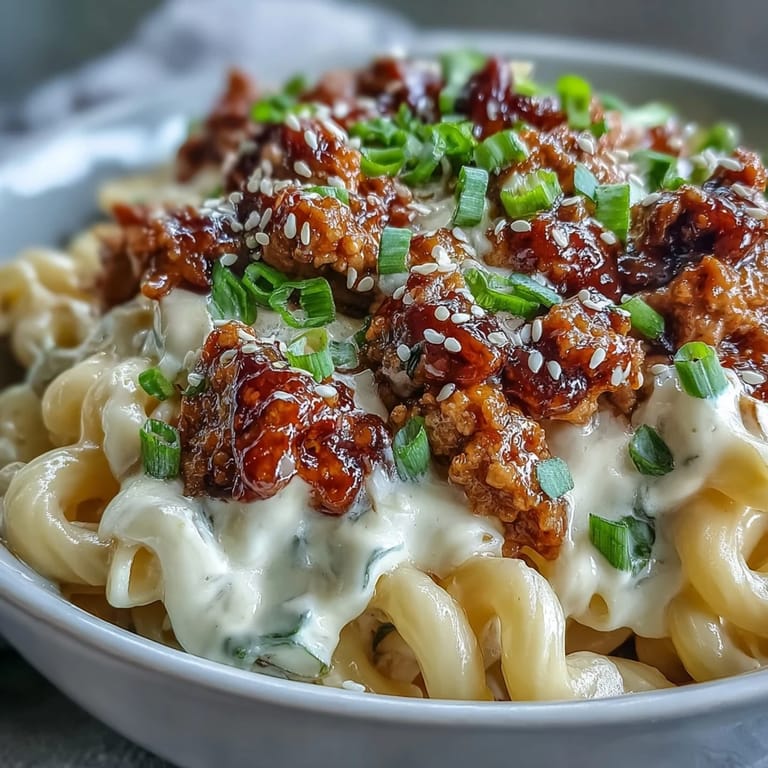
- Cook for 2 to 3 minutes more, letting the sauce reduce just a bit and develop deeper flavor. The turkey should look glossy and slightly darker as the gochujang coats everything.
- Combine and fold everything together gently:
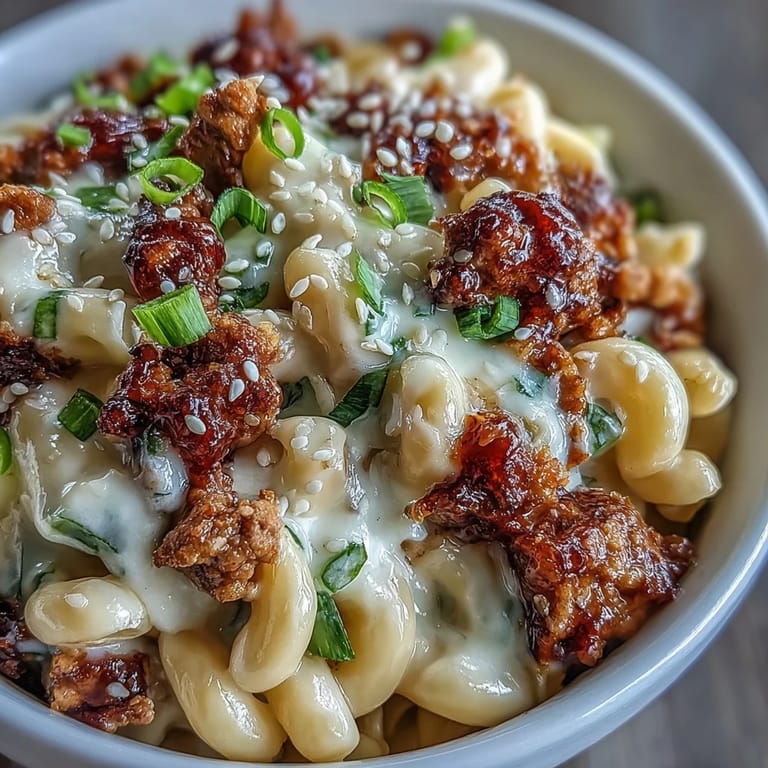
- Add the drained pasta to the cheese sauce and stir until every piece is coated, then fold in about half of the seasoned turkey so it's mixed throughout rather than sitting on top. This keeps the texture interesting.
- Serve immediately with toppings:
- Divide the mac and cheese among bowls and top each one with remaining turkey crumbles, fresh scallions, and sesame seeds if you have them. Eat right away while the sauce is creamy and everything is still hot.
 Save
Save There was this quiet moment after everyone finished eating when someone said this was the kind of dish that changes how you think about leftovers. Suddenly, mac and cheese felt like it had been waiting this whole time for Korean flavors to show up and make it feel brand new again.
Why This Flavor Combination Actually Works
The first time I tasted gochujang in a creamy sauce, I was skeptical, but the honey acts as a bridge between sweet and spicy while the sesame oil adds a toasty depth that complements cheddar in unexpected ways. The soy sauce brings umami that makes the cheese taste richer without actually adding more cheese. It's not fusion for fusion's sake; these flavors genuinely belong together once you taste them side by side.
Making It Your Own
One night I had leftover roasted vegetables and threw them in before serving, and suddenly the dish felt lighter and more complete. You could also swap the ground turkey for beef if that's what you have, or even add crispy bacon for someone at your table who's not convinced about the Korean angle yet. The beauty of this recipe is that it's flexible enough to adapt to what's in your fridge while keeping its identity.
Storage and Reheating Tips
I learned the hard way that this dish is best eaten fresh, but it does keep in the fridge for up to three days if you store the pasta and turkey separately. When you reheat it, add a splash of milk and warm everything gently over low heat so the sauce comes back together rather than breaking. The scallions and sesame seeds should always be added right before eating, since they lose their magic once they sit in the cream.
- Let leftovers come to room temperature before storing so condensation doesn't make the pasta soggy.
- Reheating in a skillet gives you better control than the microwave, and the results are noticeably creamier.
- If the sauce seizes up, a little milk and gentle whisking usually brings it back to life.
 Save
Save This recipe became my answer to the question I get asked most: how do you make comfort food feel exciting without it becoming fussy? You combine two things people love and let them teach each other. The result is something that feels adventurous but also like a warm hug.
Recipe FAQs
- → Can I make the cheese sauce ahead of time?
The cheese sauce is best made fresh as it can become grainy when reheated. However, you can prepare the Korean turkey mixture up to 2 days in advance and store it in the refrigerator. Reheat gently before serving.
- → What can I substitute for gochujang?
If you don't have gochujang, combine 1 tablespoon of red pepper flakes with 1 teaspoon of miso paste and a dash of soy sauce. Sriracha also works but will be thinner and less complex in flavor.
- → Is this dish very spicy?
The spice level is moderate—gochujang provides warmth rather than intense heat. You can control the spiciness by reducing the gochujang to 1 tablespoon or omitting the optional red pepper flakes.
- → Can I use a different type of pasta?
Yes! Shells, cavatappi, or penne work well too. The cheese sauce coats any short pasta beautifully. Just avoid long noodles like spaghetti which are harder to sauce evenly.
- → How should I store leftovers?
Store components separately in airtight containers for up to 3 days. Reheat the pasta with a splash of milk to restore creaminess, and warm the turkey in a skillet over medium heat.
- → Can I make this dairy-free?
Use your favorite plant-based milk and vegan cheese alternatives for the sauce. The flavor and texture will differ slightly but still deliver satisfying comfort.