 Save
Save There's something about the sound of quinoa popping gently in a dry pan that signals the beginning of something good. I discovered this bowl during a chaotic Tuesday when my fridge held promise but no clear direction—a handful of carrots, some frozen peas, and the realization that I needed to eat something that didn't come from ordering out. What started as an improvisation became my go-to answer whenever someone asks what I'm having for lunch, because it's colorful, filling, and genuinely makes me feel like I'm taking care of myself without the fuss.
I made this for my sister last spring when she was deep in a wellness phase, skeptical but hungry. The moment she tasted it, something shifted—she stopped talking and just ate, which I've learned is the ultimate compliment. Now she texts me photos of her own versions with different vegetables, and somehow that simple bowl became our thing, our shorthand for taking care of each other through the small daily act of eating well.
Ingredients
- Quinoa, rinsed: Rinsing removes bitterness and creates fluffier grains, trust me on this small step that changes everything.
- Water or vegetable broth: Broth adds subtle depth and makes the quinoa taste less plain, especially if you're cooking just for yourself.
- Carrots, peeled and sliced into rounds: The thickness matters because thin slices crisp up too much while thicker ones stay tender inside with caramelized edges.
- Green peas, fresh or frozen: Frozen works beautifully here and honestly tastes fresher than fresh peas sitting in your fridge, a counterintuitive truth I stumbled upon.
- Red onion, sliced: The red onion becomes sweet and mellow when roasted, losing its harsh bite and adding color that makes the bowl Instagram-ready if you're into that sort of thing.
- Olive oil: Use good quality for the dressing where you'll taste it directly, but regular oil works fine for roasting.
- Lemon juice: Fresh squeezed makes a noticeable difference in brightness, though bottled works in a pinch.
- Dijon mustard: This is the secret ingredient nobody mentions but everyone tastes, adding a subtle complexity that makes people ask what's in it.
- Honey or maple syrup: Just a touch to balance the acid and add a whisper of sweetness to the dressing.
- Fresh parsley: Chopped fresh herbs are non-negotiable here because they're what transform a side dish into a proper meal.
- Feta cheese and pumpkin seeds, optional: These are my additions when I want the bowl to feel celebratory instead of everyday.
Tired of Takeout? 🥡
Get 10 meals you can make faster than delivery arrives. Seriously.
One email. No spam. Unsubscribe anytime.
Instructions
- Heat your oven and prep the vegetables:
- Set the oven to 400°F and while it preheats, slice your carrots into rounds about half an inch thick and your red onion into thin slices. Toss them generously with olive oil, salt, and pepper on a baking sheet, spreading them out so they have room to caramelize rather than steam.
- Get the carrots and onion roasting:
- Pop the baking sheet into the oven for 25 to 30 minutes, stirring halfway through when you notice the edges turning golden. You'll know they're done when they're tender enough to pierce easily but still hold their shape, with caramelized spots on the bottom.
- Start the quinoa while vegetables roast:
- In a medium saucepan, combine your rinsed quinoa with water or broth and bring to a boil. Once it boils, lower the heat, cover the pot, and let it simmer quietly for about 15 minutes until the liquid is absorbed and the grains look fluffy and slightly translucent.
- Let the quinoa rest:
- Turn off the heat and leave the pot covered for 5 minutes, which allows the grains to finish cooking gently in the residual steam. When you fluff it with a fork, each grain should separate easily.
- Prepare the peas:
- If you're using frozen peas, drop them into boiling salted water for just 2 minutes, then drain them immediately to stop the cooking. If using fresh peas, steam them for a few minutes until they're bright green and tender but still have a little give.
- Mix your dressing:
- In a small bowl, whisk together olive oil, lemon juice, Dijon mustard, and honey until it emulsifies slightly and becomes cohesive. Taste it and adjust the salt and pepper until it feels balanced, not too sharp and not too mellow.
- Assemble your bowls:
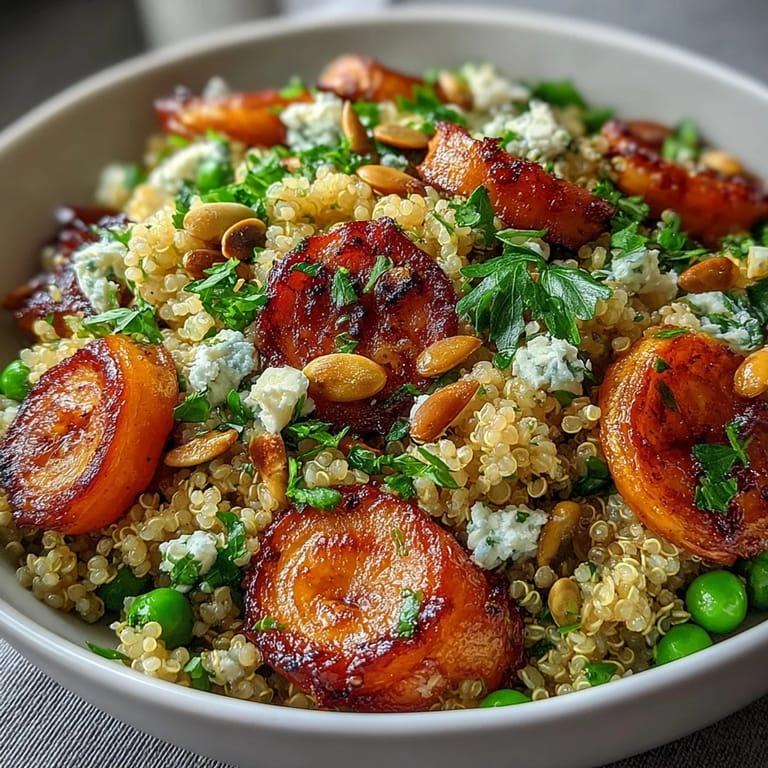
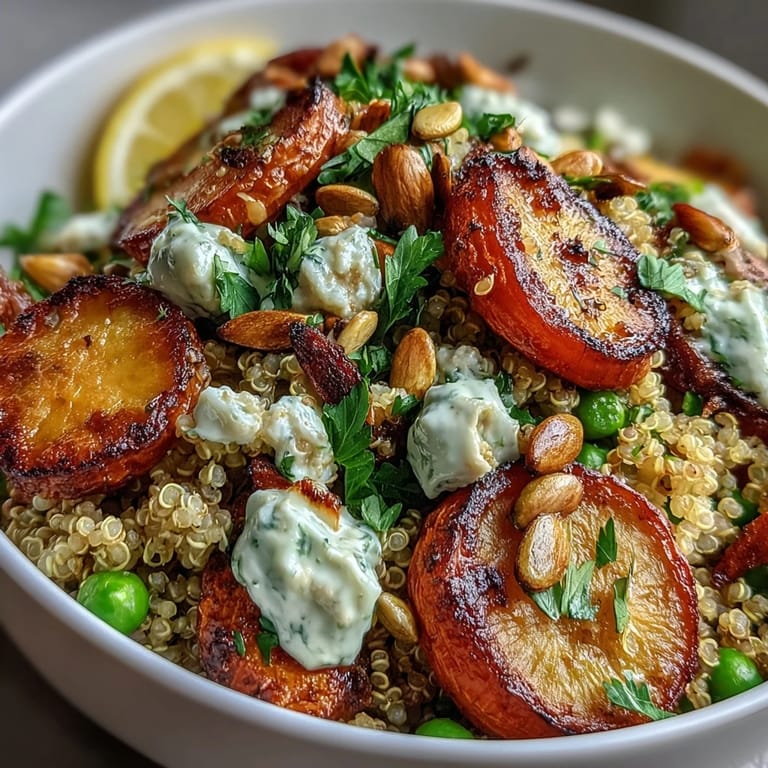
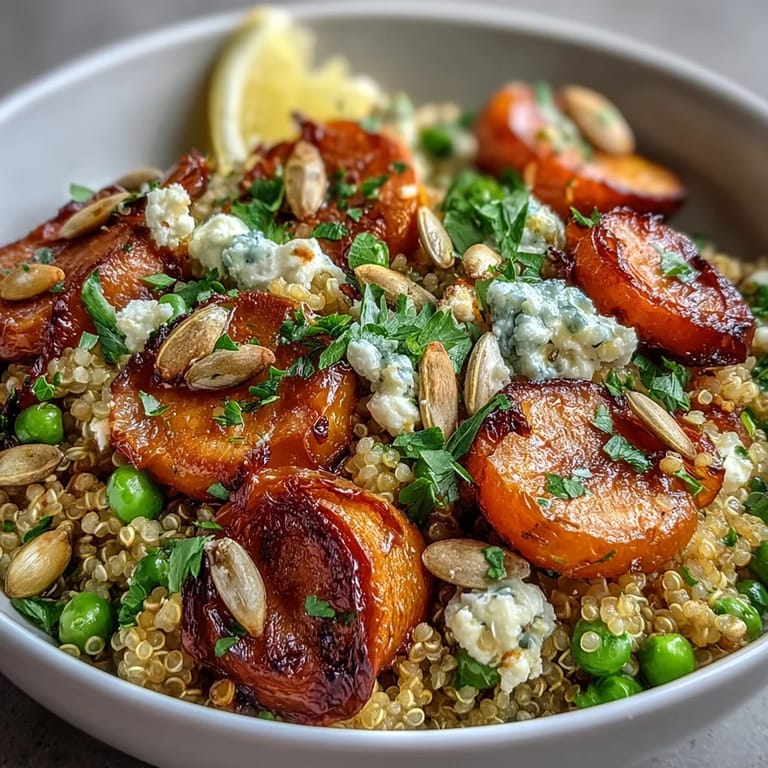
- Divide the warm quinoa among bowls as your base, then arrange the roasted carrots and onion on top, scatter the peas around, and drizzle the dressing evenly. Finish with a handful of fresh parsley, some crumbled feta if you're using it, and a sprinkle of toasted pumpkin seeds for a little crunch.
 Save
Save This bowl has become my quiet ritual on Sunday afternoons, a moment to pause and nourish myself without guilt or overthinking. There's something grounding about eating something this colorful and intentional, like I'm making a small agreement with myself to show up for my own wellbeing.
Why This Bowl Feels Different
Most grain bowls feel like a trend or a thing you eat because you should, but this one tastes like it was built for pleasure first and health second. The roasting caramelizes the natural sugars in the carrots until they're almost candy-like, and that sweetness against the nutty quinoa and bright lemon dressing creates a balance that keeps you coming back. I've served this to people who claim they don't like vegetables, and they've eaten every bite without realizing what they were eating.
Make It Your Own
The beauty of this bowl is that it welcomes experimentation without falling apart. Roasted sweet potatoes work beautifully instead of carrots, adding a deeper earthiness, and butternut squash brings an almost buttery richness that feels luxurious. You could swap the peas for roasted broccoli if you prefer more crunch, or add chickpeas that you've tossed with spices for extra protein and substance. The frame stays the same, but you get to paint it with whatever you're craving.
Taking It to the Next Level
If you want to make this bowl feel more complete and restaurant-quality, consider adding a protein that speaks to you. Grilled chicken brings a familiar richness, while roasted chickpeas seasoned with smoked paprika add a vegetarian protein that's crispy on the outside and creamy within. For a vegan version, simply skip the feta and use a cashew-based cheese or nutritional yeast for that savory depth you might miss.
- Make extra quinoa on Sunday and you'll have half the work done for weekday bowls.
- The dressing tastes even better the next day after the flavors marry together, so don't hesitate to make extra.
- If you're meal prepping, keep the dressing separate until you're ready to eat so the grains don't get soggy.
 Save
Save This bowl asks so little of you and gives so much back, which is exactly what food should do. Make it tonight and notice how you feel afterward.
Recipe FAQs
- → How do I cook quinoa perfectly for this bowl?
Rinse quinoa thoroughly, then simmer it in water or broth for about 15 minutes until fluffy. Let it stand covered for 5 minutes before fluffing with a fork.
- → Can I use frozen peas for this dish?
Yes, blanch frozen peas briefly in boiling water for 2 minutes and drain before adding to the bowl.
- → What is the best way to roast the carrots?
Toss sliced carrots with olive oil, salt, and pepper, then roast at 400°F (200°C) for 25-30 minutes until tender and caramelized.
- → Are there any good alternatives for feta cheese?
For a dairy-free option, omit feta or substitute with a plant-based cheese alternative or toasted nuts for added texture.
- → How can I add more protein to this bowl?
Try adding roasted chickpeas or grilled chicken for an extra protein boost to complement the grains and vegetables.