 Save
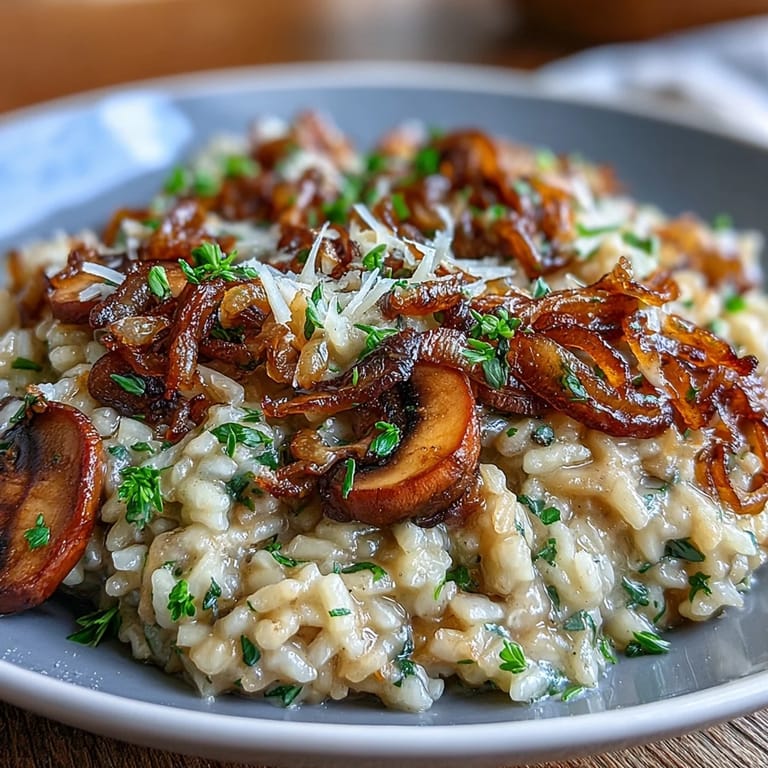
Save There's a particular Tuesday evening I won't forget—my neighbor knocked on the door with a bag of mushrooms from her garden, and I had half an onion and some rice in the pantry. What started as improvisation became something I'd make intentionally from then on. Risotto felt intimidating until I realized it's really just patience and stirring, a meditative kind of cooking where you're rewarded for paying attention. This version with caramelized onions and mushrooms turned into my go-to when I want something that tastes restaurant-quality but feels entirely homemade.
I made this for a dinner party last spring, and what stuck with me wasn't just the compliments—it was watching my friend lean over the pot and close her eyes when the aroma hit her. That's when I understood risotto isn't just food; it's an experience you can taste in the air before it reaches the plate. She asked for the recipe three times that night, which told me everything about whether I'd gotten it right.
Ingredients
- 2 large yellow onions, thinly sliced: Yellow onions caramelize better than white ones because of their natural sugar content—slice them thin so they cook evenly and develop that deep, mahogany color.
- 250 g cremini or button mushrooms, sliced: Cremini have more flavor than buttons, but honestly, use what you find; the key is slicing them thick enough that they don't disappear into nothing.
- 3 cloves garlic, minced: Fresh garlic makes all the difference in the second stage—jarred will let you down here.
- 2 tbsp fresh parsley, chopped plus more for garnish: This brightens everything at the end; dried parsley tastes like disappointment by comparison.
- 300 g Arborio rice: Arborio's short, starchy grains are what make risotto creamy—don't substitute with long-grain rice or you'll lose the whole magic.
- 60 g grated Parmesan cheese: Buy a wedge and grate it yourself if you can; pre-shredded has anti-caking agents that make it gritty in risotto.
- 40 g unsalted butter: Use real butter, not margarine—risotto is all about these small luxuries.
- 60 ml heavy cream optional: This pushes it from good to velvet-smooth, but it's genuinely optional if you want to keep things lighter.
- 1 L low-sodium vegetable broth, kept warm: Keep it simmering on a back burner so each ladle is warm when you add it; cold broth stops the cooking process.
- 120 ml dry white wine: A wine you'd drink tastes infinitely better than cooking wine—I learned this the hard way.
- 2 tbsp olive oil: Good olive oil matters for the sautéing stages.
- 1/2 tsp salt plus more to taste and 1/4 tsp black pepper: Season in layers as you go rather than all at once at the end.
Tired of Takeout? 🥡
Get 10 meals you can make faster than delivery arrives. Seriously.
One email. No spam. Unsubscribe anytime.
Instructions
- Start Your Caramelization:
- Heat 1 tablespoon olive oil and 1 tablespoon butter over medium-low heat, then add your sliced onions with a pinch of salt. This low heat is crucial—rushing it gives you soft onions, not caramelized ones. Stir every few minutes for 20-25 minutes, letting them gradually turn from pale to golden to a deep amber that smells almost sweet.
- Brown the Mushrooms:
- Add the remaining olive oil to the same pan and crank the heat to medium, then add your mushroom slices in a single layer if you can manage it. Let them sit undisturbed for a minute so they can develop a golden edge, then stir and let the moisture evaporate completely—this takes about 7 minutes and is what makes them taste rich instead of watery. Toss in your minced garlic and cook for just 1 minute until fragrant.
- Toast the Rice:
- Stir the Arborio rice into the mushrooms and garlic, keeping the heat at medium. You'll hear it click slightly against the pan as you stir constantly for 2 minutes—this toasting step is what gives risotto its subtle nutty undertone. Don't let it stick or brown; you're just waking it up.
- Add the Wine:
- Pour in the dry white wine and watch it sizzle and steam almost immediately. Stir it gently until the rice has mostly absorbed the liquid, about 2-3 minutes—the rice grains will start to look slightly translucent at the edges.
- Build the Creaminess Slowly:
- This is the meditative part—add your warm broth one ladle at a time, stirring gently but consistently after each addition. Wait until the rice has mostly absorbed each ladle before adding the next, which takes about 18-20 minutes total. You'll watch it transform from separate grains to something creamy and flowing, and somewhere around minute 15 you'll taste a grain and realize it's almost there.
- Finish with Richness:
- Stir in your caramelized onions, the remaining butter, grated Parmesan, and cream if you're using it. Taste it and adjust the salt and pepper—risotto needs more seasoning than you'd think. The whole mixture should flow slightly on the plate, not sit in a stiff mound.
- Rest and Garnish:
- Remove from heat and let it sit for 2 minutes, which lets everything settle and meld together. Stir in the fresh parsley just before serving and top with extra Parmesan and a few more parsley leaves for color.
 Save
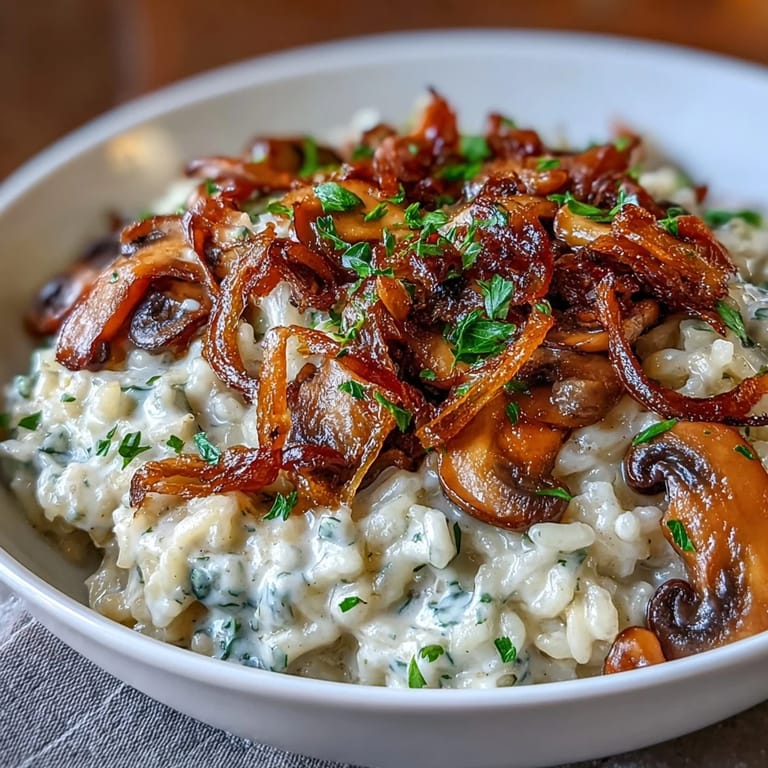
Save My mother tasted this and asked if I'd learned to cook at a restaurant, which made me realize that good risotto feels like an accomplishment beyond its actual difficulty. There's something about feeding people something that makes them pause and actually taste it that changes how you see cooking.
The Caramelization Secret
Caramelizing onions properly isn't a shortcut situation—those 20-25 minutes are when the natural sugars break down and concentrate into something almost sweet. I once tried to rush it with higher heat and ended up with browned onions that tasted sharp and bitter instead of deep and mellow. Now I treat it like the foundation it is, and everything that comes after tastes noticeably better.
Mushroom Technique That Changes Everything
The mushrooms release a surprising amount of water if you crowd the pan or stir constantly from the start. Giving them space and letting them sear undisturbed for a moment creates a golden crust that concentrates their flavor and keeps them from turning into mush. I learned this by doing it wrong first and ending up with something that tasted steamed rather than sautéed.
Making It Your Own
This is a foundation, not a prison—some nights I stir in a handful of baby spinach or fresh peas near the end for color and nutrition. Other times I've added a splash of truffle oil or a handful of crispy sage, and every version has been delicious. The core technique stays the same, and once you understand how risotto works, you can improvise with confidence.
- For a vegan version, use plant-based butter and nutritional yeast instead of Parmesan for a similar savory depth.
- A splash of balsamic vinegar stirred in at the very end adds complexity without overshadowing the other flavors.
- If you want to make this ahead, cook it until the rice is almost tender, spread it on a sheet to cool, then finish cooking it gently with a bit of extra broth when you're ready to serve.
 Save
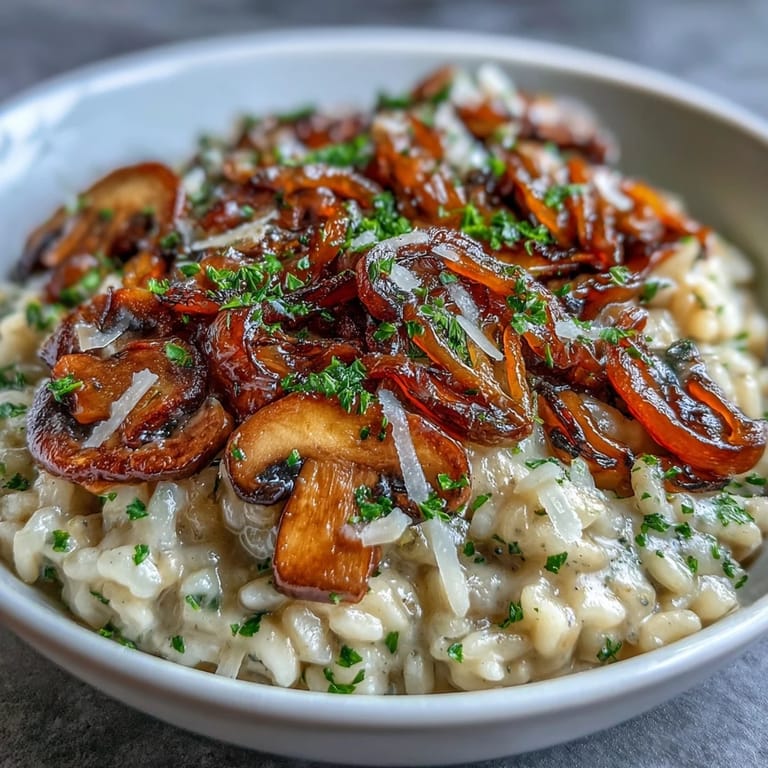
Save This risotto has become my answer to the question what should I cook when I want it to feel special but I don't want to overthink it. Once you understand the rhythm, it's as comforting to make as it is to eat.
Recipe FAQs
- → What type of rice is best for this dish?
Arborio rice is ideal as it releases starch during cooking, creating the creamy texture essential for the dish.
- → How do caramelized onions enhance the flavor?
Slowly cooking onions until golden develops their natural sweetness, adding depth and balance to savory components.
- → Can other mushrooms be used?
Yes, cremini or button mushrooms work well, but wild varieties like shiitake or portobello can add earthiness.
- → What is the purpose of the white wine in cooking?
White wine adds acidity and complexity, helping to deepen flavor and balance the richness of the dish.
- → How should the broth be added during cooking?
Warm broth should be added gradually ladle by ladle, allowing the rice to absorb liquid slowly for optimal creaminess.
- → Can this dish be made vegan?
Substitute plant-based butter and a vegan cheese alternative while omitting heavy cream to maintain richness.