 Save
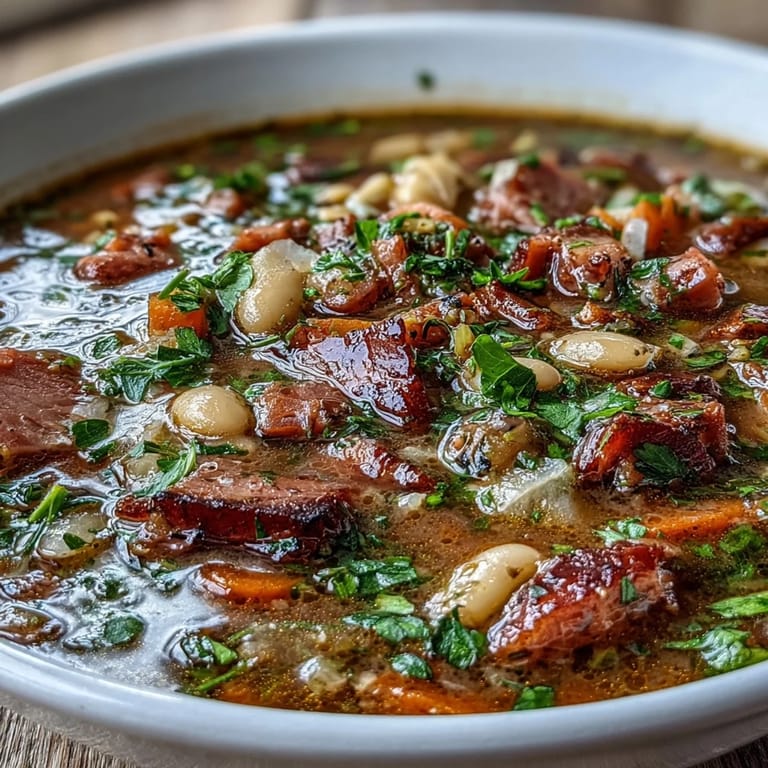
Save My neighbor Maria showed up at my door one frigid January afternoon with a container of this stew, steam still rising from the lid. She'd made it that morning and insisted I needed something warm in my belly. One spoonful and I understood—the ham had seeped into every bean, the vegetables had softened into the broth until they were almost part of it, and somehow it tasted like comfort tastes. I asked for the recipe that same evening, and now whenever the kitchen gets cold, I make this.
I made this for my book club on a night when everyone trudged in soaking wet from the rain. We'd planned to discuss our selection, but instead we all just sat there with bowls in our laps, eating quietly. Someone eventually said the book didn't matter—this stew was the best part of the evening. That's when I knew I'd gotten the recipe right.
Ingredients
- Cooked ham, diced (400 g): This is where the magic lives—choose quality ham with good flavor, and don't skip dicing it properly so every spoonful has pieces throughout.
- Cannellini beans, canned (800 g total): Always drain and rinse them to remove the starchy liquid that can make the stew cloudy and one-dimensional.
- Carrots and celery (2 each): These form the flavor foundation—don't rush the sauté, as those 8 minutes let them release their sweetness.
- Onion, large (1): Finely chop it so it nearly disappears into the broth, creating a silky texture rather than distinct pieces.
- Garlic, minced (3 cloves): Mince it fine and add it after the soffritto to prevent it from burning and turning bitter.
- Canned diced tomatoes (400 g): San Marzano varieties make a noticeable difference in brightness and sweetness.
- Tomato paste (2 tbsp): Cook it in the hot pan for a full minute to deepen its flavor and remove any tinny taste.
- Spinach or kale, fresh (2 handfuls): Save this for the very end—it wilts in seconds and keeps its vibrant color and nutrients.
- Broth, low-sodium (1 L): Use vegetable broth if you want the ham to shine, or chicken if you prefer more body.
- Bay leaf, oregano, thyme (1 each, 1 tsp each): These dried herbs are essential to Italian cooking—don't substitute fresh herbs here as they'll lose their punch during the long simmer.
- Red pepper flakes (1/2 tsp optional): Add this only if you want a gentle warmth, not heat—you can always pass it at the table.
- Olive oil (2 tbsp): Use a good quality oil; it's the fat that carries the flavor in this dish.
- Salt and black pepper: Taste as you go—the ham and broth already contain sodium, so season gradually.
Tired of Takeout? 🥡
Get 10 meals you can make faster than delivery arrives. Seriously.
One email. No spam. Unsubscribe anytime.
Instructions
- Build your base with the soffritto:
- Heat the olive oil in your pot over medium heat until it shimmers slightly, then add the onions, carrots, and celery. You'll hear them start to sizzle right away—that's the signal you're at the right temperature. Let them soften for the full 8 minutes, stirring occasionally, until the onions turn translucent and the carrots begin to lose their raw edge.
- Wake up the spices:
- Stir in the minced garlic, tomato paste, oregano, and thyme all at once. Cook for exactly 1 minute, stirring constantly, so the tomato paste caramelizes slightly and the dried herbs release their oils into the hot pan. The kitchen will smell like an Italian kitchen now.
- Introduce the ham:
- Add the diced ham and stir it through for 2 to 3 minutes. The ham will warm through and start releasing its salty, savory essence into the oil and aromatics beneath it.
- Add the liquids and build the broth:
- Pour in the canned tomatoes with their juice and the broth, then drop in the bay leaf. Bring everything to a boil—you'll see large bubbles breaking the surface—then immediately lower the heat to keep it at a gentle simmer.
- Let the beans absorb the flavors:
- Add the drained cannellini beans and partially cover the pot with a lid (slightly ajar so steam can escape). Simmer for 50 minutes, stirring every 15 minutes or so. The beans will soften further, the broth will deepen in color, and the flavors will knit together into something unified.
- Finish with greens:
- If you're using spinach or kale, add it in the final 5 minutes and stir it down. It will wilt almost immediately into the hot stew, adding a fresh note and vibrant color.
- Taste and adjust:
- Remove the bay leaf with a spoon, then taste a small spoonful. Add salt, pepper, and red pepper flakes to your preference—remember that the ham and broth already contain salt, so don't be heavy-handed.
- Serve with warmth:
- Ladle the stew into bowls and garnish with fresh chopped parsley and a light shower of grated Parmesan if you like. The heat will bring out the aroma of the parsley and melt the cheese slightly.
 Save
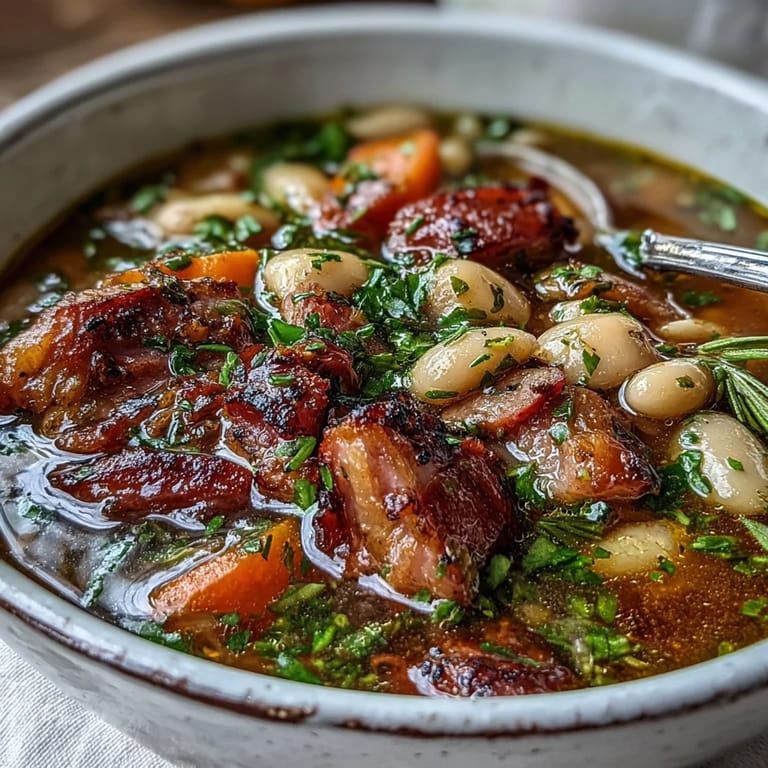
Save My daughter asked me once why I always made this stew instead of ordering takeout on busy nights. I didn't have a quick answer until I realized it was because watching her eat something I'd made with my own hands mattered to me in a way that delivery never could. This stew became our thing.
When to Make This Stew
Winter is the obvious answer, but I've learned this stew works year-round. Serve it cold on a summer evening if you want something substantial without heating the kitchen. On autumn afternoons when the light turns gold early, it feels like the right meal. Spring is the only season where it sometimes feels too heavy, though that depends on your appetite and the weather.
How to Stretch It or Make It Special
This recipe feeds six people generously, but you can easily double it if you're cooking for a crowd. For special occasions, I sometimes add a ham bone instead of diced ham—it releases deeper flavor as it simmers, though you'll need to fish it out before serving. Escarole, bitter greens, or even chopped chard work beautifully in place of spinach, each bringing their own character to the final bowl.
Serving and Pairing Ideas
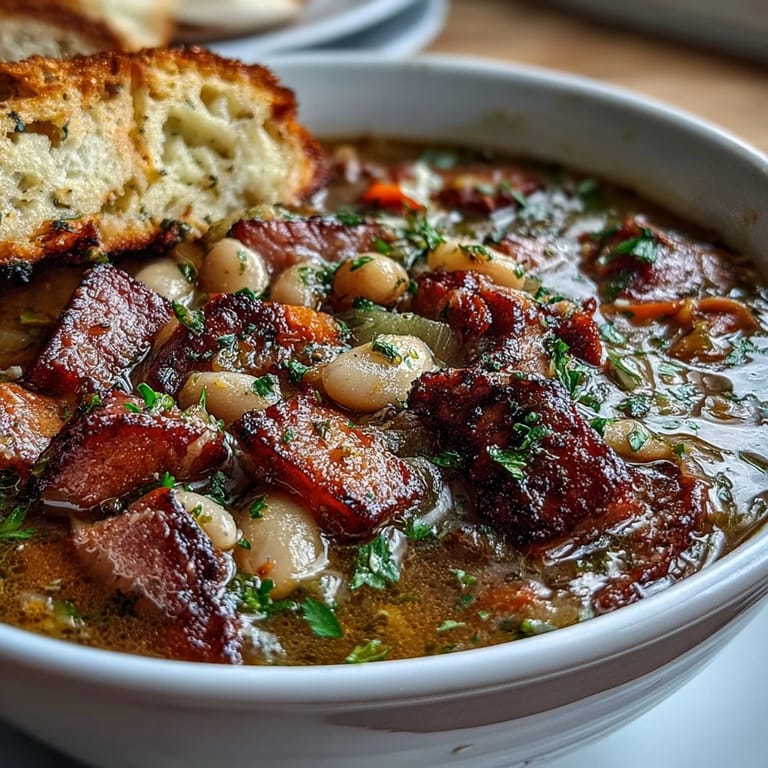
Crusty bread is essential—you'll want something sturdy enough to break apart in the broth without falling apart immediately. A glass of Chianti or another Italian red wine complements the earthy beans and salty ham perfectly, though a simple white works if that's what you have. If your guests are dairy-free, skip the Parmesan garnish entirely; the stew is complete and satisfying without it.
- Slice bread thick and toast it lightly with olive oil for more structure in the bowl.
- Make this stew a day ahead and reheat gently—the flavors only improve with rest.
- Leftover stew freezes beautifully for up to three months; thaw overnight and warm slowly on the stovetop.
 Save
Save This stew has become my answer to the question what's for dinner when everyone's tired and the weather's bad. It's the kind of food that makes people slow down and remember why eating together matters.
Recipe FAQs
- → How should I prepare the ham for this stew?
Use cooked, diced ham for best flavor and texture. A smoked ham hock or bone can be added for deeper taste but should be removed before serving.
- → Can I substitute the cannellini beans?
Yes, white beans like Great Northern or navy beans work well as alternatives, offering similar creamy textures.
- → What vegetables complement this stew?
Onions, carrots, celery, and garlic create a flavorful base, enhanced by tomato paste, diced tomatoes, and optional leafy greens such as spinach or kale.
- → How long should the stew simmer?
Simmer the stew partially covered for about 50 minutes to allow flavors to meld and beans to soften perfectly.
- → What garnishes enhance the finished stew?
Fresh chopped parsley adds brightness, while grated Parmesan cheese provides a rich, savory finish.
- → Is this stew suitable for a gluten-free diet?
Yes, it is naturally gluten-free, but verify broth and canned ingredient labels to avoid hidden gluten sources.