 Save
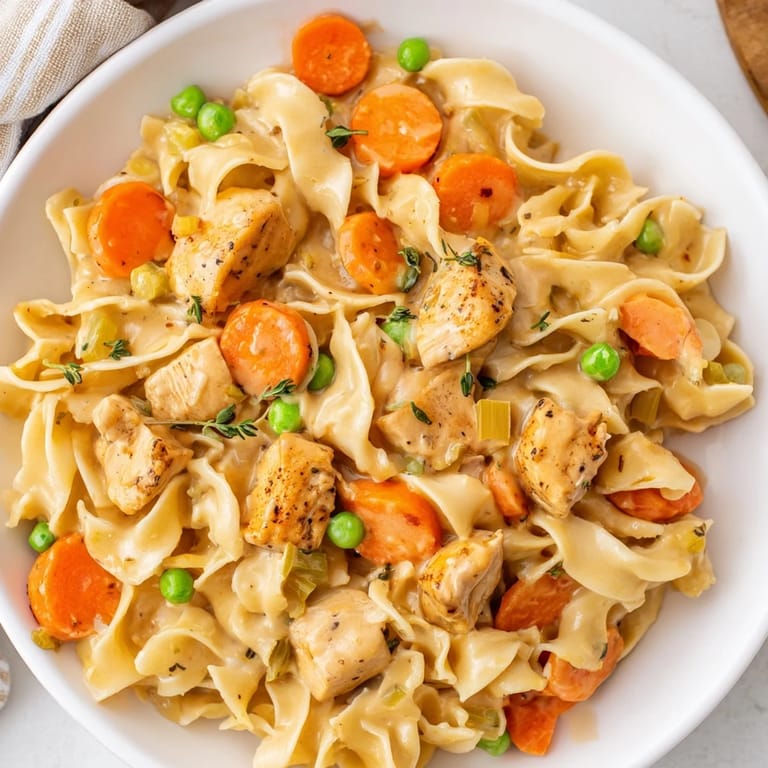
Save There's something about a bowl of creamy chicken and egg noodles that stops time. My neighbor once brought this dish over during a chaotic week, and I remember sitting at the kitchen counter at 6 PM, fork in hand, suddenly feeling like everything was manageable again. The way the noodles absorbed that silky sauce, the tender chicken pieces waiting around every turn of the fork—it wasn't fancy, but it was exactly what I needed. This is the kind of recipe that sits in your mental comfort file, ready whenever life demands a little gentleness.
I made this for friends who were moving into a new apartment, and we ate it straight from the pot while sitting on their unopened boxes, laughing about what they'd forgotten to pack. That's when I realized this dish works in any setting—it doesn't need a fancy table or the right plate. It just needs to be warm and there.
Ingredients
- Boneless, skinless chicken breasts or thighs (500 g): Thighs stay more forgiving and tender than breasts, but either works—just season generously so the meat has something to hold onto.
- Butter and olive oil (2 tbsp butter, 1 tbsp oil): The combination gives you a higher smoke point and richer flavor than butter alone; the oil keeps things from browning too aggressively.
- Yellow onion, carrots, and celery (1 medium onion, 2 carrots, 2 stalks): This trio is the backbone of flavor—don't rush the chopping, and don't skip any of them.
- Garlic (2 cloves, minced): Add it after the vegetables soften so it doesn't burn and turn bitter.
- All-purpose flour (2 tbsp): This is your thickener; cooking it briefly removes the raw flavor and helps create a silky sauce.
- Chicken broth, whole milk, and heavy cream (480 ml broth, 240 ml milk, 120 ml cream): The layering of these dairy products creates depth—the milk keeps it from being too heavy, while the cream gives it that final richness.
- Dijon mustard, dried thyme, parsley, and paprika: Trust these seasonings to work as a team; they're subtle but they change everything about the final taste.
- Wide egg noodles (250 g): The wider shape holds sauce better than thin noodles, so don't substitute without thinking about it.
- Frozen peas (60 g): They thaw into the dish in moments and add a gentle sweetness that balances the richness.
Tired of Takeout? 🥡
Get 10 meals you can make faster than delivery arrives. Seriously.
One email. No spam. Unsubscribe anytime.
Instructions
- Season and sear the chicken:
- Pat your chicken pieces dry before hitting the pan—this helps them brown instead of steam. The salt and pepper should make you take notice; don't be shy with seasoning at this stage.
- Build your flavor foundation:
- Once the chicken rests on a plate, use the same pot for vegetables so all those browned bits stay in the pan. You want to hear the sizzle when onion hits the heat, and smell should tell you when garlic is ready to move on.
- Make your roux:
- Stir the flour into the vegetables and let it toast for a minute or two—this cooking step is what keeps your sauce from tasting floury. The mixture should look sandy and golden.
- Whisk in the liquid slowly:
- Pour gradually, whisking constantly, so lumps don't have a chance to form. Watch how the sauce thickens and becomes glossy as you add ingredients.
- Season generously and let it simmer:
- Taste as you go; this is where you adjust salt, pepper, and the balance of herbs. Those 5 minutes of simmering let flavors meld together.
- Cook noodles separately:
- Don't skip the second pot—cooking noodles in their own water keeps them from turning into mush from the sauce.
- Bring everything together:
- Warm the chicken in the sauce, add peas, then gently toss in the drained noodles. The goal is a unified dish, not separate components on a plate.
 Save
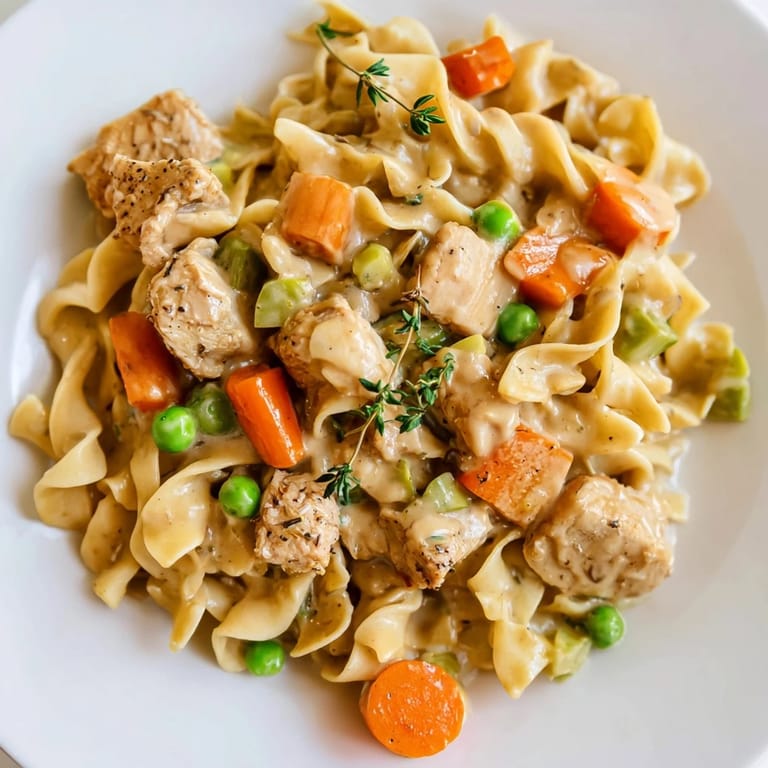
Save My sister told me once that she'd started making this recipe whenever someone in her life was going through something difficult, and now it's become a running joke in her friend group—they call it 'the hug bowl.' I understood immediately what she meant.
Customizing Your Bowl
This recipe welcomes change without losing its soul. Add a splash of white wine to the vegetables while they cook for a subtle sophistication, or stir in sautéed mushrooms for earthiness that rounds out the cream. Some people swear by a pinch of nutmeg whispered into the sauce, and I've never disagreed with that choice. The beauty is that you can adapt based on what's in your kitchen, what sounds good right now, or what you're trying to use up.
A Shortcut When You Need It
If time is sparse, grab a rotisserie chicken from the store, shred it, and skip the browning step entirely—your weeknight dinner just became even faster without sacrificing warmth or comfort. Or keep frozen peas, canned broth, and egg noodles in your pantry so this meal exists as an emergency option whenever life gets loud.
Serving and Pairing
Serve this in wide bowls so the sauce pools around the noodles in a way that looks intentional and generous. A crisp green salad on the side cuts through the richness beautifully, or roasted broccoli if you want something warm and substantial to accompany it. Fresh parsley scattered on top does more than taste fresh—it gives your eyes permission to believe this is elegant enough to serve to people you want to impress.
- Let the dish rest for 2-3 minutes after adding noodles so the sauce thickens and coats everything evenly.
- If it seems too thick when you reheat leftovers, warm a splash of broth and stir it in gently until you reach the right texture.
- This dish feeds four hungry people or five if you're serving alongside other dishes.
 Save
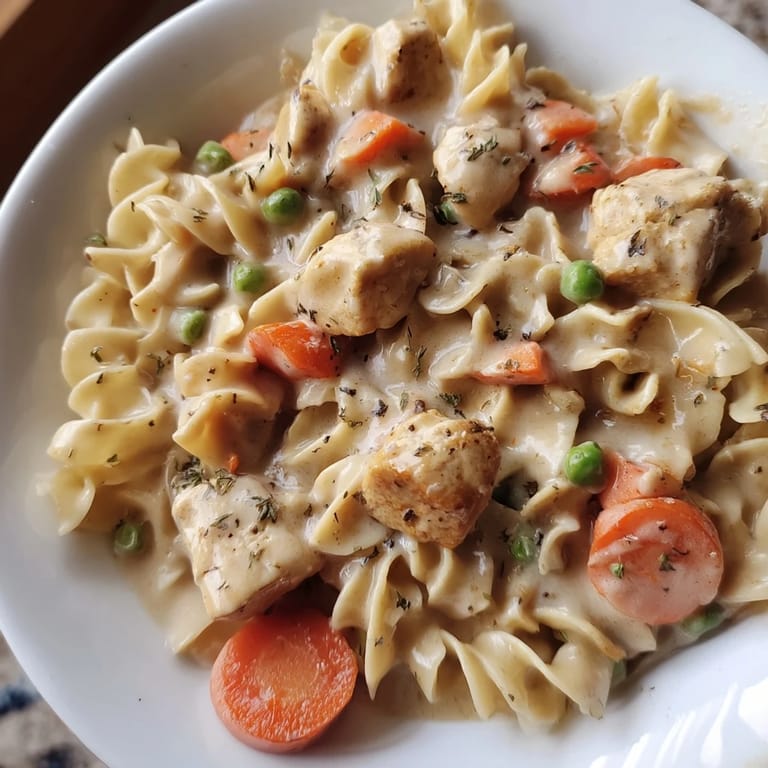
Save This is the kind of recipe that gets better each time you make it, not because of technique, but because you begin to trust it. It asks very little and gives back comfort, nourishment, and the quiet satisfaction of having made something warm with your own hands.
Recipe FAQs
- → How do I prevent the chicken from drying out?
Cook chicken over medium-high heat just until browned and no longer pink inside. Avoid overcooking by monitoring closely during sautéing.
- → Can I use different noodles in this dish?
Yes, wide egg noodles work best, but you can substitute with pappardelle or fettuccine for a similar texture and mouthfeel.
- → What thickens the creamy sauce?
The sauce is thickened by cooking flour with butter to form a roux before gradually whisking in broth and dairy ingredients.
- → Is it possible to add more vegetables?
Absolutely, mushrooms or peas can be added during sautéing or towards the end for extra flavor and texture.
- → What herbs enhance the flavor?
Dried thyme, parsley, and a hint of paprika blend harmoniously to add depth and aromatic notes to the dish.
- → Can this be made ahead of time?
Yes, prepare in advance and gently reheat while stirring to preserve the creaminess and texture.