 Save
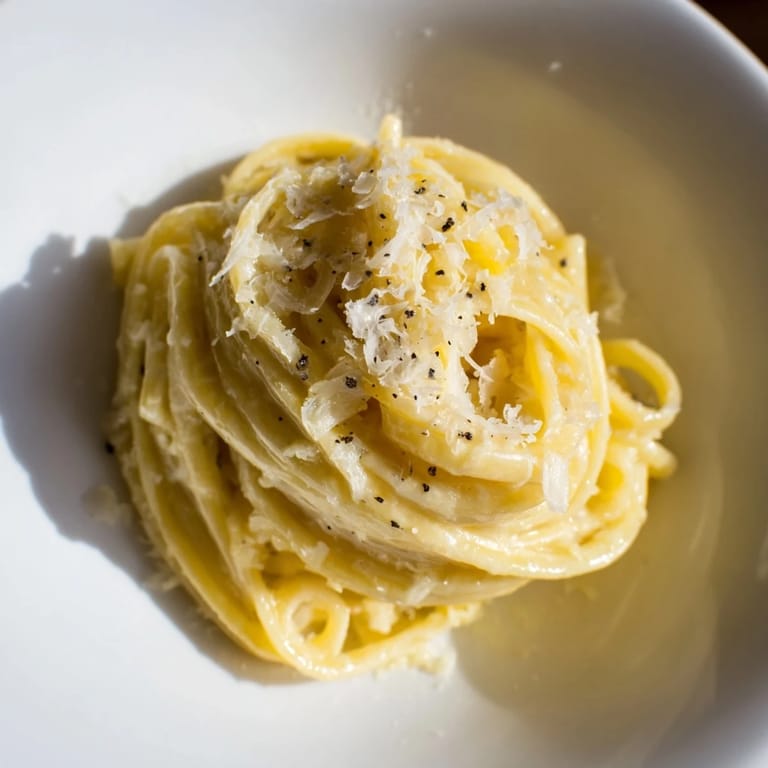
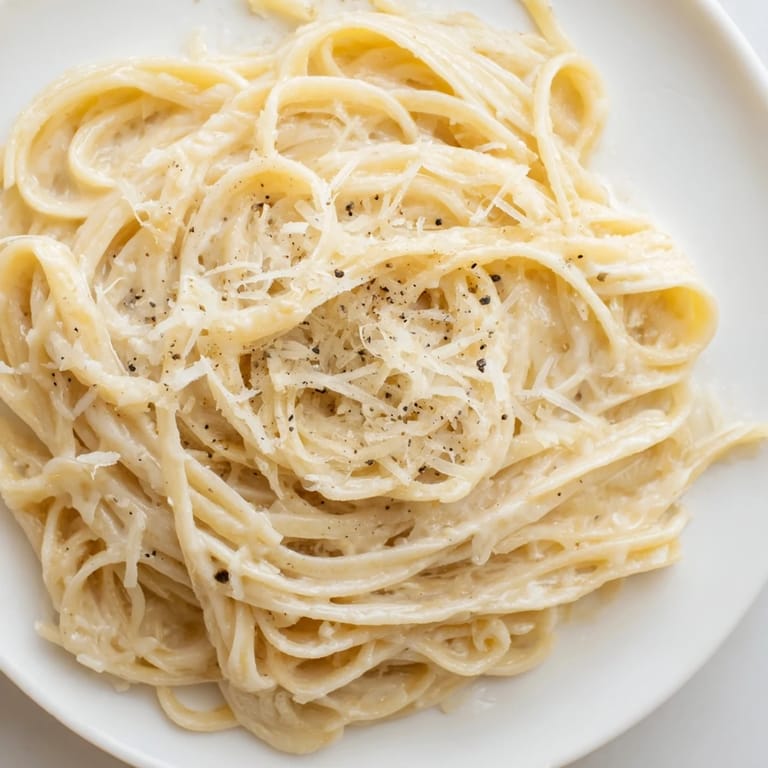
Save There's something almost rebellious about a three-ingredient pasta—no complicated sauces, no long ingredient lists, just butter, cheese, and starch transformed into something silky and deeply satisfying. I discovered this dish one Wednesday night when I was too tired to think but too hungry to order takeout, standing in my kitchen with maybe fifteen minutes before I needed to eat something. The magic happened when I learned that pasta water isn't waste; it's the secret that turns two simple fats into a sauce that actually coats every strand.
I made this for my friend Maya on a random Tuesday when she called saying she'd had the worst day and just needed comfort food—nothing elaborate, nothing that required her to make conversation while I cooked. I boiled the pasta while she sat at my counter telling me about her meeting, and by the time she finished her story, the dish was ready. She took one bite and got quiet in that way that means food has done exactly what it was supposed to do.
Ingredients
- Dried pasta (200 g): Use whatever shape you love—spaghetti gives you elegance, but pappardelle or linguine work beautifully too, and the cooking time stays the same.
- Unsalted butter (50 g): This is non-negotiable because salted butter changes the whole balance; you need control over seasoning.
- Freshly grated Parmesan (60 g): Pre-grated cheese has anti-caking agents that prevent a proper sauce, so spend the extra minute with a box grater.
- Pasta water (60-80 ml): This starchy liquid is your emulsifier; it's what keeps the butter and cheese from separating into a greasy mess.
- Salt and black pepper: Taste as you go because pasta water adds salt too, and you can always add more but you can't take it back.
Tired of Takeout? 🥡
Get 10 meals you can make faster than delivery arrives. Seriously.
One email. No spam. Unsubscribe anytime.
Instructions
- Boil the pasta like you mean it:
- Fill a large pot with water, add enough salt that it tastes like the sea, and bring it to a rolling boil before adding pasta. Cook according to the package time until you can bend a strand with just a little resistance—al dente is real, not a myth.
- Save the starchy water before you drain:
- While the pasta is cooking, grab a measuring cup and reserve about 150 ml of that cloudy water. This is your sauce foundation, so don't skip it.
- Get everything back in the warm pot:
- Off the heat is important here—you're working with residual warmth. Drain the pasta, return it to the pot, and immediately add the cold butter while tossing constantly.
- Build the sauce with vigor:
- Sprinkle the Parmesan over the buttered pasta and start pouring in the pasta water a little at a time, tossing aggressively like you're mixing a salad. You'll see it transform from separated into creamy as the starch and fat emulsify together.
- Adjust and serve instantly:
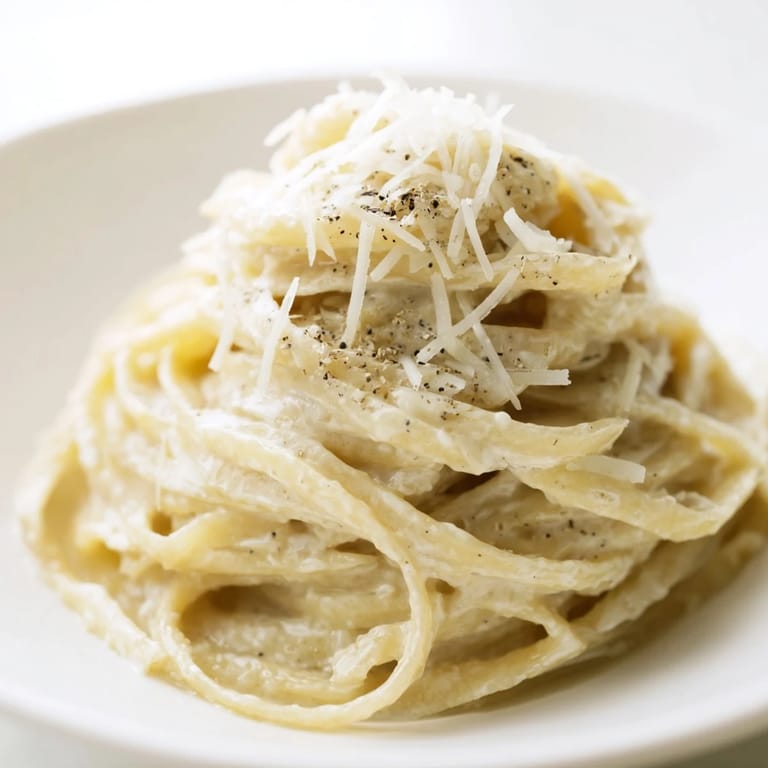
- If it's too thick, add a splash more water; if it's too loose, let it sit for ten seconds. Season with salt and pepper, knowing you've probably added enough salt already, and eat it while it's still hot enough to steam off the plate.
 Save
Save This pasta reminded me that eating doesn't always need to be a production—sometimes the best meals are the ones where you're not trying to impress anyone, not scrolling through seventeen recipe variations, just cooking something honest in your favorite pot. There's freedom in that simplicity.
Why Three Ingredients Actually Work
The first time I explained this to someone who'd never heard of cacio e pepe (the Roman dish this is inspired by), they looked skeptical until they tasted it. What seemed like deprivation—no cream, no garlic, no complexity—turns out to be clarity. When there are only three things in the bowl, each one has to be good, and somehow that constraint makes everything taste better. It's the opposite of how recipe blogs usually work, and that's exactly why it works.
The Texture Matters More Than You'd Think
The creamy sauce that forms isn't cream at all; it's the starch in pasta water binding with melted fat, and that knowledge changed how I thought about cooking. I started understanding why certain liquids work in certain dishes, why you can't just swap in water and expect the same result. Suddenly the instructions made sense instead of being arbitrary steps to follow.
When Simple Food Becomes Ritual
I've made this pasta on the kind of nights when I need to move my hands, when thinking about dinner is too much, when I just need something warm and good. I've learned that it's better slightly oversalted than undersalted, that the pepper matters even though it seems optional, and that eating alone at the counter in your kitchen can be just as nourishing as a dinner with other people.
- Fresh cracked pepper right at the end makes all the difference—dried out pepper tastes harsh in comparison.
- If you have fresh herbs, even a small handful of chopped parsley or basil stirred in at the last second elevates it without changing the core simplicity.
- Leftover pasta water keeps in the fridge for three days and is useful for loosening up other sauces that get too thick.
 Save
Save This dish proved to me that you don't need a lot of ingredients to make something worth eating; you just need to respect what you have and pay attention while you're cooking. It's the kind of meal that sticks with you not because it's fancy, but because it's real.
Recipe FAQs
- → How is the creamy sauce made without cream?
The sauce is crafted by combining melted butter, grated Parmesan, and reserved pasta water, which emulsifies into a smooth, creamy coating for the pasta.
- → What type of pasta works best for this dish?
Long pastas like spaghetti, linguine, or fettuccine are ideal as they hold the sauce well and complement the simple flavors.
- → Can I use different cheeses for variation?
Yes, substituting Parmesan with Pecorino Romano adds a sharper, tangy flavor while maintaining the sauce’s creaminess.
- → How do I adjust the sauce consistency?
Add reserved pasta water gradually, tossing the pasta until the sauce reaches your desired creamy texture without becoming too thin.
- → Are there tips for enhancing the flavor?
Try adding a pinch of freshly grated nutmeg or fresh chopped herbs to elevate the dish subtly without overpowering the main ingredients.