 Save
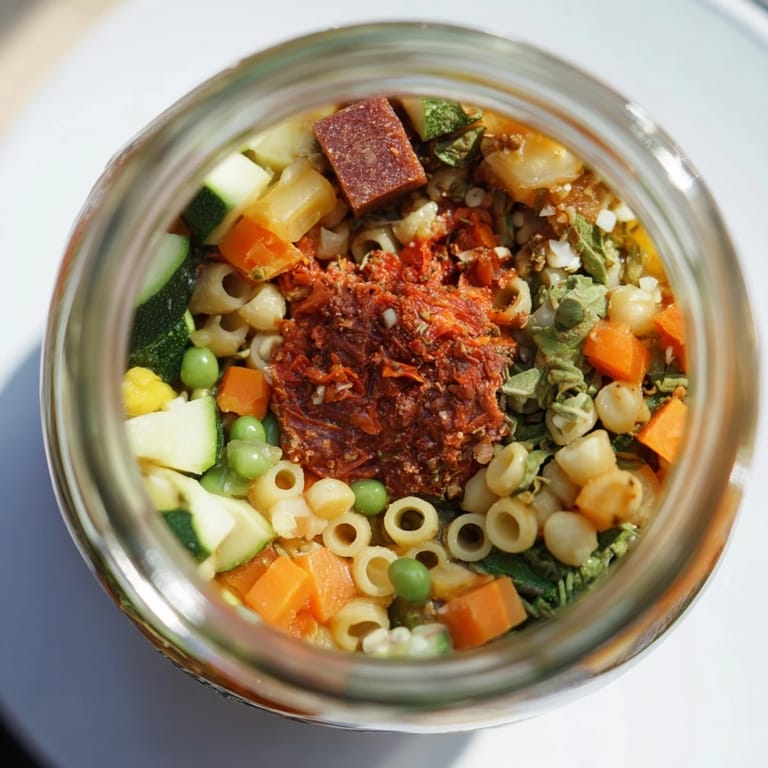
Save There's something magical about opening your fridge and finding a jar of soup ready to go—no chopping, no fussing, just add boiling water and you're minutes away from lunch. I discovered minestrone soup jars on a hectic Tuesday when I was desperate for something that felt homemade but didn't require me to stand at the stove. The moment I poured hot water into that first jar and watched everything come alive, softening and blooming with color, I realized I'd stumbled onto something special.
I brought a jar to work one winter morning and my colleague nearly stole it just from the smell when I poured the water. She asked what restaurant I'd gotten it from, and when I told her I'd made it, she wanted the method immediately. That's when I knew these jars deserved to be shared.
Ingredients
- Small pasta (ditalini, elbow macaroni, or mini shells): Use the tiny shapes—they cook perfectly in minutes and feel less heavy than larger pasta would.
- Dried red lentils: These break down slightly during cooking, creating a subtle creaminess that thickens the broth naturally without any cream.
- Canned cannellini beans: Rinse them well to remove excess sodium, and they'll add protein and a gentle, buttery texture.
- Zucchini, carrots, and celery: Dice these uniformly so they cook at the same rate and layer beautifully in the jar.
- Frozen green peas: They stay bright and firm in the layers, adding sweetness and a pop of color.
- Baby spinach: Chop it roughly—it'll wilt completely when the water hits it, disappearing into the broth.
- Sun-dried tomatoes: Buy them oil-packed and drain well; they're intensely flavored and give the jar an elegant touch.
- Tomato paste: A small spoonful goes a long way, adding depth and a slight tanginess that balances everything.
- Italian herbs, garlic powder, and chili flakes: These dry seasonings bloom beautifully when the hot water hits them, releasing their full flavor.
- Vegetable bouillon cube: Crumble it so it dissolves evenly, but you can always swap it for a pinch of salt and your favorite seasoning blend.
Tired of Takeout? 🥡
Get 10 meals you can make faster than delivery arrives. Seriously.
One email. No spam. Unsubscribe anytime.
Instructions
- Gather your jars and organize your ingredients:
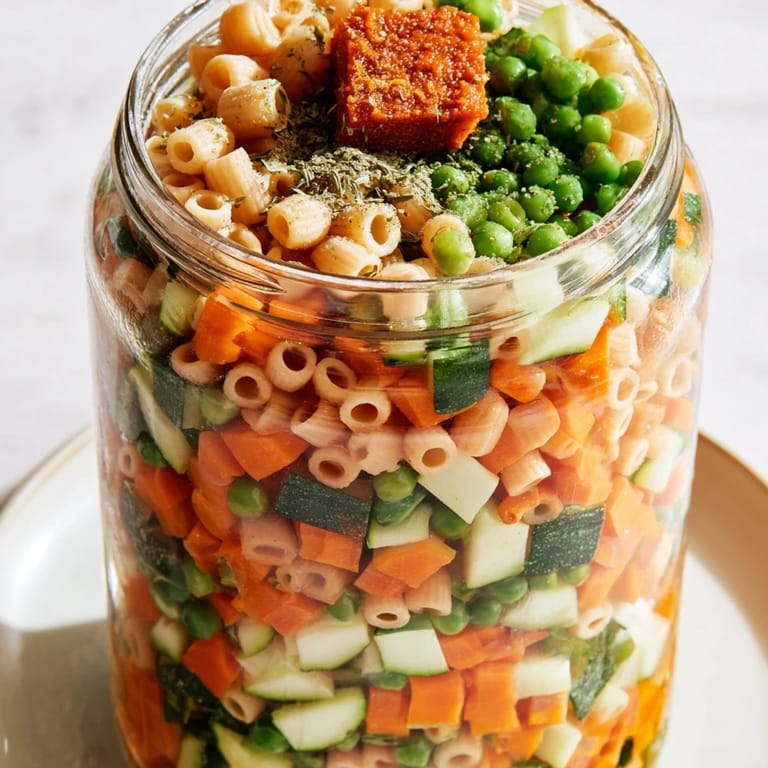
- Line up four clean quart-size mason jars and set up your ingredients in bowls—this makes layering fast and meditative. The organization part is half the fun.
- Layer the pasta and legumes first:
- Pour 1/3 cup of pasta into each jar, pressing it flat at the bottom. Add the lentils, then the beans, layering them with a gentle hand so nothing crushes.
- Add the vegetables in this order:
- Pour carrots in next—they're sturdy and create a solid base. Follow with celery, zucchini, and peas, pressing gently after each layer so everything nestles together.
- Top with the delicate ingredients:
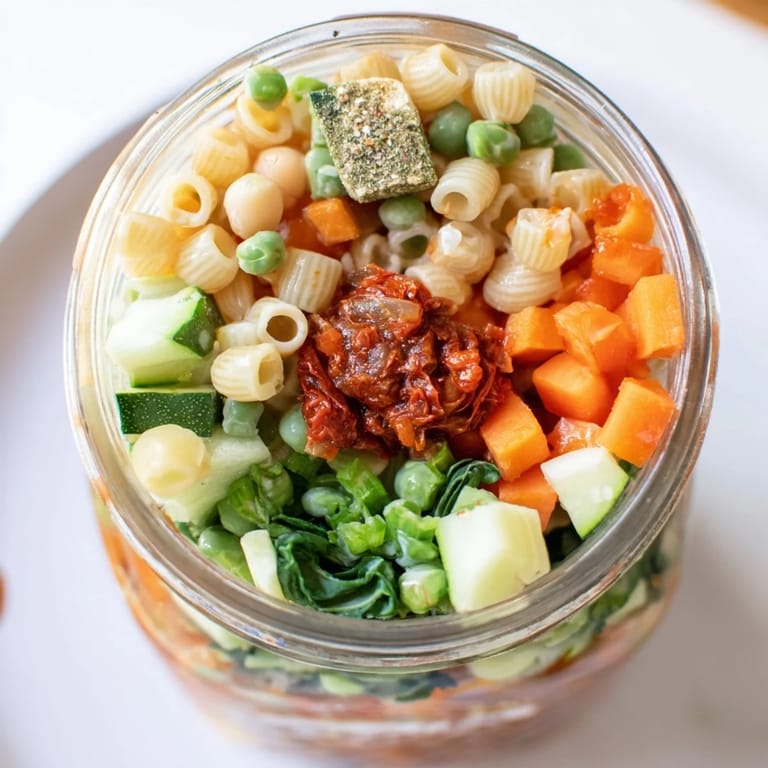
- Scatter spinach across the top, then add sun-dried tomatoes and a small dollop of tomato paste. The pasta will stay on top and act as a lid of sorts.
- Season each jar:
- Sprinkle Italian herbs, garlic powder, chili flakes if using, salt, pepper, and crumble the bouillon cube directly into each jar. This is where you taste the future of the soup.
- Seal and refrigerate:
- Screw the lids on tightly and store in the refrigerator for up to four days. Label them with the date if you want to feel extra organized.
 Save
Save There's a quiet satisfaction in knowing that when hunger strikes, you won't be the person ordering takeout or eating crackers for lunch. You'll be the person who had the foresight to prepare something real.
The Beauty of Layers
The layering isn't just for show, though it does look beautiful through the glass. Each ingredient stays distinct until the water awakens it, which means flavors develop gradually as you eat—you might taste the sweet carrot first, then the earthiness of lentils, then the brightness of sun-dried tomato. It's a conversation in a jar, and every spoonful is different.
How to Serve It
You can pour boiling water directly into the jar and let it sit while you settle at your desk or table—about 10 to 15 minutes is all you need. If you're impatient or have access to a microwave, pour the water into a microwave-safe bowl, transfer the jar's contents, and zap it for three to four minutes. Either way, stir well before eating because the seasonings tend to sink to the bottom.
Making It Your Own
This recipe is forgiving enough to become a weekly ritual of using up whatever vegetables are on sale or lingering in your crisper drawer. Swap bell peppers for carrots, add white beans instead of cannellini, toss in some diced tomatoes or fresh kale if that speaks to you. The structure stays the same, but your jars will taste completely different each time, which keeps things interesting.
- Drizzle a splash of good olive oil into each jar right before serving for richness and flavor.
- Fresh basil stirred in at the end transforms the soup into something special.
- A handful of grated Parmesan isn't optional if you ask me, but it's completely skippable if dairy isn't your thing.
 Save
Save This soup proved to me that the best meals aren't always the ones that take hours—they're the ones you thought ahead to make. Now whenever I have a free Sunday afternoon, those jars get made.
Recipe FAQs
- → How should I store the layered jars before preparing?
Keep the sealed jars refrigerated for up to 4 days to maintain freshness and flavor.
- → Can I use different types of pasta in the layers?
Yes, small pasta shapes like ditalini, elbow macaroni, or mini shells work well; gluten-free options can substitute if needed.
- → Is it necessary to add boiling water before eating?
Adding 2 cups of boiling water hydrates and cooks the pasta and vegetables, making for a warm, ready-to-eat dish.
- → How long should I wait after adding water before consuming?
Allow 10-15 minutes for the pasta to soften and flavors to meld; microwaving for 3-4 minutes is an alternative for quicker preparation.
- → Can I customize the vegetable layers?
Absolutely, feel free to swap in preferred vegetables or beans, adjusting water and seasonings as needed for taste.