 Save
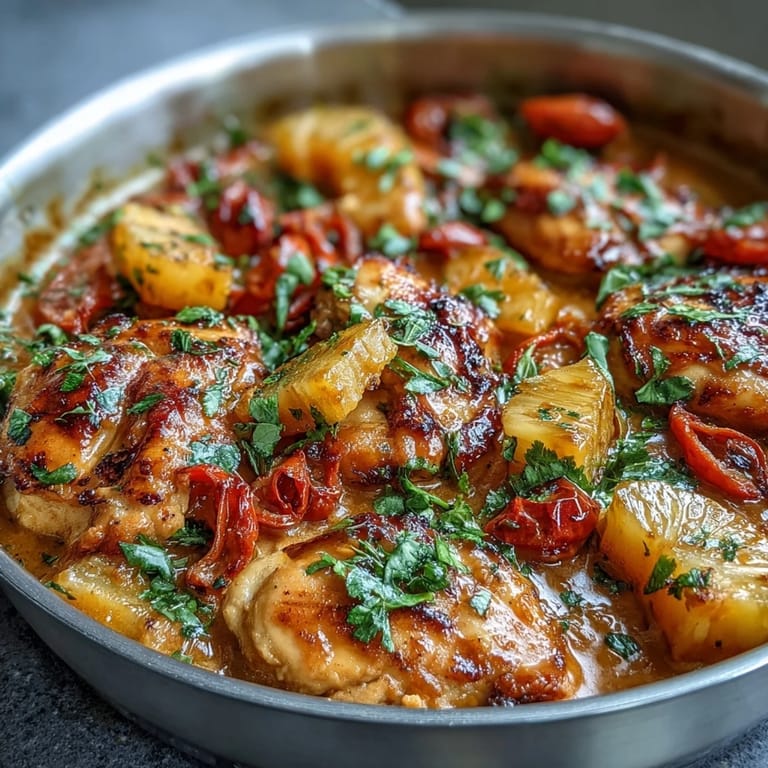
Save My neighbor knocked on the door one evening with a container of fresh pineapple from her garden, and I realized I had exactly one pot, some coconut milk, and a jar of red curry paste sitting around. What started as a quick dinner experiment became something I now make whenever I need to feel like I'm feeding people something special without the usual stress. The curry bubbles away on the stove while you catch your breath, filling the kitchen with this warm, aromatic cloud that makes everyone wonder what you've been plotting all day.
I made this for my colleague's potluck once, and she came back three times for more, which should tell you everything. But what really stuck with me was watching people who said they didn't usually like curry suddenly understand what all the fuss was about—the sweetness of the fruit somehow makes it feel less intimidating, more inviting. That's when I knew this wasn't just a recipe; it was a conversation starter.
Ingredients
- Boneless, skinless chicken thighs (600 g): Thighs stay impossibly tender even with a longer simmer, unlike breasts which can dry out if you blink too long; they also have more flavor.
- Yellow onion (1 medium): The foundation that quietly sweetens as it cooks, balancing the spice and heat.
- Fresh ginger and garlic: These two are the backbone of the curry flavor, so don't skip them or use powder; fresh makes all the difference.
- Red bell pepper (1): Adds sweetness, color, and a slight textural contrast that keeps the dish interesting.
- Fresh pineapple chunks (1 cup): If you're using canned, make sure it's in juice, not syrup, or your curry will be cloying; fresh is always worth it if you have it.
- Carrot (1 medium): Softens gently and adds earthiness that rounds out the tropical notes.
- Vegetable oil (2 tbsp): Keeps the pan from sticking and helps the curry paste bloom properly.
- Coconut milk (400 ml): Full-fat is non-negotiable here; the richness is what makes this feel like the real thing.
- Chicken broth (1 cup): Waters down the coconut just enough so it's creamy rather than heavy.
- Thai red curry paste (2 tbsp): The soul of this dish; buy from a reputable brand and store it in the fridge once opened.
- Fish sauce and soy sauce (1 tbsp each): These provide umami depth that makes you wonder what's in there; use tamari if you need gluten-free.
- Brown sugar (1 tsp): A tiny pinch to bridge the gap between sweet and savory.
- Fresh cilantro, lime wedges, and jasmine rice: The finishing touches that transform a good curry into one people remember.
Tired of Takeout? 🥡
Get 10 meals you can make faster than delivery arrives. Seriously.
One email. No spam. Unsubscribe anytime.
Instructions
- Warm your pot and start with the onion:
- Heat the oil over medium heat until it shimmers slightly, then add your onion. You'll hear a gentle sizzle and smell that sweet onion perfume start to rise—that's your signal you're on the right track, and it usually takes about 3 to 4 minutes until the pieces soften and turn slightly translucent.
- Build the flavor base with garlic and ginger:
- Once the onion is soft, add the minced garlic and grated ginger, stirring constantly for about a minute so they don't stick. The aroma that hits you at this moment is why people love curry; your kitchen will smell incredible.
- Toast the curry paste:
- Stir in the red curry paste and let it cook for a minute, stirring frequently. This brief cooking step wakes up the spices and removes any raw edge from the paste.
- Brown the chicken pieces:
- Add your chicken and let it sit undisturbed for a couple of minutes before stirring, then brown it on all sides for about 4 to 5 minutes total. You're not trying to cook it through; you're just giving it color and developing flavor.
- Add vegetables and pineapple:
- Throw in the bell pepper, carrot, and pineapple chunks, stirring everything together so the flavors start mingling. The fruit will soften as the curry cooks, so don't worry if it seems firm right now.
- Pour in the liquids and seasonings:
- Add the coconut milk and broth, then stir in the fish sauce, soy sauce, and brown sugar. Taste the sauce at this moment and you'll understand how the flavors build—it'll taste bold but not quite finished.
- Simmer gently with the lid on:
- Bring everything to a gentle simmer (not a rolling boil), then cover and cook for 20 minutes, stirring occasionally. The chicken will become tender, the vegetables will soften, and the sauce will start binding everything together.
- Uncover and reduce the sauce:
- After 20 minutes, remove the lid and let it simmer uncovered for another 5 to 10 minutes, depending on how thick you like your sauce. This step evaporates some liquid and concentrates the flavors, making everything taste richer and more intentional.
- Taste, adjust, and finish:
- Give it a final taste and adjust the salt and pepper as needed. You might want a squeeze of lime juice or another pinch of salt; trust your palate here.
- Plate and serve:
- Ladle the curry over jasmine rice, scatter fresh cilantro on top, and serve with lime wedges on the side so people can brighten it up as they eat.
 Save
Save There's something almost meditative about watching a one-pot curry come together—the way the coconut milk clouds briefly before melting into the broth, how the pineapple releases its sweetness right when you need a counterbalance to the heat. I made this for my daughter's friend who was vegan for a month, and when she realized halfway through her bowl that she was eating something without sacrificing flavor, I saw her relax in a way that reminded me food is really about belonging.
Why This Works Every Time
The magic here is balance—sweet fruit against spicy paste, creamy coconut against savory broth, tender protein against al dente vegetables. None of the components fights for attention; instead, they support each other like a well-rehearsed team. I've learned over the years that this is what separates a good curry from a great one, and it's why people keep asking for the recipe.
Customizing Without Losing Your Way
If you want more heat, add sliced fresh chilies or chili flakes along with the curry paste. For a milder version, reduce the curry paste to 1 tablespoon and add an extra squeeze of lime juice at the end. You can swap the chicken for firm tofu or shrimp, swap the jasmine rice for cauliflower rice if you're watching carbs, or add a handful of spinach in the last minute of cooking. The structure is flexible enough to bend without breaking.
Storage and Timing Notes
This curry tastes even better the next day once the flavors have settled and gotten to know each other. Store leftovers in an airtight container in the fridge for up to 4 days, and reheat gently on the stovetop, adding a splash of broth if it's thickened too much overnight. You can also freeze this for up to 3 months, though the texture of the vegetables will be softer when thawed. For weeknight cooking, you can prep all your ingredients the morning of and just cook when you get home.
- Make extra rice because people always want seconds and the curry soaks into plain rice like nothing else.
- Lime wedges aren't optional—they brighten everything at the last moment and let people control the acidity to their taste.
- Fresh cilantro on top isn't fancy; it's the difference between a good curry and one people remember.
 Save
Save This curry lives in my regular rotation now because it feels special without demanding special effort, and that's the definition of a keeper. Whether you're cooking for a weeknight or trying to impress someone at the table, this one does the heavy lifting while you just follow along.
Recipe FAQs
- → Can I use chicken breasts instead of thighs?
Yes, chicken breasts can be substituted but require less cooking time to prevent drying out. Brown them quickly and simmer gently.
- → How can I make this dish spicier?
Add sliced fresh chilies or a pinch of chili flakes along with the red curry paste for extra heat.
- → Is it possible to prepare a vegetarian version?
Replace chicken with firm tofu and use vegetable broth in place of chicken broth for a plant-based variation.
- → What pairs well as a side for this dish?
Steamed jasmine rice is traditional, providing a fragrant base that complements the rich curry flavors.
- → Can I prepare this dish ahead of time?
Yes, it tastes great reheated. Store in an airtight container in the fridge for up to 2 days and reheat gently.