 Save
Save There's something about the sizzle of salmon under a hot broiler that makes the kitchen feel alive. I discovered this dish by accident one evening when I had salmon thawing, a jar of gochujang I'd been meaning to use, and three oranges rolling around in my fruit bowl. The combination sounded wild at first, but when that tangy-sweet glaze started caramelizing in the oven, filling my kitchen with this incredible aroma of citrus and spice, I knew I'd stumbled onto something special. Now it's become my go-to when I want to feel like I'm cooking something restaurant-worthy without the stress.
I made this for a friend who claimed she doesn't like salmon, and watching her face when she tasted that first bite was worth the entire dinner. She asked for the recipe before dessert, and now she texts me photos of her versions. It's become this little running joke between us that the gochujang-orange combo converted her into a salmon person.
Ingredients
- Salmon fillets (4, 150g each): Skin-on is essential because it crisps up beautifully and keeps the flesh tender inside. Pat them completely dry before the glaze touches them, or you'll lose that gorgeous caramelization.
- Gochujang (2 tablespoons): This Korean chili paste is fermented and complex, not just spicy. It adds depth that you can't replicate with other chili pastes, so don't substitute unless you have to.
- Fresh orange juice (1/4 cup): Squeeze it yourself if possible. Bottled juice is okay, but fresh juice gives you that bright, almost floral quality that makes the glaze sing.
- Soy sauce (2 tablespoons): The salt and umami backbone of the whole sauce. Use good quality soy sauce, not the harsh stuff that tastes one-dimensional.
- Honey (2 tablespoons): This is what creates that sticky, caramelized finish. It's not just sweetness; it's the glue that makes everything coat the salmon evenly.
- Rice vinegar (1 tablespoon): The acid that balances everything. It keeps the glaze from becoming cloying and adds a subtle sharpness.
- Fresh ginger (1 teaspoon, grated): Grate it right before mixing so you get all the spicy, fresh bite. Dried ginger won't give you the same punch.
- Garlic (1 clove, minced): Just one clove keeps this balanced. Too much garlic and it overpowers the citrus-spice story you're trying to tell.
- Sesame oil (1 teaspoon): A little goes a long way. This is your secret ingredient that adds that toasted, almost nutty finish.
- Jasmine rice (1 1/2 cups): Its natural sweetness complements the spicy-sweet glaze without fighting it. Rinsing removes the starch and keeps each grain separate and fluffy.
- Butter (2 tablespoons): This makes the rice luxurious, not just a neutral base. Don't skip it.
- Scallions (3, thinly sliced): The fresh green bite at the end that makes every bite feel bright and alive.
- Sesame seeds and orange zest (optional): These are the final touches that take it from good to memorable.
Tired of Takeout? 🥡
Get 10 meals you can make faster than delivery arrives. Seriously.
One email. No spam. Unsubscribe anytime.
Instructions
- Make the glaze first:
- Whisk together gochujang, orange juice, soy sauce, honey, rice vinegar, ginger, garlic, and sesame oil in a bowl. This is your moment to taste as you go, though don't taste the raw gochujang on the whisk. The glaze should smell inviting and balanced, not one-note spicy or too sweet.
- Prepare and marinate the salmon:
- Pat your salmon fillets completely dry with paper towels. Lay them in a shallow dish and coat with 2 tablespoons of glaze, turning to coat all sides. Ten minutes is enough time for the flavors to start penetrating while you get the rice going.
- Cook the rice properly:
- Rinse jasmine rice under cold water until the water runs clear. This removes excess starch. Combine rice, water, butter, and salt in a saucepan and bring to a boil, then reduce heat to low, cover, and simmer for exactly 15 minutes. After you remove it from heat, let it sit covered for 5 minutes before fluffing with a fork so every grain stays separate and tender.
- Get your oven ready:
- Preheat your broiler to high and line a baking sheet with foil, lightly oiling it. A hot broiler crisps the salmon skin while keeping the flesh moist inside.
- Broil the salmon with intention:
- Place marinated fillets skin-side down on the prepared sheet and brush with more glaze. Broil 5 to 7 inches from the heat for 6 to 8 minutes, brushing halfway through with additional glaze so it builds up those beautiful caramelized layers. The salmon is done when it flakes gently and reaches 52 to 54°C (125 to 130°F) for medium.
- Finish and thicken the sauce:
- While the salmon finishes cooking, simmer the remaining glaze in a small saucepan over medium heat for 2 to 3 minutes until it's slightly thickened. This concentrates all those flavors into something that coats every bite.
- Assemble and serve:
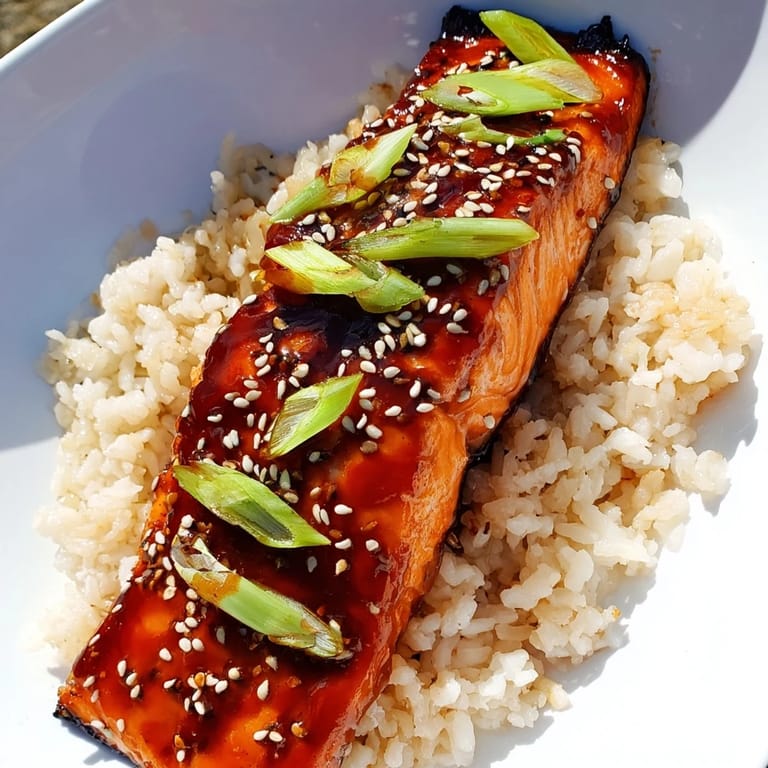
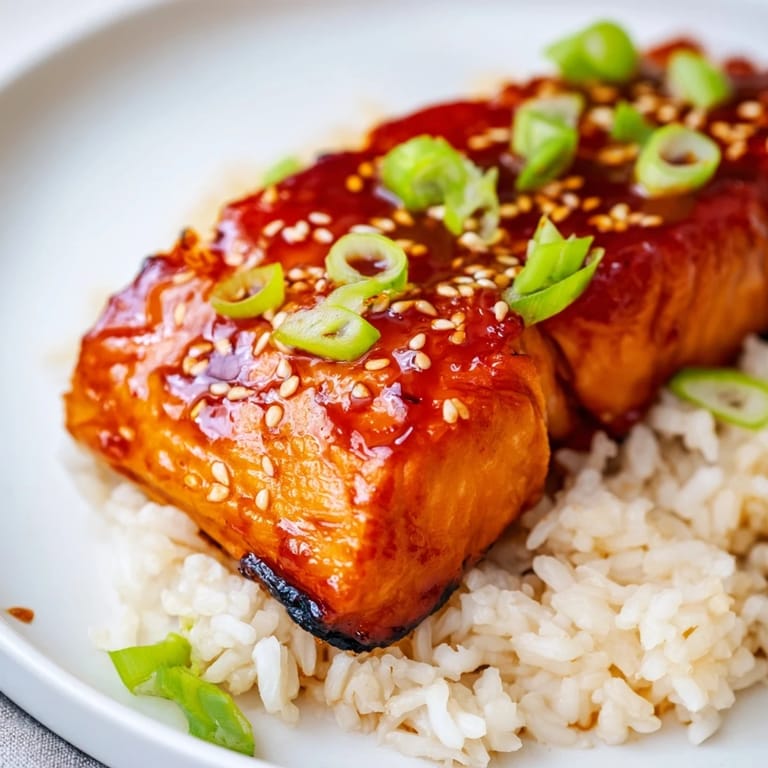
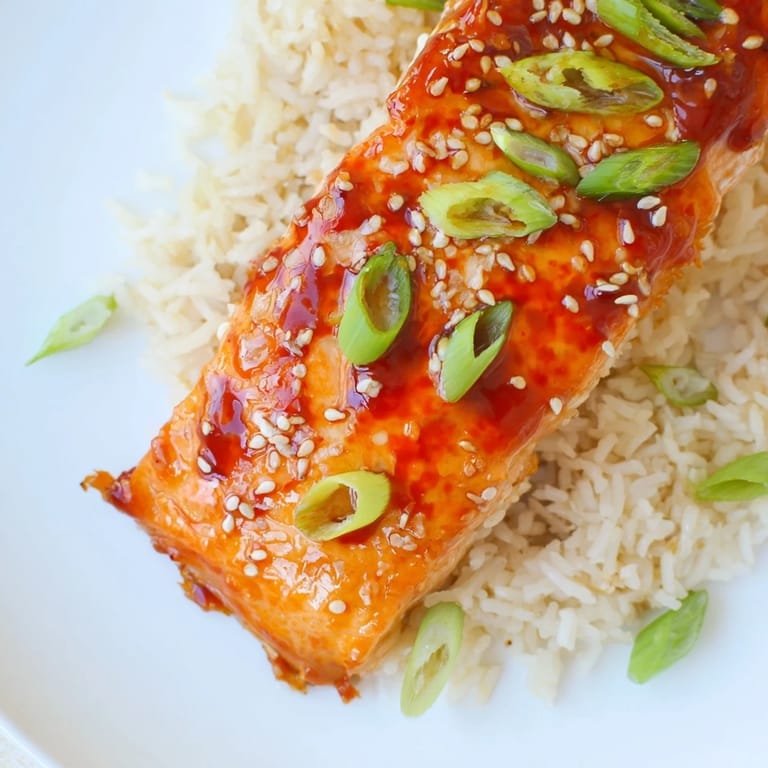
- Divide buttery rice among bowls, crown each with a salmon fillet, drizzle with thickened sauce, and top with sliced scallions. A sprinkle of sesame seeds and orange zest finishes the picture.
 Save
Save What I love most about this dish is how it makes everyone feel like they're eating something thoughtfully composed, when really it's just a bowl of butter and fluffy rice with salmon that cares about tasting good. The glaze is the star, but it exists because three simple ingredients found each other in a bowl and decided to throw a party.
Why This Combination Works So Well
Gochujang and citrus shouldn't theoretically be best friends, but they are. The fermented spice in gochujang has this funky depth that bright orange juice completely respects. The honey acts as a peacemaker between them, and the soy sauce anchors everything with umami so nothing feels scattered or uncertain. It's like each ingredient knows its job and does it without getting in anyone else's way.
Timing and Temperature Matter More Than Technique
I've learned the hard way that this recipe isn't about fancy knife skills or complicated steps. It's about respecting temperature and time. A hot broiler is non-negotiable because it creates that contrast between the caramelized glaze exterior and the tender, flaky salmon inside. Room temperature salmon takes longer to cook through, which means the glaze starts burning before the fish is done. Medium-rare salmon, somewhere around 52 to 54°C (125 to 130°F), is the exact temperature where it's still tender and luxurious, not dry.
Customization Without Losing the Soul
Over time, I've experimented with versions of this. Sometimes I add a pinch of chili flakes to the glaze for extra heat, or I swap the jasmine rice for brown rice if I want something with more texture and earthiness. I've even tried it with quinoa, which adds a slightly nutty background that complements the spice beautifully. The constant is that gochujang-orange pairing, because that's what makes this dish itself.
- If you want more heat, stir in a pinch of chili flakes or gochugaru to the glaze before marinating.
- Brown rice or quinoa both work as substitutes if you want a different grain texture or nutritional profile.
- For a wine pairing, reach for a crisp Sauvignon Blanc or a citrusy IPA that echoes the orange juice in the glaze.
 Save
Save This is the kind of dish that reminds you why cooking at home feels like a small luxury. It comes together quickly, tastes like you spent all afternoon on it, and leaves everyone feeling genuinely satisfied.
Recipe FAQs
- → What glaze ingredients enhance the salmon's flavor?
The glaze combines gochujang, freshly squeezed orange juice, soy sauce, honey, rice vinegar, ginger, garlic, and sesame oil, creating a balance of tangy, sweet, spicy, and savory notes.
- → How is the jasmine rice prepared for this dish?
Rinse jasmine rice until clear, then simmer it with water, unsalted butter, and salt until tender. Let it rest covered to finish cooking and fluff before serving.
- → What is the recommended cooking method for the salmon fillets?
The salmon is broiled skin-side down, brushed with glaze, ensuring a caramelized exterior and tender interior cooked to medium doneness.
- → Can any garnishes be used to complement the dish?
Thinly sliced scallions, toasted sesame seeds, and a touch of orange zest add fresh, crunchy, and citrusy accents enhancing the overall flavor and presentation.
- → Are there any suggested variations or substitutions?
You can add chili flakes to the glaze for added heat or swap jasmine rice for brown rice or quinoa to adjust texture and nutrition.