 Save
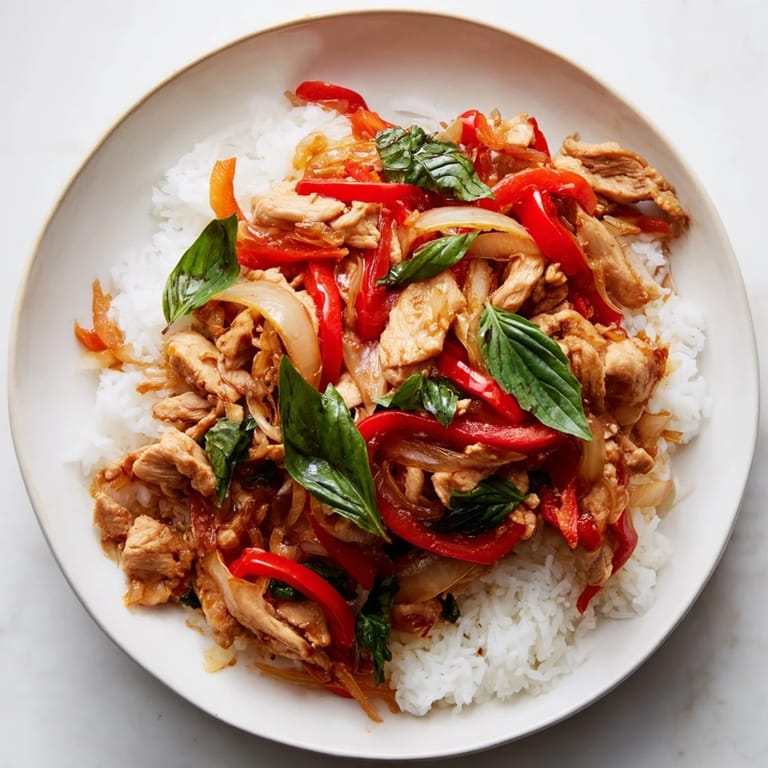
Save My first Thai basil chicken was a spontaneous weeknight invention, born from leftover herbs and whatever protein I had thawing. I'd bought a bundle of holy basil at the market, curious about the difference from the Italian kind in my garden, and one evening just decided to figure it out as I cooked. The kitchen filled with this intoxicating peppery-sweet aroma that made my roommate emerge from the other room asking what smelled so good. It became my go-to whenever I wanted something that tasted like I'd ordered takeout but took only as long as boiling rice.
I made this for a friend who'd just moved back to town, and she took one bite and her eyes got that look—you know, when food suddenly explains something about why you've been missing someone. She told me it tasted like every street vendor she remembered from Bangkok, and I realized right then that sometimes the simplest dishes carry the most weight. Since then, this has become my refuge recipe, the one I make when I need to feel grounded or want to share something that feels like care in a bowl.
Ingredients
- Chicken thighs or breasts (500 g): Thighs stay tender and forgiving, but breasts work fine if that's what you have; slice everything thin so it cooks in minutes without drying out.
- Soy sauce (3 tbsp): This is your base savory note; use regular or low-sodium depending on how salty you like things.
- Oyster sauce (2 tbsp): Brings subtle sweetness and umami depth that soy alone can't deliver.
- Fish sauce (1 tbsp): Non-negotiable for authentic flavor, though it smells funky in the bottle, I promise it disappears into something delicious once cooked.
- Brown sugar (1 tbsp): Balances the heat and salt with just a whisper of sweetness.
- Water (2 tbsp): Keeps the sauce from becoming too thick and concentrated.
- Garlic (4 cloves, minced): Mince it fine so it perfumes the oil before anything else goes in; this is your flavor foundation.
- Thai chilies (2–3, finely sliced): Adjust down if you're heat-sensitive, adjust up if you want it to wake you up; they're not just hot, they're aromatic.
- Onion (1 small, thinly sliced): Adds sweetness and slight crunch before it softens into the dish.
- Red bell pepper (1, thinly sliced): Provides color, sweetness, and texture; green or yellow work too if that's easier.
- Holy basil leaves (1 cup packed): This is the star; add it last so it wilts into the warm sauce instead of cooking down to nothing, preserving that peppery bite.
- Jasmine rice (4 cups cooked): Fluffy, fragrant, and perfect for soaking up the sauce; cook it the same day you'll eat it for the best texture.
- Lime wedges (optional): A squeeze brightens everything and ties the flavors together at the last moment.
Tired of Takeout? 🥡
Get 10 meals you can make faster than delivery arrives. Seriously.
One email. No spam. Unsubscribe anytime.
Instructions
- Build your sauce while everything is raw:
- Stir the soy sauce, oyster sauce, fish sauce, brown sugar, and water together in a small bowl. This gives you one simple motion once the wok gets hot and everything moves fast.
- Heat the oil and wake up the aromatics:
- Pour a tablespoon of vegetable oil into your skillet or wok over medium-high heat and let it shimmer. As soon as it's ready, add the garlic and Thai chilies and stir constantly for about 30 seconds, just until the smell becomes impossible to ignore.
- Build flavor with the onion base:
- Add the sliced onion and give it a minute of constant movement so it softens slightly but doesn't lose its structure. You're looking for that sweet, slightly caramelized edge.
- Cook the chicken until it's cooked through:
- Slide the chicken into the pan and don't be tempted to move it around constantly; let it touch the hot surface for a bit so it browns on one side. Stir every 30 seconds or so for about 4 to 5 minutes total until it's no longer pink inside and the edges look golden.
- Add the bell pepper for freshness:
- Toss in the red bell pepper and stir everything together for about 2 minutes. You want it to soften enough to taste sweet but still hold a slight crunch.
- Bring it all together with the sauce:
- Pour in that sauce mixture and keep stirring as it bubbles and reduces, about 1 to 2 minutes. Watch the liquid glaze the chicken and coat the vegetables, creating this glossy, savory pool.
- Add the holy basil at the end:
- Remove the pan from the heat and immediately stir in all those fresh holy basil leaves. The residual heat will wilt them gently, releasing their peppery fragrance without destroying their freshness.
- Serve over jasmine rice and garnish:
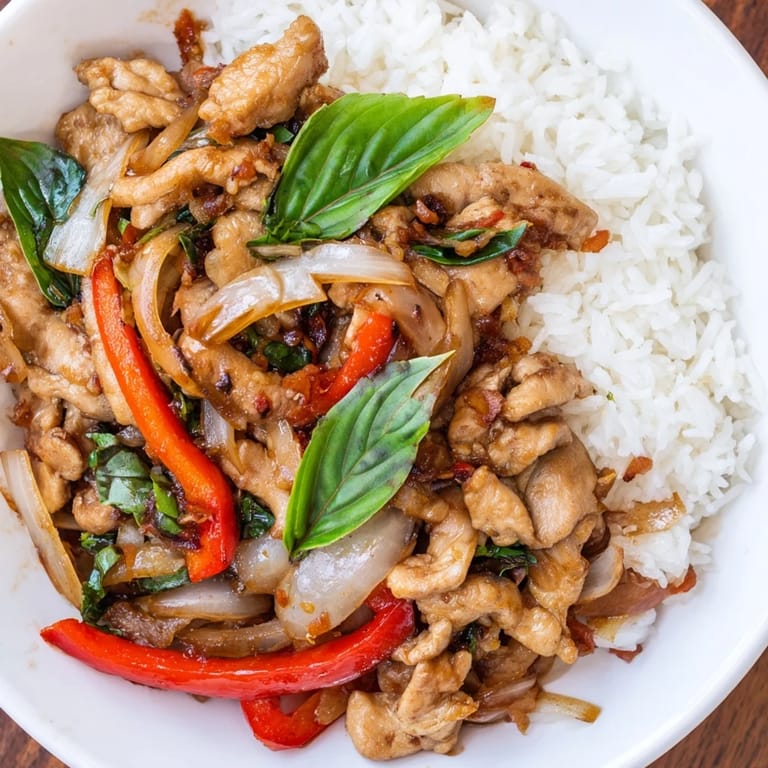
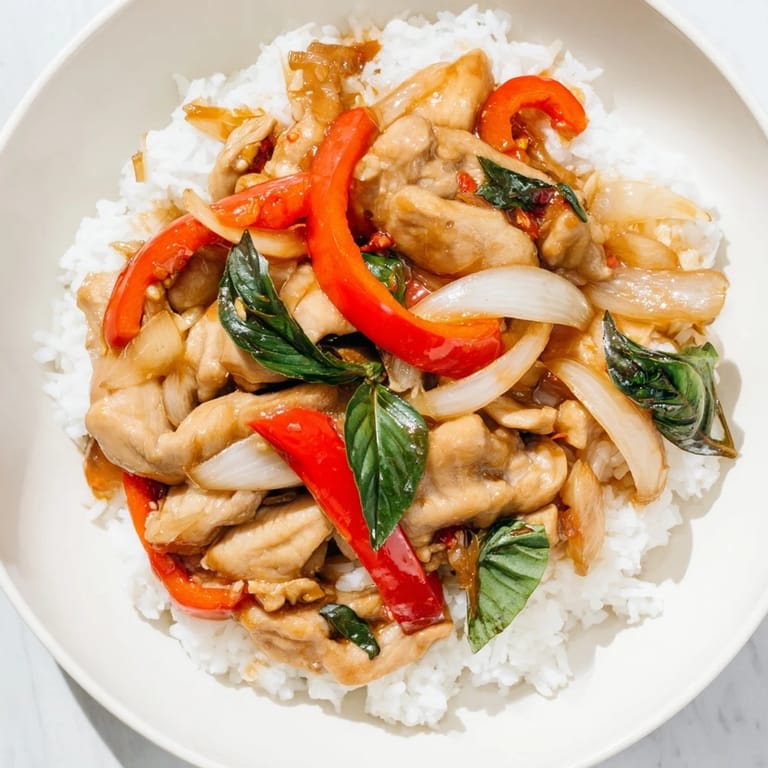
- Spoon the chicken and sauce over fluffy jasmine rice in bowls, and squeeze lime over the top if you're using it. The citrus brightness makes everything taste somehow both lighter and more complete.
 Save
Save There's something about serving this in bowls instead of on a plate that makes people slow down and actually taste what they're eating. It transforms takeout-fast into something more intentional, a moment where food becomes a conversation starter instead of just fuel.
Why Holy Basil Matters
Holy basil tastes nothing like Italian basil; it's got this peppery, almost medicinal complexity that people either love immediately or need to try a few times to understand. I learned this the hard way when I first substituted it thinking basil was basil, and the dish fell flat. Now I hunt for it specifically at Asian markets because once you taste the real thing in a Thai dish, other basil varieties feel like they're missing the entire point. If you genuinely can't find it, Thai basil is your closest match, though even that has a subtly different flavor profile worth exploring.
The Heat Adjustment Dance
Thai food heat is personal, and this recipe respects that. Start with 2 chilies and taste as you go, because it's easier to add more heat than to cool things down once you've gone too far. One evening I made this for a group and pre-sliced everything, only to realize one guest couldn't eat anything spicy, so I ended up making a second batch without the chilies. That taught me the value of tasting at every stage, so you know exactly when to adjust and can make tweaks on the fly if you need to.
Making It Your Own
This recipe is flexible enough to bend to what you have on hand and who you're cooking for. I've made it with shrimp when chicken seemed boring, added mushrooms when I wanted extra texture, and even thrown in snap peas for a different crunch. The core technique stays the same, which is why it became such a reliable favorite in my kitchen.
- A crispy fried egg on top transforms breakfast into lunch and lunch into dinner.
- If you want protein variety, shrimp takes about 2 to 3 minutes, tofu takes 3 to 4 minutes, and beef cooks similarly to chicken.
- Serve with a cold lime soda or iced tea to balance the heat and richness.
 Save
Save This bowl has gotten me through busy weeks and special occasions with equal grace. It reminds me that food doesn't have to be complicated to feel like love.
Recipe FAQs
- → What type of basil works best in this dish?
Holy basil offers a spicy, peppery flavor that's ideal, but Thai or Italian basil are good substitutes if unavailable.
- → Can I use chicken breasts instead of thighs?
Yes, thinly sliced chicken breasts work well and cook quickly without sacrificing flavor.
- → How can I adjust the spiciness level?
Add more Thai chilies or a pinch of chili flakes to increase heat according to preference.
- → What cooking tools are recommended?
A large skillet or wok is best for quick stir-frying, ensuring even cooking and flavor development.
- → Are there gluten-free options for the sauces?
Yes, use gluten-free soy and oyster sauces to accommodate gluten sensitivities while maintaining flavor.