 Save
Save My first Vietnamese caramel chicken came from watching my neighbor Mae through her kitchen window—literally. She was making it for her family dinner, and the aroma of caramelizing sugar mixed with fish sauce drifted across the garden fence so insistently that I had to ask for the recipe. What struck me most wasn't just how it tasted, but how simple the technique was: sugar transformed into liquid gold, then meeting chicken and becoming this glossy, sticky miracle. Now whenever I make it, I can still smell that moment.
I made this for a potluck once and brought it in a container, reheating it gently on the host's stovetop. Someone asked if I'd ordered it from a Vietnamese place down the street—I almost didn't correct them. That's when I realized this dish has a kind of quiet confidence; it doesn't need fanfare, just heat and a good spoon to scoop that glossy sauce over rice.
Ingredients
- Boneless, skinless chicken thighs (800 g): Thighs forgive you—they stay moist even if you're not perfect with timing, unlike breast meat which dries out if you blink.
- Fish sauce (3 tbsp): This is the backbone of the flavor; don't skip it or reduce it, even if you're nervous about it at first (most people are).
- Light soy sauce (2 tbsp): Use light, not dark, so the caramel stays the star and the sauce doesn't turn murky.
- Brown sugar (2 tbsp): Adds depth compared to granulated; it's worth the small difference.
- Fresh lime juice (1 tbsp): Bottled works if you must, but fresh lime cuts through the richness like a bell at the end of a sentence.
- Minced garlic (2 tsp): Fresh garlic only—jarred tastes flat against the boldness of caramel and fish sauce.
- Freshly ground black pepper (1 tsp): Grind it yourself; pre-ground loses its punch by the time you need it.
- Vegetable oil (1 tbsp): For cooking after the caramel is made; neutral oil doesn't compete.
- Granulated sugar (4 tbsp): This is what becomes the caramel—don't confuse it with the brown sugar in the marinade.
- Water (3 tbsp): Just enough to help the sugar dissolve evenly before it caramelizes.
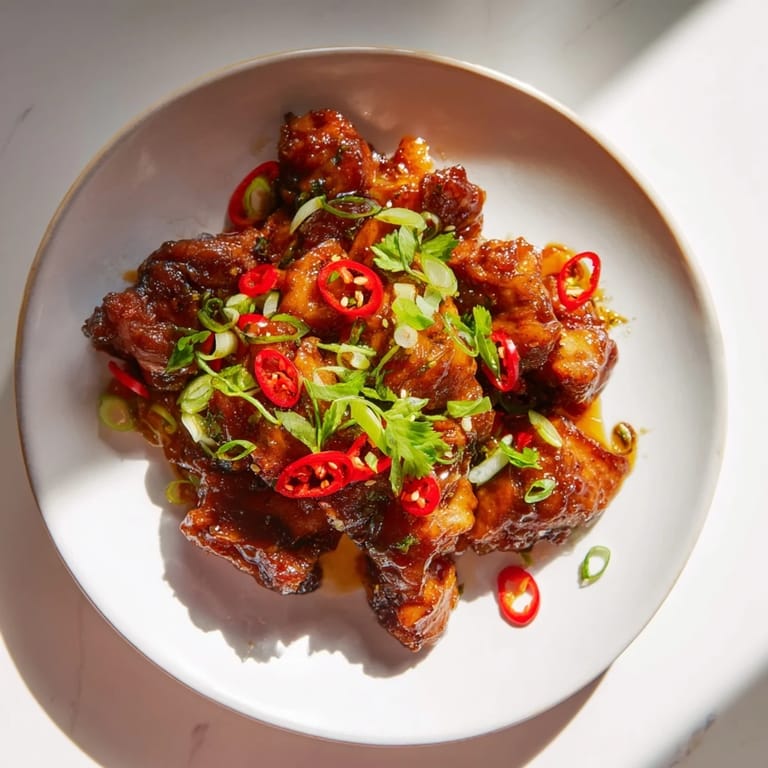
- Spring onions, red chili, fresh coriander: These are your finishing flourish; they add brightness and texture that keeps the dish from feeling heavy.
Tired of Takeout? 🥡
Get 10 meals you can make faster than delivery arrives. Seriously.
One email. No spam. Unsubscribe anytime.
Instructions
- Marinate the chicken:
- Combine your chicken pieces with fish sauce, soy sauce, lime juice, garlic, and black pepper in a bowl. The longer you let it sit, the deeper the flavor—15 minutes is minimum, but an hour is even better if you have the time. You'll notice the chicken starts to lighten in color as the marinade does its work.
- Make the caramel carefully:
- Pour granulated sugar and water into a cold pan, then turn heat to medium. This is meditation time—don't stir, just watch. After a few minutes, the edges will start turning amber, then the whole pool darkens into a deep golden brown (4–5 minutes total). The moment it smells like burnt sugar is the moment you move; any longer and it's bitter.
- Add chicken to caramel:
- This is the dramatic part. Immediately add your marinated chicken and all its juices to the hot caramel—it will sizzle and steam. Toss everything together with tongs or a spatula so each piece gets coated. The sauce will tighten up around the chicken, but don't panic; heat and stirring are coming.
- Finish cooking:
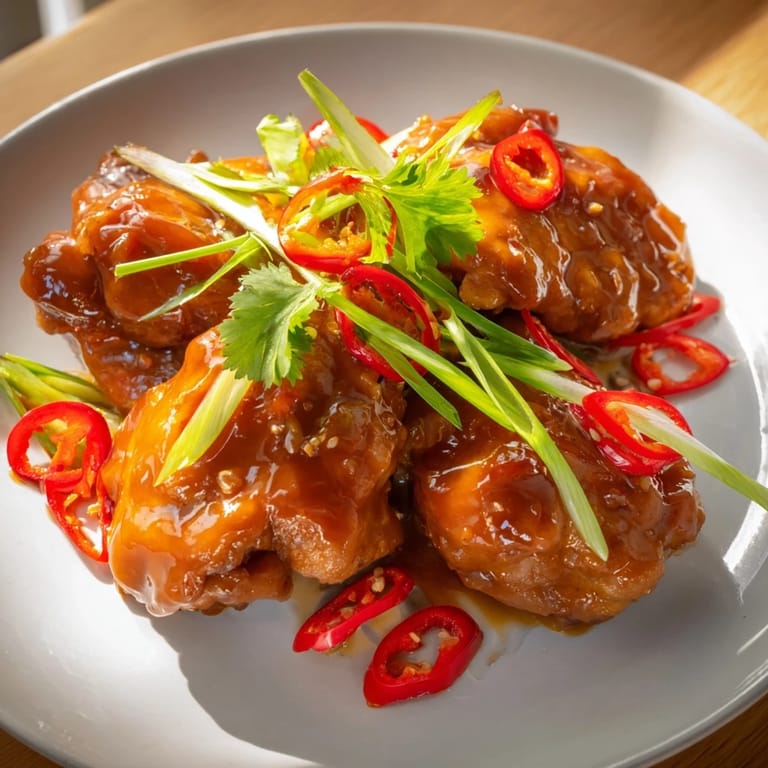
- Turn heat to medium-high and add vegetable oil. Stir occasionally for 8–10 minutes, letting the sauce reduce and turn glossy. You'll know it's ready when the chicken is cooked through (no pink inside) and the sauce clings to each piece like a glaze. Taste as you go—this is when you adjust with more fish sauce if it needs saltiness or lime juice if it needs brightness.
- Plate and garnish:
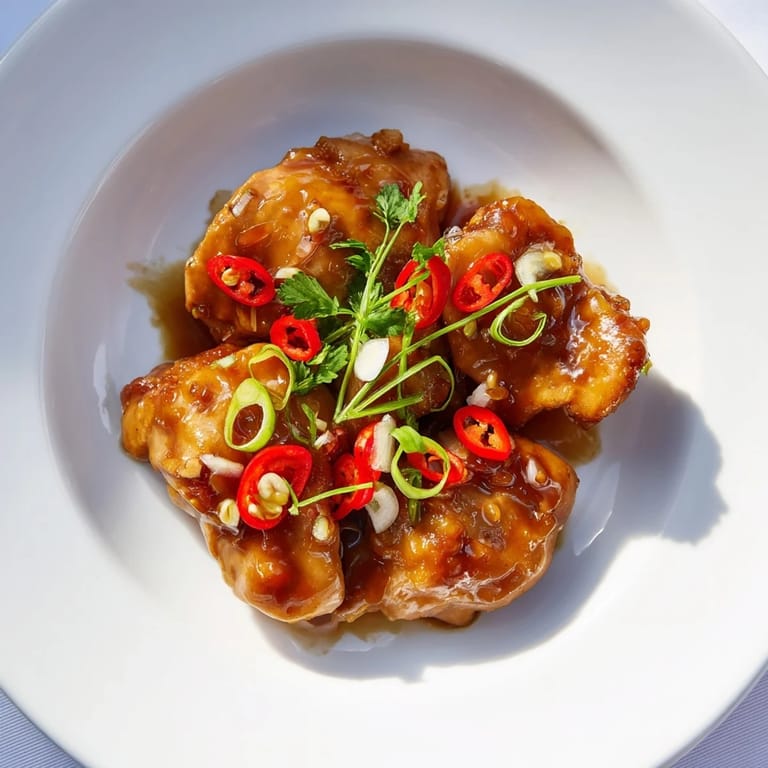
- Transfer everything to a serving plate while it's still hot. Top with sliced spring onions, thin red chili slices if using, and a handful of fresh coriander leaves. The fresh herbs wake up the whole dish and balance the richness.
 Save
Save There's a moment when the raw caramel hits the cold chicken and everything steams together—it's chaotic and perfect, and it's why I love cooking this dish. That controlled chaos is when the magic happens, and you're part of it.
The Caramel Question Everyone Asks
You'll worry the caramel will be too sweet. It's not—the fish sauce and lime juice are sharp enough to cut through it, and they create this savory-sweet balance that tastes alive. The depth comes from letting that sugar go properly dark, not from extra ingredients. Trust the recipe, trust the heat, and trust that Vietnamese cooks have been doing this for generations.
What to Serve It With
Steamed jasmine rice is the obvious choice, and it's right—the fluffy rice catches the glossy sauce and becomes part of the eating experience. You could also serve it with jasmine rice and quick-pickled cucumber on the side, or over warm rice noodles if you want something lighter. A crisp white wine or iced green tea beside the plate cuts the richness beautifully and makes the whole meal feel complete.
Flexibility and Swaps
Chicken breast works if you want leaner meat, but watch it like a hawk—it dries out faster than thighs. Cook it for only 6–8 minutes instead of the full 10. If fish sauce makes you anxious, you could replace half of it with extra soy sauce, though you'll lose some of that distinctive Vietnamese flavor. For extra heat, double the chili or add a pinch of chili flakes to the marinade itself.
- Always taste and adjust at the end—your fish sauce might be saltier or milder than mine, and your lime might be more or less acidic.
- Leftovers reheat beautifully in a low oven or gently on the stovetop with a splash of water to loosen the sauce.
- This dish is naturally dairy-free and comes together in under an hour from start to plated meal.
 Save
Save This is the kind of dish that tastes special without asking for much, and that's its real magic. Serve it hot, gather people around, and watch how fast it disappears.
Recipe FAQs
- → What cut of chicken works best for this dish?
Boneless, skinless chicken thighs are ideal for their tenderness and flavor. You can substitute with chicken breast for a leaner option but watch cooking time to keep it moist.
- → How is the caramel sauce prepared?
The caramel is made by slowly melting sugar with water until it turns a deep amber color, then the marinated chicken is added directly to coat it evenly with a rich, glossy glaze.
- → What role does fish sauce play in the flavors?
Fish sauce adds a distinctive salty and umami depth that balances the sweetness from the caramel and sugar, creating an authentic Vietnamese flavor profile.
- → Can I add spice to the dish?
Yes, thinly sliced red chili or a pinch of chili flakes can be added to introduce a gentle heat that complements the sweet and savory elements.
- → What sides pair well with this dish?
It is traditionally served with steamed jasmine rice, which helps absorb the flavorful caramel glaze and balances the rich taste of the chicken.